The right months and hours to paint an exterior around Dallas
North Texas gives painters a long season, but not every month or every hour works. This guide covers the temperature, sun, wind and rain limits that decide when exterior paint goes on well.
Key takeaways
- Keep surface temperatures under about 90 F while painting
- October and early November are the most reliable months
- Summer work runs early and follows the shade around the house
- Allow dry days after rain and watch the 72-hour forecast in winter
The temperature range paint actually needs
Most exterior acrylic paints from Sherwin-Williams, Benjamin Moore and PPG list a minimum application temperature between 35 and 50 F, depending on the product line. The number that matters most in Dallas is the top end. Above roughly 90 F of surface temperature, paint skins over too fast, lap marks show, and the film can blister.
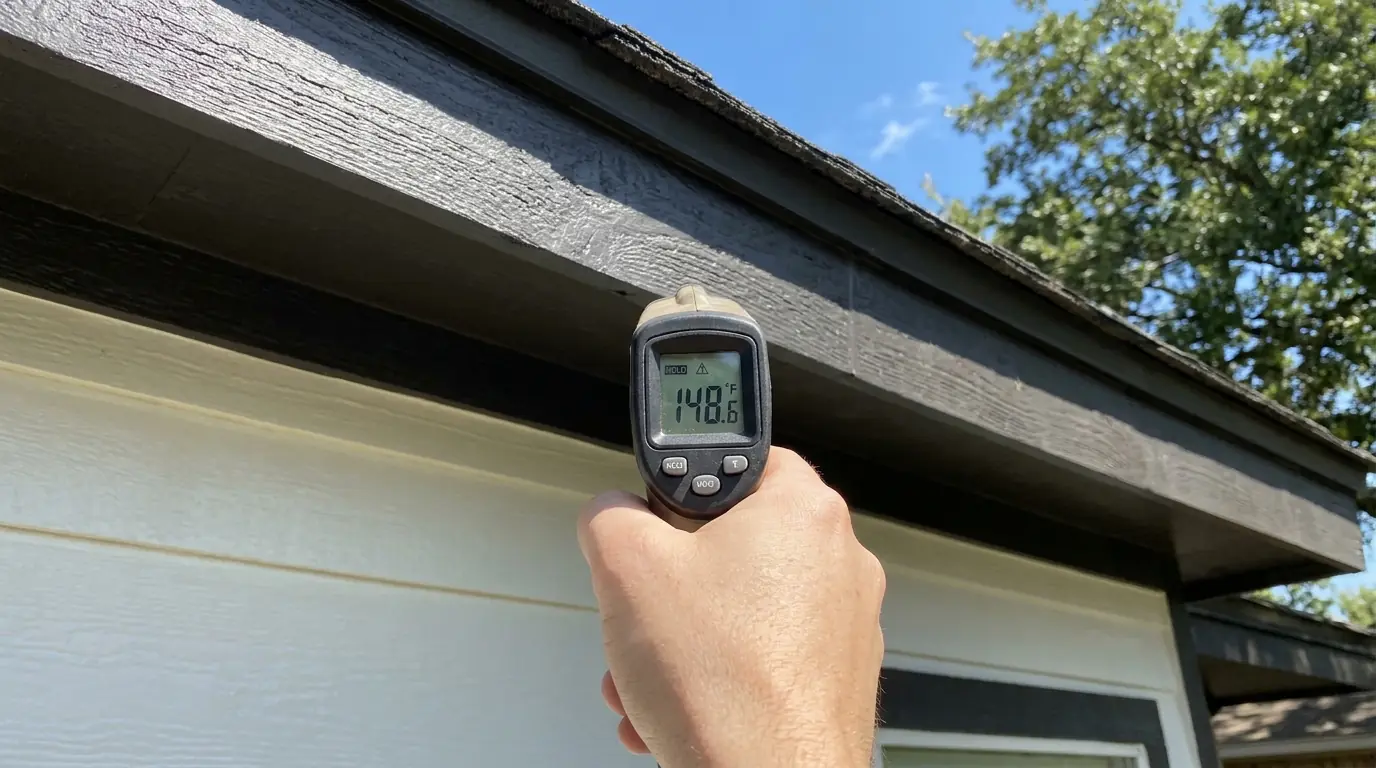
Air temperature and surface temperature are not the same thing. A dark brown fascia board facing west on an August afternoon can read 140 F or more on an infrared thermometer while the weather app says 98. Painters work by the surface, not the forecast.
Overnight conditions matter too. Paint needs several hours above the product minimum after it goes on, and dew settling on a fresh coat in the evening can leave surfactant streaks, a sticky tan or clear residue that shows on darker colors.
Humidity plays a smaller role in Dallas than on the Gulf Coast, but it still matters on still mornings in spring and fall. When the air is close to the dew point, moisture can condense on siding before the sun dries it, so crews wait until the surface is dry to the touch before rolling on the first coat.
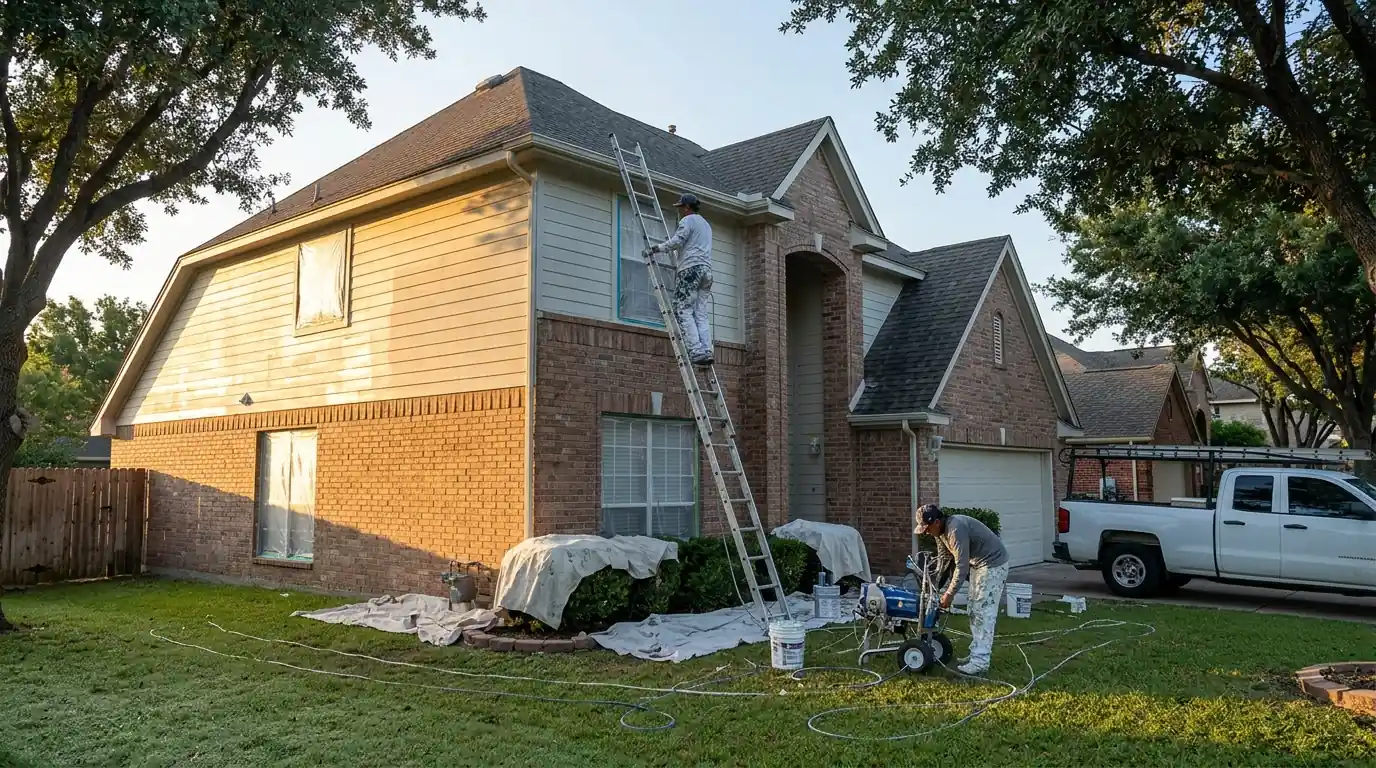
Spring in North Texas: good weather, crowded calendars
March through May is a popular window. Daytime highs in the 70s and 80s are close to ideal, and the surface stays cool enough to paint every side of the house on the same day.
The catch is rain and storms. Spring is one of the wettest stretches of the year in Dallas, and hail season peaks in April and May. A crew may lose a day here and there to weather, and siding needs time to dry after a soaking before primer goes on.
Spring is also when painting calendars fill fastest, partly because homeowners who see hail damage on trim and gutters want it fixed before summer. Calling in late winter usually gets a wider choice of start dates.
Summer painting: early starts and shade chasing
Exterior painting does happen in July and August around Dallas, but the day looks different. Crews start at first light, often around 6:30 or 7:00 in the morning, and plan the sequence so each wall gets painted after the sun has moved off it.
A typical summer order is the west and south walls in the early morning while they are still cool, the east side late in the morning once it falls into shade, and the north side whenever it suits. Work on sun-facing walls usually stops by early afternoon.
Summer schedules also need patience from the homeowner. A crew may finish one wall by 10 in the morning and spend the rest of the day caulking and prepping shaded areas, which looks slow from the street but protects the finish. Heat breaks for the crew are part of the plan, not a sign the job has stalled.
- Avoid painting any surface above about 90 F
- Skip direct afternoon sun on dark colors entirely
- Use open time extenders only where the manufacturer allows
- Rinse dusty siding and let it dry before coating
- Expect shorter work days and a longer total schedule
Fall is the most forgiving season
September can still be hot, but from October into mid-November the weather in North Texas is about as good as it gets for exterior paint. Highs in the 70s and 80s, lower rain totals and mild nights let crews work full days on every side of the house.
Fall also gives the new coat time to cure before winter. Most acrylics are dry to the touch in an hour or two but take two to four weeks to reach full hardness. A coat applied in October is well cured before the coldest nights and before the next spring storm season.
Because fall is so dependable, it books up quickly too. Homeowners who want an October start often call in July or August to hold a spot.
If your home sits under large shade trees, fall also brings leaf drop, which sticks to wet paint. Crews often blow off roofs and gutters each morning and mask or cover the ground below fresh work, so plan for a quick cleanup step on those days.
Winter painting and the cold snap problem
Dallas winters are mostly mild, and plenty of December and February days reach the 50s and 60s. Low-temperature paint lines rated down to 35 F make winter work possible on many of those days.
The risk is the occasional hard freeze or ice storm. A coat applied on a 58 F afternoon followed by a 24 F night may not cure into a proper film. Careful painters watch the 72-hour forecast and stop a day early rather than gamble on it.
Winter suits exterior trim, front doors and smaller jobs that can be finished in one or two warm days. Large full repaints are easier to schedule with fewer weather gaps in fall or spring.
Rain, wind and dry time
Most exterior acrylics need two to four hours without rain before they are safe from washoff, and longer in cool or damp conditions. If a storm line is due in the afternoon, a crew will often paint only the sheltered sides or switch to scraping and caulking.
Wind is easy to overlook. A steady 20 mph south wind dries paint faster than you would expect and blows dust and grass clippings into wet coats. On windy days, sprayers come out less and brushes and rollers do more of the work.
When you plan an exterior repaint, build in a buffer of a few days. Scheduling the pressure washing two or three dry days before the first coat gives siding and fascia and soffit boards time to dry out completely.
Follow-up questions
Can I have my exterior painted during a Dallas August?
Yes, with limits. Crews start at first light, paint each wall after the sun leaves it, and stop sun-facing work by early afternoon. Days are shorter, so a job that takes five days in October may take seven in August. Dark colors in direct sun are the main thing to avoid during the hottest weeks.
How soon after a rainstorm can exterior painting start?
It depends on the surface. Fiber cement and painted trim often dry in one sunny day, while brick, stucco and bare wood can hold moisture for two or three days after a heavy soaking. Painters often check with a moisture meter before priming, especially on masonry and on north walls that stay shaded most of the day.
Is it worth waiting until fall if my house needs paint now?
If the paint is only fading, waiting a few months is fine. If you see peeling, bare wood or open caulk joints, sitting through a summer of storms and sun can turn a paint job into a wood repair job. In that case, start sooner with an early-morning schedule, or at least seal the worst areas first.
Want a painter to look at it?
Call and a person answers 24/7. We will set a walk-through and give you a written scope.