Color Consultation
In-home color sessions with large painted samples, checked against your floors, fixtures and Dallas daylight before any paint is bought.
See color consultationA deep navy or forest green accent wall looks great in photos but turns streaky, patchy, and ragged at the edges when it is rushed or under-primed.
A single accent wall in Dallas typically costs $295 to $685, depending on size, color depth, and how many edges need cutting. Deep colors need a tinted primer and two or three finish coats. Patterns like stripes or geometric shapes add layout time. Most accent walls are done in one day. We set the real number at the in-home walk-through.
The wall that works as an accent is usually the one your eye lands on first: behind a bed, behind a sofa, or the wall with a fireplace. In the open floor plans common in newer Frisco and Prosper homes, a dining area wall can define the space without adding walls. Hallways and stair landings can work too, as long as the wall is visible from the main living area.
Dallas light changes how a color looks. West-facing rooms get hard orange afternoon sun that can make a warm color look loud, while north-facing rooms make cool blues and greens look gray. We put large sample swatches on the wall and suggest you look at them morning and evening. If you want help choosing, a color consultation covers that.
Popular choices right now include deep greens like Sherwin-Williams Pewter Green, inky blues like Benjamin Moore Hale Navy, and earthy terracottas that pair well with Texas limestone. Those colors also sit well next to the cream and gray brick seen on many DFW ranch homes. Darker colors can make a large room feel more intimate without any construction.
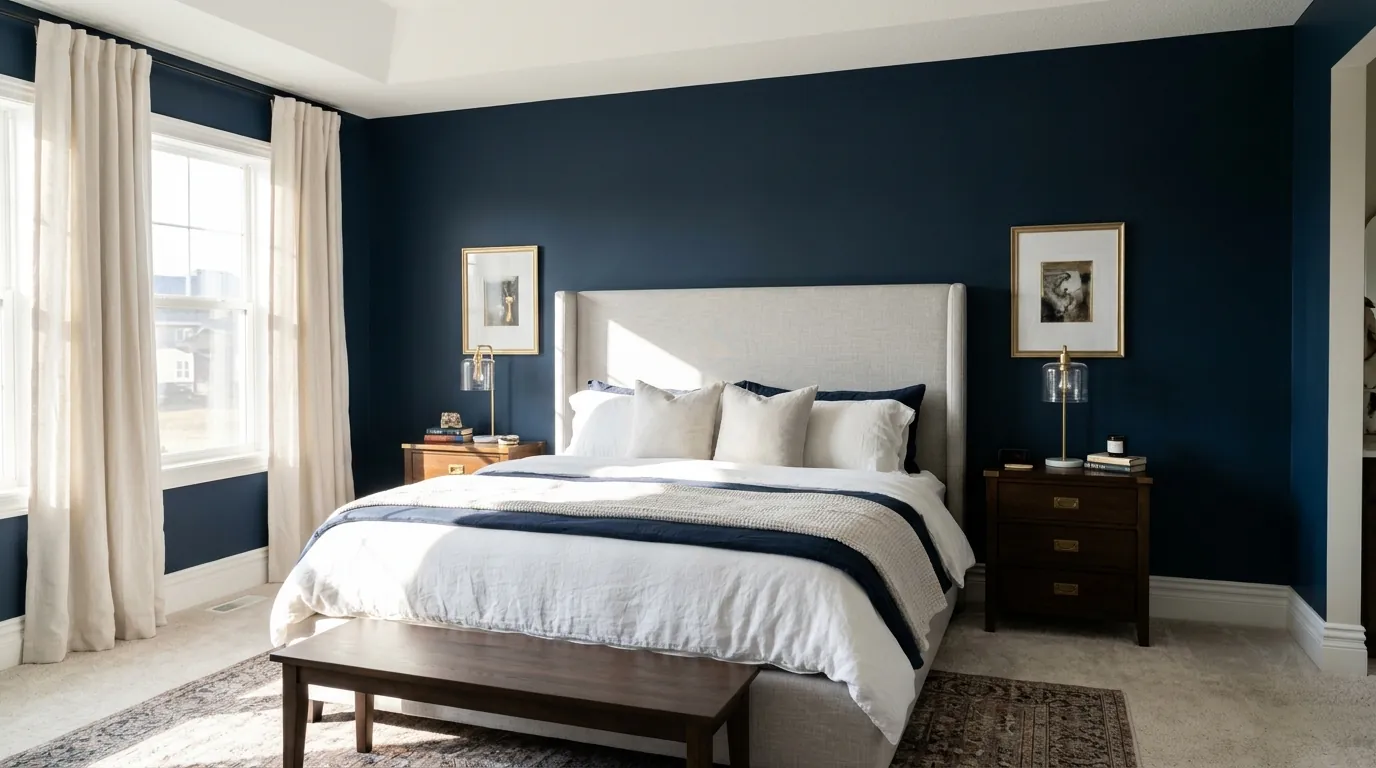
Dark and saturated colors carry a lot of tint and less hiding pigment, so they cover poorly. Rolled straight over a white wall, a deep red or navy can take four coats and still look blotchy. A gray-tinted primer matched to the color family cuts that down to two finish coats in most cases.
Deep colors also show roller marks and touch-ups more than light ones. We use a matte or eggshell finish, roll with a quality microfiber cover, and back-roll each section so the surface texture is even across the wall.
Coverage also depends on the base color. Painting a deep green over an old beige wall usually takes one less coat than painting it over a bright white, which is something we factor in at the walk-through.
The walk-through sets your real number, written line by line.
An accent wall is only as good as its edges. Where the color meets a white ceiling or an adjoining wall, we cut the line by hand with an angled sash brush. On textured walls, tape alone leaves a fuzzy line because paint creeps under it. Cutting by hand takes longer, but it is the only way to get a straight edge on textured drywall.
When tape is the right tool, such as for stripes, color blocks, or a half-painted wall, we seal the tape edge with the base color first. Any bleed is then the base color, and the accent line comes out clean when the tape is pulled. Painter's tape like FrogTape works well for this on smooth walls and holds a cleaner line than standard blue tape.
Patterns take careful layout with a laser level. A geometric accent wall with angled lines can add half a day or more to the job. We mark the layout lightly in pencil first and let you approve it before any color goes on.
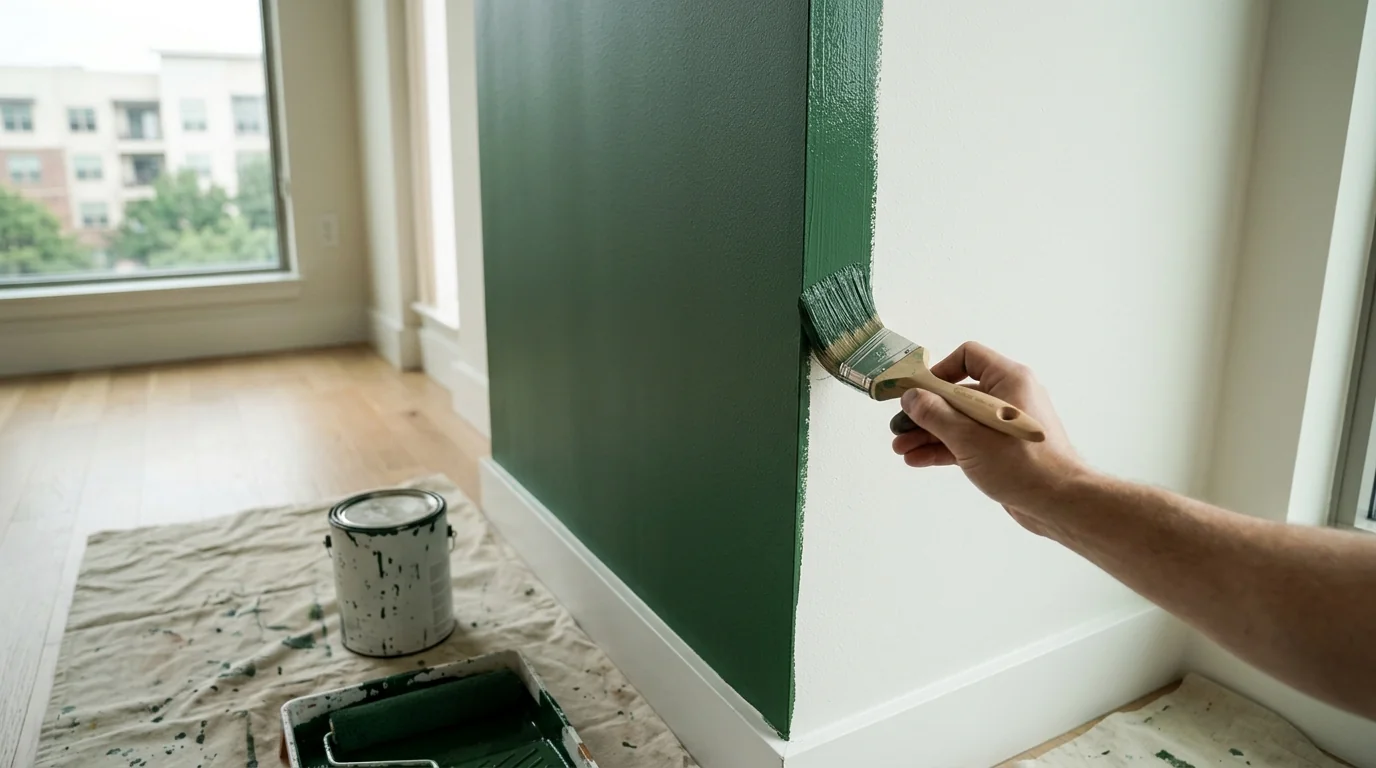
An accent color often makes the other walls look tired by comparison. Many homeowners pair the accent with a refresh of the remaining walls as part of interior house painting, or with trim and baseboard painting so white trim looks fresh against the new color. It also helps to pick the accent color first, then choose the surrounding wall color to suit it.
If the accent wall has any cracks or holes, they get fixed and primed first. A deep color shows every patch and dent, so wall prep matters more here than on a light neutral. Nail holes from old shelves and anchor holes from TV mounts are the most common fixes we make.
We leave you with a labeled quart of the accent color. Deep shades are hard to match later, even with the same formula, because tint batches vary slightly. Store it somewhere cool, not in a hot Dallas garage in summer, which can ruin latex.
Large blank wall behind the bed or sofa
Open floor plan with no defined spaces
DIY dark wall turned out streaky
Fuzzy edges where a dark color meets ceiling
Fireplace wall that blends into the room
Want color without painting the whole house
We look at the room, the light, and furniture placement to pick the wall that will work as the focal point.
Large swatches go up so you can see the color at different times of day before committing.
Holes and cracks are patched, and the wall gets a tinted primer matched to the finish color.
Edges are hand-cut, then the wall is rolled and back-rolled in two or three coats.
We inspect edges and coverage in side light and touch up before cleanup.
Usually a tinted primer plus two finish coats. Very bright reds, yellows, and oranges can need a third coat even with primer because those pigments are naturally translucent. We check coverage after each coat in raking light and add a coat if the color looks uneven, and that possibility is priced in at the walk-through.
Yes. Most Dallas walls have knockdown or orange peel texture, and accent colors look fine on them. The main difference is at the edges: tape will not seal on texture, so we cut the line by hand with a brush. That gives a clean edge without the fuzzy bleed you get from tape on a bumpy surface.
Matte or eggshell for most rooms. Higher sheens make deep colors look shiny and show every roller mark and wall flaw. In a kitchen or entryway where the wall gets touched a lot, a scrubbable matte like Benjamin Moore Regal Select Matte holds up well without the shine of satin.
Going back to a light color takes more work than going dark. A deep navy or charcoal usually needs a coat of primer and two coats of the new color. We mention this up front so the choice is not a surprise later, but it is still a small job compared to repainting a whole room.
In-home color sessions with large painted samples, checked against your floors, fixtures and Dallas daylight before any paint is bought.
See color consultationTwo-coat wall painting with real prep: crack repair, spot priming, sharp cut lines, and furniture moved and covered.
See interior house paintingColor wash, strié, metallic glaze and wood grain finishes for Dallas walls, doors and cabinets, with sample boards made first.
See faux finishes & decorative paintingCall and a person answers, day or night. We will set a walk-through and write up every surface before any work starts.