Exterior House Painting
Full exterior repaints with washing, scraping, caulk and two coats, scheduled around Dallas heat and HOA rules.
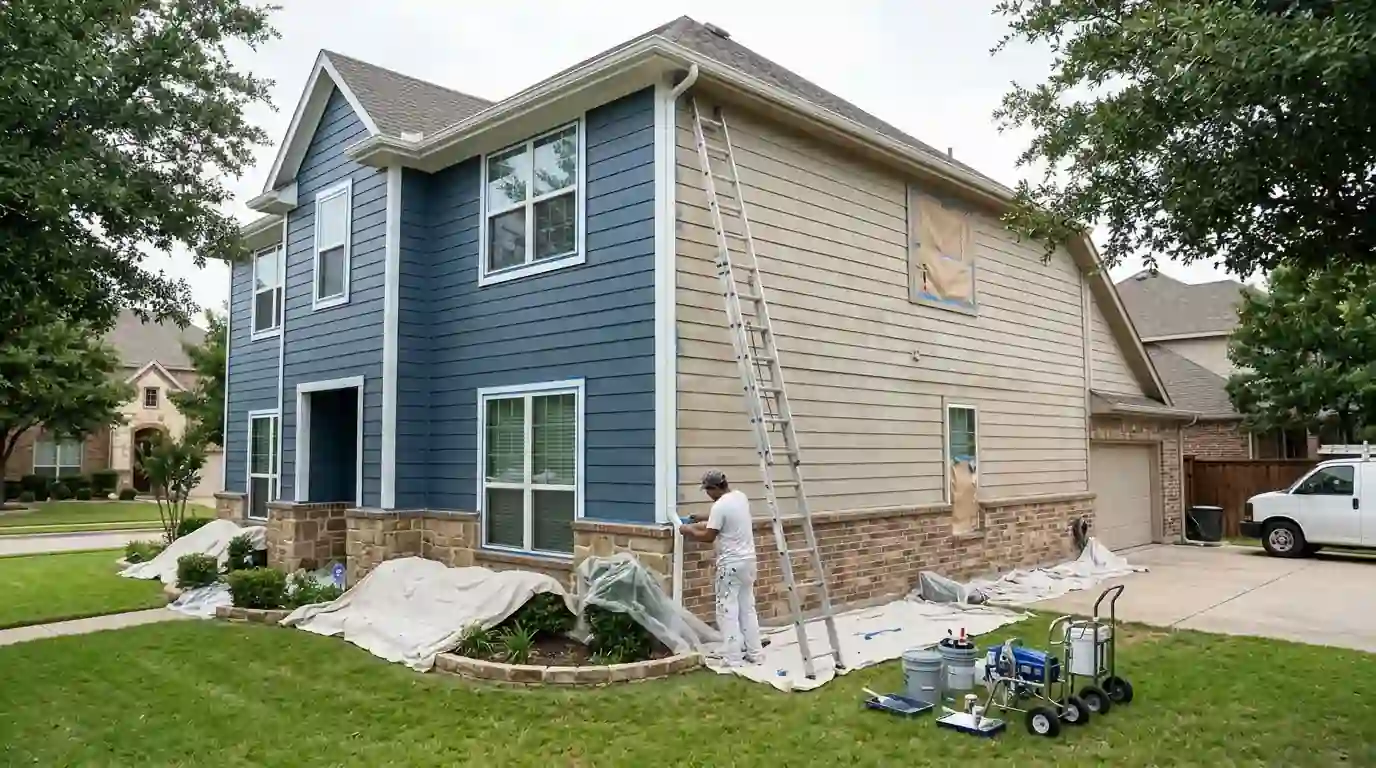
See exterior house paintingSiding on Dallas homes takes direct sun, hail and sprinkler spray every week, so boards fade, swell at the ends and open gaps that paint alone will not close.
Painting the siding on a typical Dallas two-story home runs $4,270 to $8,830, depending on siding type, height and repairs. The job includes washing, scraping, caulking butt joints, priming bare spots and two coats of exterior acrylic. Fiber cement, wood and vinyl each need different prep, and the in-home walk-through sets the real number.
James Hardie fiber cement is the standard siding on many newer homes in Frisco, McKinney, Prosper and Allen. It comes with a factory finish that holds color well at first, then chalks and fades on south and west faces after a number of summers. Hail can also chip the factory coat and leave small dents where paint has flaked off.
Fiber cement takes acrylic paint well once the chalk is washed off. The weak spots are butt joints and nail heads. Builder caulk at those joints tends to shrink and split, so we cut it out where it has failed and recaulk before painting.
We keep the bottom edge of the siding sealed and clear of mulch and soil. Fiber cement wicks water from the cut edge, and swelling at the base of the wall is a common complaint on Dallas homes with heavy sprinkler use. We seal those bottom edges with paint and point out any soil or mulch piled against the wall.
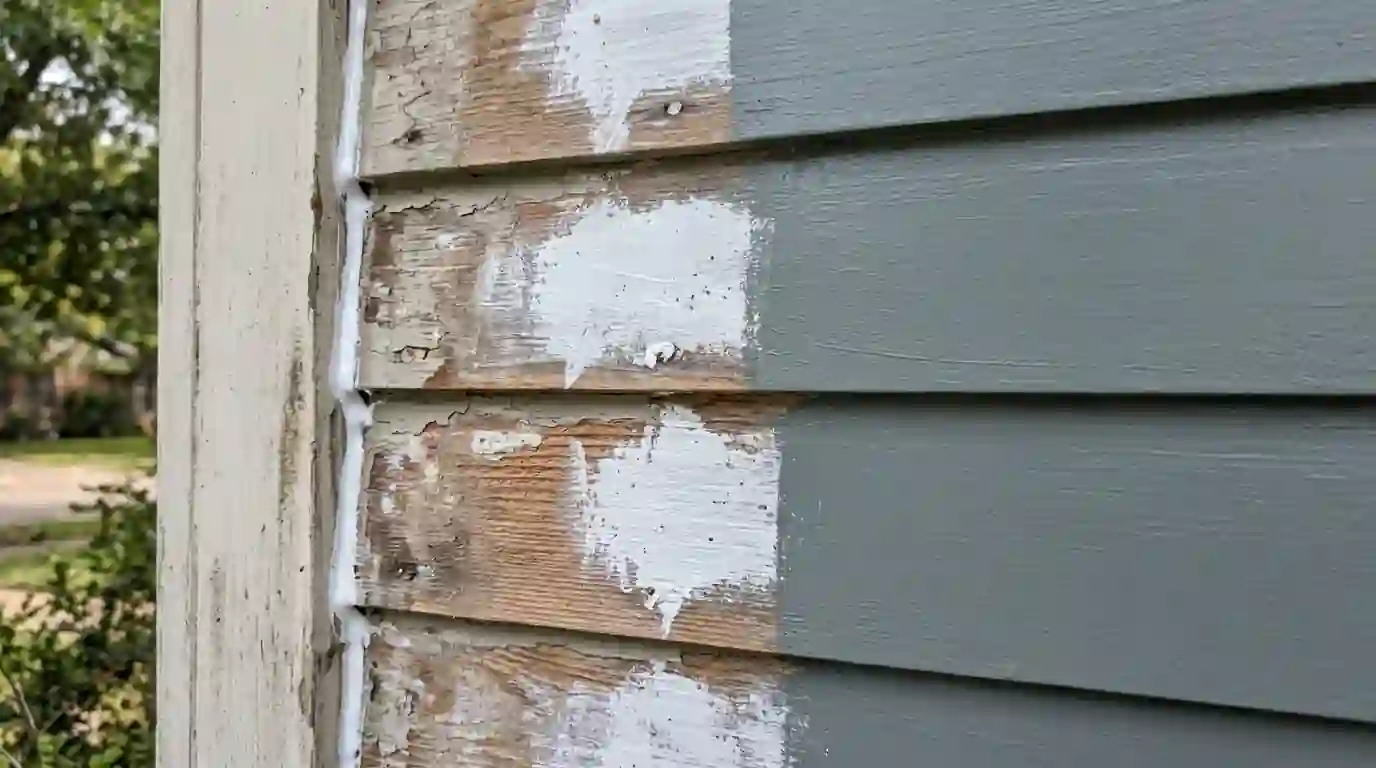
Cedar, redwood and pine lap siding is common on 1920s through 1960s homes in East Dallas, Oak Cliff and the Park Cities. These houses often carry many old coats, and peeling usually starts where layers have lost grip on each other. Paint that has alligatored into small squares usually needs heavier scraping or full stripping in spots.
We scrape and sand to a sound edge, spot prime bare wood with an oil-based or bonding primer and replace split or rotted boards. Wood that has been bare for a while gets primer the same day it is exposed to keep sun from breaking down the fibers. New boards are back-primed before they go on, so moisture does not enter from behind.
Homes built before 1978 likely have lead paint in the lower layers. We follow lead-safe work practices, with containment on the ground, wet scraping and HEPA cleanup, so paint chips do not end up in your yard or garden beds. These practices also keep dust out of the house and away from kids and pets.
The walk-through sets your real number, written line by line.
Vinyl siding can be painted, but only with colors made for vinyl. Sherwin-Williams VinylSafe and similar color lines keep heat gain within what the panels can take. A dark color outside those lines can warp vinyl on a sunny Dallas wall.
Engineered wood siding, such as LP SmartSide, is common on newer garages and additions. It takes paint well, but swollen drip edges and nail pops need attention first, and any panel that is soft at the bottom gets replaced. Its factory primer is fine to paint over once it is clean and dry.
Mixed siding on one house is normal. A brick front with fiber cement sides and a wood gable is a common example, and each section gets the prep it needs before we tie them together with one color plan. Where two siding types meet, we caulk the transition so water does not slip behind.
Sprinklers hitting the siding are one of the fastest ways to ruin a paint job in Dallas. Hard water leaves mineral spots, and constant wetting at the bottom boards lifts paint. We point out heads that need adjusting before we leave. Moving or capping a few heads protects the new finish more than any paint upgrade.
A siding repaint is a natural time to refresh the fascia and soffits and the garage door, since the crew and ladders are already on site. It also keeps every color aging at the same rate. Painting everything together also means one round of masking and one setup.
If your siding has hail dents or cracked boards, we note which pieces need replacing before the repaint, so you are not painting over damage you may want handled first. For a whole-house plan, see exterior house painting. Boards with only light dents can usually be painted as they are.
Chalky, faded siding on south and west walls
Split caulk at fiber cement butt joints
Swollen or flaking bottom boards
Peeling layers on old wood lap siding
Hail dents or cracked boards after a storm
Vinyl that looks washed out and dull
We confirm whether each wall is fiber cement, wood, vinyl or engineered wood and note damage.
Siding is washed to remove chalk and mildew, then dried before scraping or caulking.
Failed boards are replaced and open butt joints and trim seams are recaulked.
Exposed wood and new boards get primer the same day they are uncovered or installed.
Acrylic goes on in sections with a wet edge, using vinyl-safe colors where needed.
Yes. Fiber cement takes a 100 percent acrylic paint well, and you can go lighter or darker than the factory color. The siding just needs a thorough wash to remove chalk, recaulked joints and spot primer on any cut or bare edges. Many Dallas HOAs want approval before a color change, so check that first.
It can if the color absorbs more heat than the panels are rated for. Dallas west walls get very hot in summer, and standard dark paint can cause vinyl to buckle. We use vinyl-safe color lines that are tested for heat buildup, which open up many deeper shades without the warping risk.
That depends on the house. On most older Dallas homes we find a handful of boards near the ground, under windows and at downspouts. During the walk-through we probe suspect areas and count boards, then list replacement as a separate line so you know exactly what is repair and what is paint.
Yes. Two-story walls need taller ladders, sometimes a lift, and more setup time, which is why they cost more per square foot. We also take extra care masking upper windows and roof edges. Most two-story siding jobs in the Dallas area take five to eight working days, depending on prep.
Full exterior repaints with washing, scraping, caulk and two coats, scheduled around Dallas heat and HOA rules.
See exterior house paintingRot repair on sills, door jambs, fascia and siding with epoxy fills or new primed wood, painted to match the house.
See wood rot repairFascia, soffit, window and door trim repaints, including rot fixes and gutters, often done without repainting the whole house.
See fascia, soffit & trim paintingCall and a person answers, day or night. We will set a walk-through and write up every surface before any work starts.