Fence Staining & Painting
HOA-approved stain colors, spray and back-brush application, and careful overspray control for cedar and pine fences across DFW.
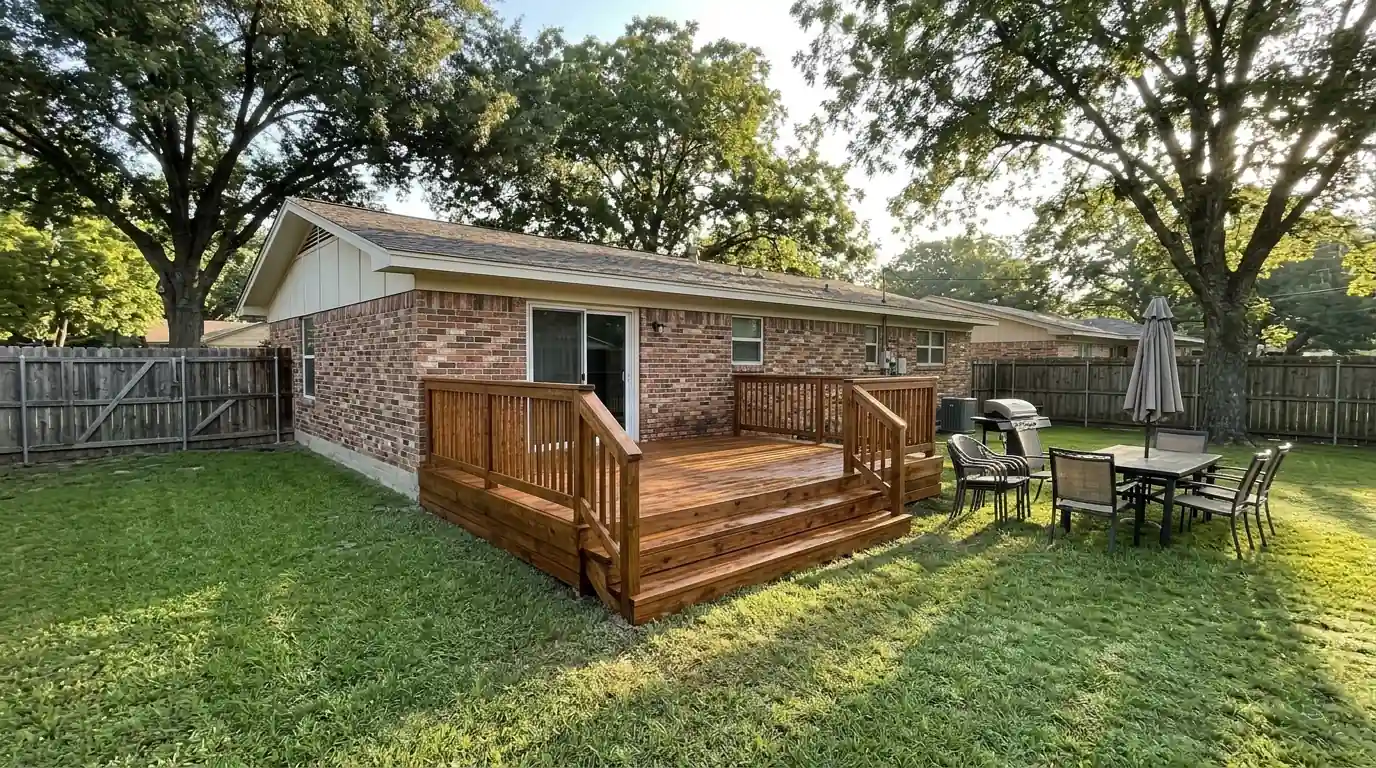
See fence staining & paintingYour deck turned silver-gray after one Texas summer, the boards are splintering, and water now soaks in instead of beading on the surface.
Staining a typical Dallas deck costs $2.35 to $4.15 per square foot of deck surface, with railings and stairs priced in. The work involves cleaning and brightening the wood, letting it dry, light sanding where boards are rough, and applying a penetrating semi-transparent stain in the cooler part of the day. The in-home walk-through sets the real number.
Horizontal deck boards take more UV than any other surface on a Dallas house. Unprotected cedar and pressure-treated pine start graying within months, and the surface fibers break down into a soft, fuzzy layer that sheds stain and catches dirt. Decks on the west side of a house, which catch the hottest late-day sun, usually show it first.
Heat compounds the problem. Boards cup and check as they dry out between rare heavy rains, and hail can bruise soft pine and leave dents that hold water. A good stain cannot reverse all that, but it slows it down a lot when applied to clean, sound wood. Spring storms that come through DFW with hail can also strip loose stain off in patches.
Because foot traffic and sun wear horizontal surfaces faster, Dallas decks typically need restaining every two to three years, while the railings often last longer between coats. Covered sections under a roof or pergola can usually wait longer than open boards.
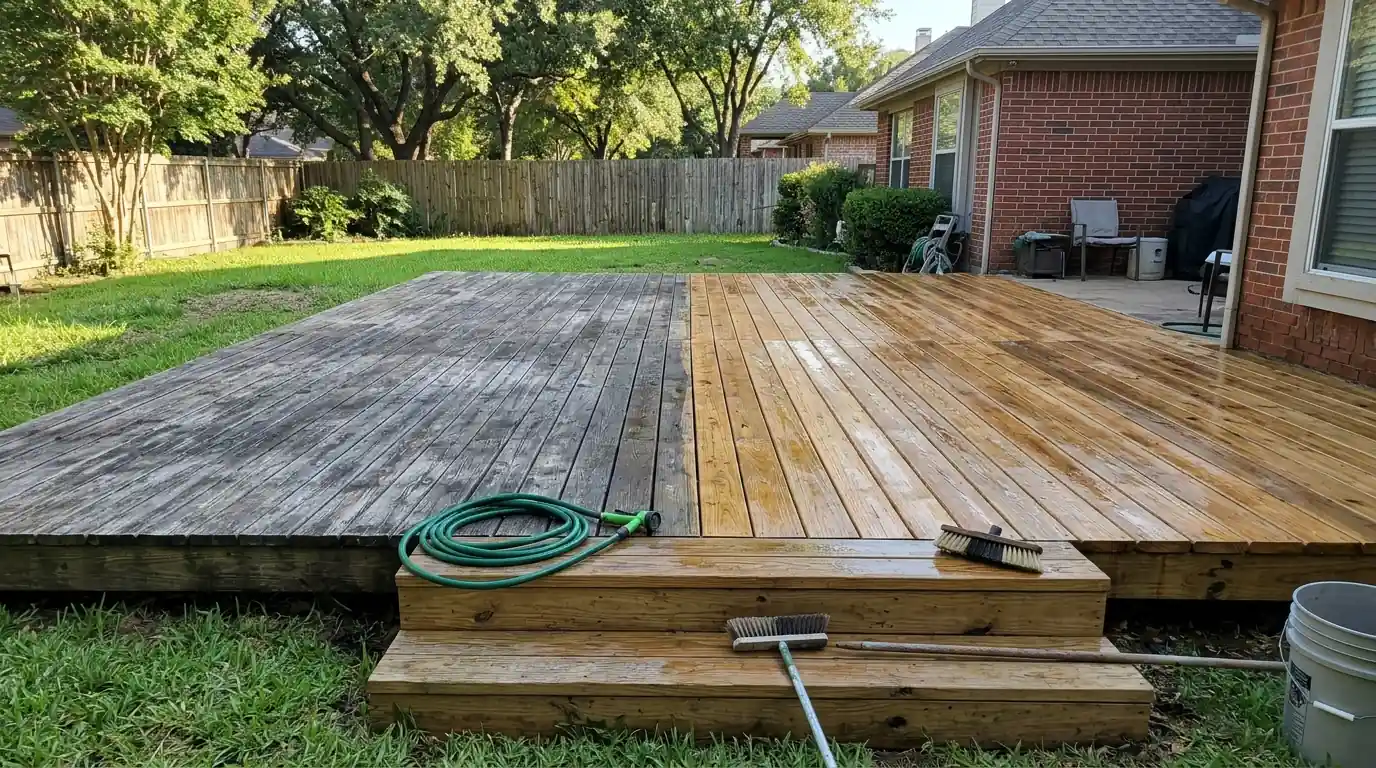
Stain only works if it can get into the wood. We wash the deck with an oxygen-based cleaner to lift gray fibers, mildew and dirt, then rinse at low pressure so the wood is not gouged. High-pressure blasting raises the grain and leaves wand marks that show through stain. It also takes more stain to fill a fuzzy, overblasted surface.
A second step with an oxalic acid brightener restores the natural wood color and neutralizes the cleaner. Then the deck has to dry, usually two to three days in Dallas weather. We check with a moisture meter or a simple water-drop test before staining.
Dirt and leaves packed between boards are cleared with a putty knife so water can drain and the board edges take stain. Plants along the deck edge are wetted down and covered before cleaner goes on, and we rinse them again afterward.
The walk-through sets your real number, written line by line.
For most Dallas decks we recommend a penetrating oil or water-based semi-transparent stain. It soaks in, shows the grain, and wears away gradually rather than peeling. Solid stains and paint look good the first year, but on horizontal boards they tend to peel in sheets once foot traffic and sun break the film. Semi-transparent stain also recoats cleanly next time, since there is no film to scrape.
Products such as Sherwin-Williams SuperDeck or Benjamin Moore Arborcoat come in transparent, semi-transparent and solid versions. More pigment means more UV protection, so a mid-tone cedar or brown color outlasts a clear finish under full sun. Clear water sealers with no pigment look natural on day one but tend to gray again within a single summer in full sun.
New pressure-treated lumber is usually too wet to stain right away. In Dallas heat it often dries enough in a few months, but we test it before scheduling rather than guessing. Composite and PVC decking is a different material and is usually cleaned rather than stained.
Deck stain applied in direct afternoon sun, or on boards hotter than about 90 F, flashes dry before it soaks in and leaves lap marks. From June through September our crews start at first light and work shaded sections as the sun moves, watching the forecast for rain within a day of application. A deck stained at 7 a.m. in August can be fully coated before noon heat hits the boards.
If boards are soft or rotted, they should be replaced before staining, and our wood rot repair crew can handle that during the same visit. The house wall behind the deck often needs attention too, and pressure washing plus fence staining can be scheduled together so the whole backyard matches.
Call to set up a walk-through. We measure the deck, check board condition and talk through color options with samples. Mention any spots where water pools or boards feel springy, since those often hide rot under the surface.
Deck boards have turned silver or gray
Water soaks in instead of beading up
Splinters on stairs and handrails
Old solid stain is peeling in patches
Black mildew spots in shaded corners
Boards are cupping or showing new cracks
We measure the deck, stairs and railings and check for soft boards, popped nails and old coatings.
An oxygen cleaner and oxalic brightener lift gray fibers and restore wood color, followed by a low-pressure rinse.
The wood dries for two to three days, and we test moisture before any stain goes on.
Raised nails are set, loose boards refastened, and rough stair treads and handrails sanded smooth.
Penetrating stain is applied in the cool morning hours, back-brushed into the grain, and kept off the house.
Most Dallas decks need a fresh coat of semi-transparent stain every two to three years on the walking surface. Railings and vertical posts often go four or five years. A deck in full western sun wears faster than one under tree cover. If water stops beading on the boards, it is time to look at restaining.
Not well. New stain bonds to the loose old film, which then peels and takes the new coat with it. We remove peeling solid stain with a chemical stripper and sanding, then switch to a penetrating product if the wood allows. If the wood is too damaged, a new solid coat after full prep may be the realistic option.
Light foot traffic is usually fine after about 24 hours in warm Dallas weather. Wait 48 to 72 hours before putting furniture, grills and planters back, since heavy items can stick to or mark fresh stain. Keep pets off until the surface is dry to the touch and no longer smells strong.
Yes, once it dries out. New treated pine is soaked with preservative and water, so stain will not absorb right away. In Dallas heat, the wood is often ready within a few months. Staining it in that first year prevents the early graying and checking that make an older deck look worn.
HOA-approved stain colors, spray and back-brush application, and careful overspray control for cedar and pine fences across DFW.
See fence staining & paintingTannin-blocking primer, sealed end grain and full-coverage paint or stain for cedar pergolas and attached patio covers in DFW.
See pergola & patio cover paintingRot repair on sills, door jambs, fascia and siding with epoxy fills or new primed wood, painted to match the house.
See wood rot repairCall and a person answers, day or night. We will set a walk-through and write up every surface before any work starts.