Pressure Washing
Soft washing for siding, stucco and painted trim, plus surface cleaning for driveways, walks and patios across Dallas.
See pressure washingPorch floors take sun, rain runoff and shoes every day, so the paint that looks fine on a wall peels off a Dallas porch floor within a season or two.
A typical Dallas porch or patio floor job runs $640 to $1,890 for about 200 square feet and takes two to three days including cure time. The work covers cleaning, scraping or grinding, repairs, primer and two coats of floor-rated porch paint or a concrete stain with grit added. The in-home walk-through sets the real number.
A porch floor is the only painted surface on the house that people walk on, drag chairs across and hose down. Wall paint is built to flex and breathe, not to stand up to grit ground in by shoes, so it scuffs through at the doorway and along the steps first. Once bare spots open up, water gets under the film and the peeling spreads outward.
Dallas adds its own stress. A covered front porch on a Lakewood bungalow may stay fairly shaded, but an open patio slab on the west side of a Richardson ranch can top 140 F in a July afternoon. That heat softens coatings, and the cool evening that follows shrinks them again. Floors that see sprinkler overspray every morning also stay damp at the edges, which is where most porch paint lifts.
Worn floors are also a slip risk. Glossy paint on a sloped concrete porch turns slick after a summer storm, and older wood porches with cupped boards hold puddles. Part of every job we do is picking a coating and texture that gives shoes some grip without feeling like sandpaper on bare feet.
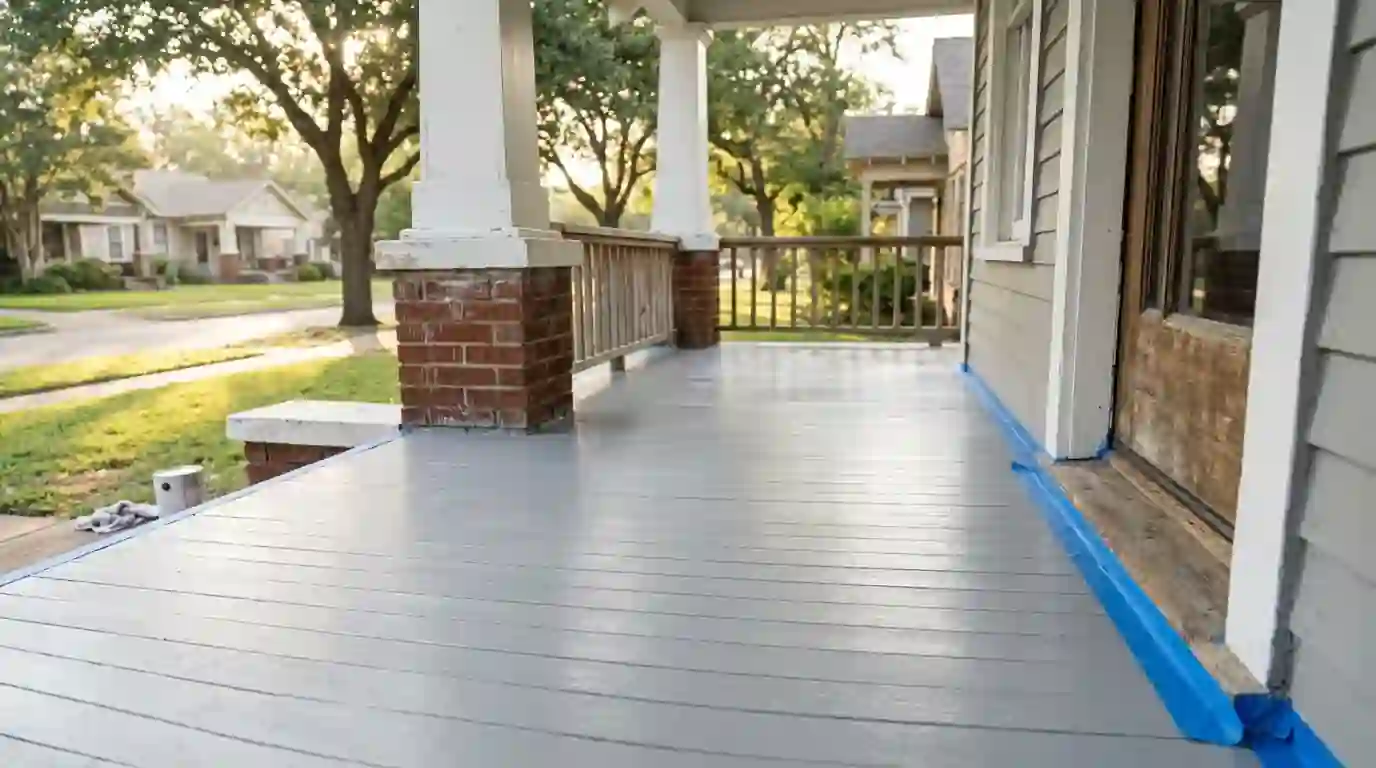
Tongue-and-groove wood porch floors are common on 1920s and 1930s homes around Swiss Avenue, the M Streets and Winnetka Heights. These boards were made to be painted, and they take an oil-modified or acrylic porch and floor enamel well once loose paint is scraped and bare wood is primed. We check the board ends and the outer edge first, because that is where rot starts. Soft boards get replaced through Wood Rot Repair before any paint goes on.
Concrete patios, front stoops and covered back porches on newer builds need a different approach. Bare concrete takes a penetrating concrete stain or a masonry porch paint. Concrete that was sealed or painted before needs testing so the new coat sticks to what is already there. For a garage slab with hot tires and chemicals, a full epoxy floor coating is the stronger choice, while porch paint suits foot traffic.
Painted brick and pavers can be coated too, though the mortar joints and pavers move independently, so we talk through how the finish will age before you commit.
The walk-through sets your real number, written line by line.
Floor coatings fail from the bottom up, so most of our time goes into prep. We start with a pressure wash or a scrub with a degreaser to lift dirt, pollen and mildew, then let the surface dry fully. Wood needs at least a day of dry weather before it takes primer.
On wood, we scrape and sand any loose or flaking paint, feather the edges so old layers do not show through, and set raised nails. On concrete, we grind or etch smooth spots so the coating has something to bite into, and we patch spalled areas and crack lines with a patching compound made for exterior slabs. North Texas clay soil moves slabs, so hairline cracks often come back. We tell you up front which cracks are likely to show again.
Before the finish coats, we caulk the gap where the floor meets the house wall and the posts so water does not run under the new film.
Lighter grays and tans stay cooler underfoot and hide dust, while dark colors look sharp but show every footprint and get hot in the sun. Many porch paints come in a limited color set, so we bring the actual chips to your porch rather than matching from a fan deck indoors.
We add a fine grit to the final coat on steps, sloped areas and pool-side patios. You choose how much texture you want, and we can brush out a test board so you can feel it with your shoes off. Coatings need dry weather and surface temperatures in the range the label calls for, so summer jobs start early in the morning and wrap before the slab heats up.
Expect light foot traffic after about a day and furniture back in place after two to three days, depending on the product and the weather.
Paint worn through at the front door threshold
Peeling edges along the porch floor perimeter
Concrete patio looks chalky, stained or faded
Floor turns slick after rain or sprinklers
Soft or cupped boards on a wood porch
Old coating flaking off the porch steps
We check the floor material, test old coatings for adhesion and look for soft boards or slab damage.
The floor gets washed or scrubbed, then left to dry fully before any sanding or grinding.
We scrape, sand or grind, patch cracks, replace bad boards and caulk the wall line.
Bare wood or concrete gets primer, then two coats of floor-rated paint or stain with grit where needed.
We tape off the area and tell you when to walk on it and when furniture can go back.
We do not recommend it. Wall paint is made to flex on vertical surfaces and wears through quickly under shoes and chair legs. Porch and floor enamels are harder and built for foot traffic, and concrete stains soak into the slab instead of sitting on top. The right product depends on whether your floor is wood, bare concrete or already coated.
We mix a fine anti-slip grit into the final coat, or broadcast it onto wet paint on steps and sloped spots. A lower-sheen finish also helps, since high gloss turns slick when wet. We can brush a sample board so you can feel the texture before we coat the whole floor, and adjust the amount of grit to suit bare feet or work boots.
Repeat peeling usually comes from moisture under the film, paint applied over a dusty or sealed surface, or a wall paint that was never meant for floors. On concrete, sprinkler water and a missing wall joint seal are common causes. We find the source during the walk-through and fix it, because a new coat over the same problem peels the same way.
Sometimes. We test the old sealer with tape and a water drop to see if it is still firmly attached and whether new coating will stick. Some sealers can be scuffed and coated over, and others need to be stripped or ground off first. That test decides the prep method, and we explain the result before giving you a price.
Soft washing for siding, stucco and painted trim, plus surface cleaning for driveways, walks and patios across Dallas.
See pressure washingRot repair on sills, door jambs, fascia and siding with epoxy fills or new primed wood, painted to match the house.
See wood rot repairCleaning, brightening and penetrating stain for cedar and pressure-treated decks, applied early in the day to beat Dallas heat.
See deck stainingCall and a person answers, day or night. We will set a walk-through and write up every surface before any work starts.