Cabinet Staining & Refinishing
Gel stain to go darker, a full strip to go lighter, and a fresh clear topcoat that stands up to kitchen grease and cleaning.
See cabinet staining & refinishingYour stained trim, beams or built-ins look dull, scratched or orange, and you want the wood brought back without painting over the grain.
Interior wood staining in Dallas typically runs $6.35 to $11.80 per linear foot of trim, or $385 to $640 per door both sides. Many jobs need only a clean, scuff and fresh clear coat. Color changes require stripping, sanding and new stain. Older homes get lead-safe work practices. The in-home walk-through sets the real number.
A lot of stained woodwork in Dallas homes looks worse than it is. Clear coats on baseboards and door casings wear from vacuums, pets and hands, and the dull, scratched layer makes the wood under it look tired. In many cases the stain itself is fine. Window stools and the bottom rails of doors tend to look the worst.
For that kind of wear we clean the wood with a mild degreaser, scuff the old finish with fine pads, touch up scratches with a stain marker or tinted glaze, and apply a fresh clear coat. It costs far less than stripping and keeps the original patina that older homes are known for. Scratches on closet doors and hallway casings respond well to this approach.
We test a hidden spot first to see whether the old finish is shellac, lacquer or polyurethane, since each one bonds differently with new clear. New clear over an incompatible old finish can wrinkle or stay soft, so this check saves a lot of grief.
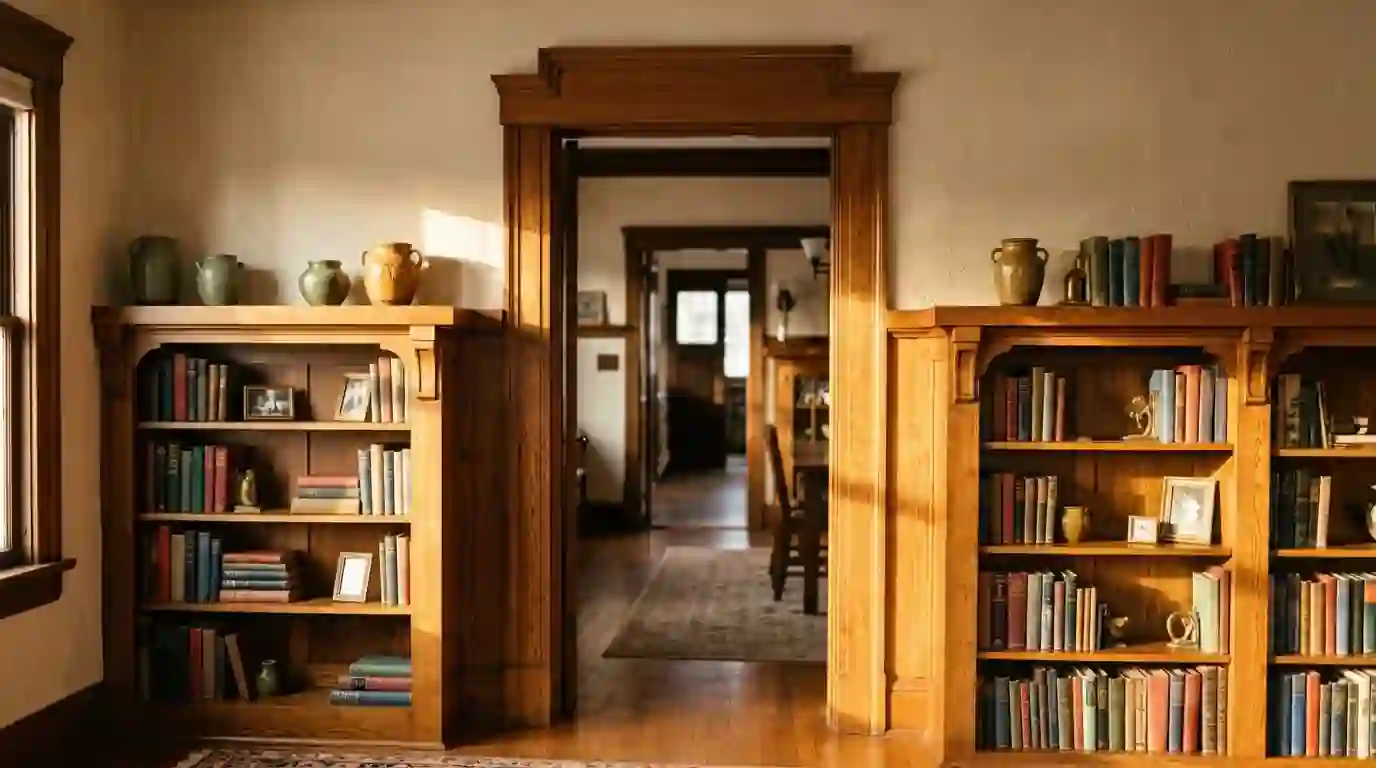
Craftsman and Tudor homes in Swiss Avenue, Lakewood, Munger Place and Kessler Park often still have original stained pine or oak trim, built-in bookcases and paneled doors. That wood is usually finished with old shellac or varnish that has darkened to amber over decades. Many owners in those neighborhoods want that color kept, not stripped away.
When the owner wants it restored rather than painted, we strip carefully with a chemical stripper instead of heavy sanding, which preserves crisp profiles on moldings. Homes built before 1978 may have lead in old finishes on nearby painted trim, so we use lead-safe work practices, including plastic containment, HEPA vacuums and wet cleanup.
Some original pieces have missing trim, cracked panels or old hardware holes. We patch with matching wood or tinted filler, then blend the repair into the surrounding finish so it does not show from across the room. Replacement moldings milled to match can be stained to sit next to the original.
The walk-through sets your real number, written line by line.
The clear coat sets the final look as much as the stain. Oil-modified polyurethane adds a warm amber tone that suits darker oak and walnut. Waterborne polyurethane stays clear and does not yellow, which matters on lighter stains, white oak and maple. We show samples of both on your wood before choosing.
Sheen matters too. Satin is the usual choice for trim and built-ins, since it hides small dents and fingerprints. Semi-gloss suits doors, kitchen islands and window seats that get handled a lot. Matte finishes look modern on beams and paneling but show smudges more on surfaces people touch.
Dallas winters bring very dry indoor air, which can open small gaps at miter joints. We fill those with tinted wood putty after staining so they blend with the color. Running a humidifier in winter also helps the wood stay stable.
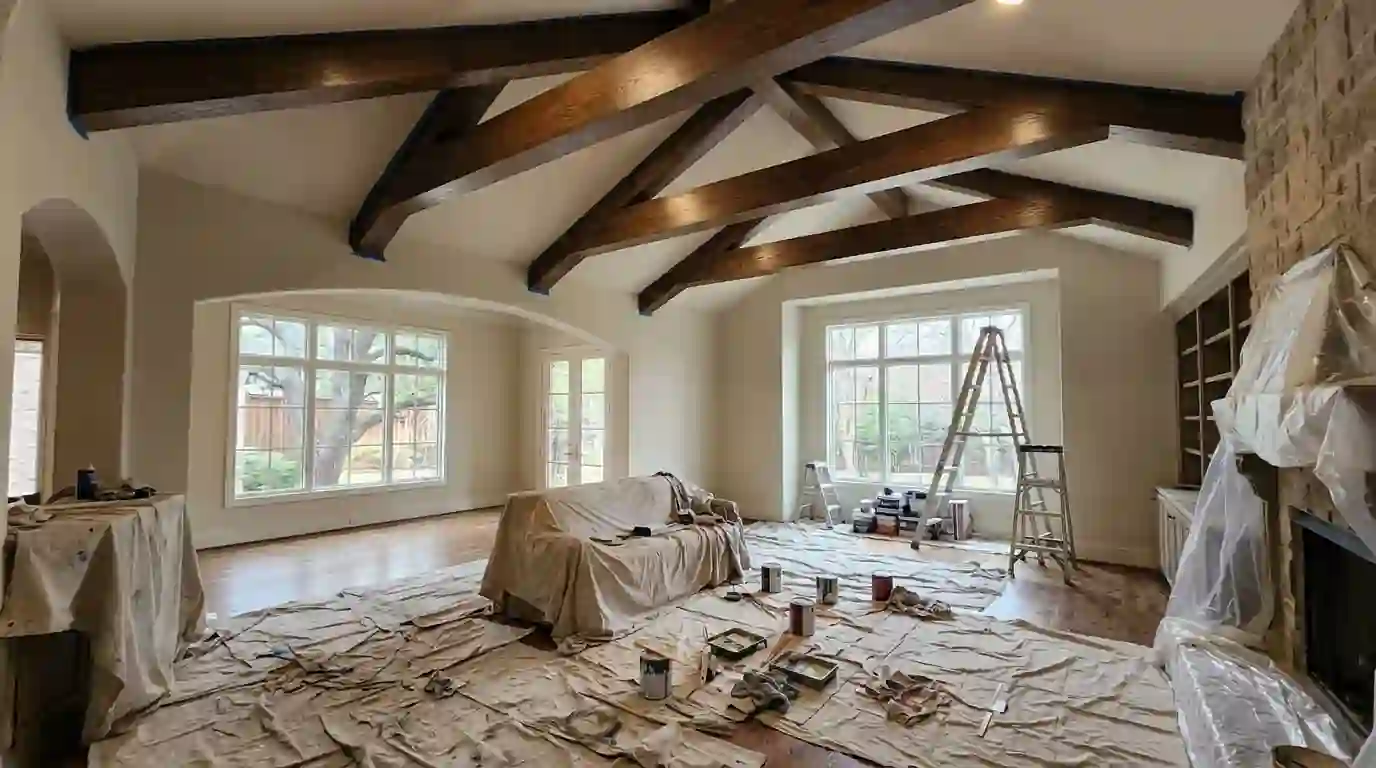
Ceiling beams in newer Preston Hollow and Highland Park builds are often stained wood or faux beams that need a consistent tone. Wood paneling in dens and studies from the 1960s and 1970s can be refreshed with stain and clear or, if you prefer, primed and painted instead. Faux beams made of foam or resin take a gel stain or glaze rather than regular penetrating stain, since there is no real grain to soak in.
If your kitchen cabinets carry the same wood, cabinet staining and refinishing lets us match tones throughout. Painted trim nearby falls under trim, baseboard and door painting, and stairs with stained treads and rails are handled through staircase and railing painting.
Call to set up a walk-through. We identify the existing finish, check for lead-era coatings and bring stain samples for your wood. If you have a piece of the original trim stored in the garage or attic, set it out for us to use as a match.
Stained trim is dull and scratched along floors
Wood has turned orange or yellow with age
Built-in shelves feel sticky or gummy
Water rings or white marks on wood surfaces
New wood repairs do not match old trim
Original woodwork has chips and worn edges
We test a hidden spot to tell shellac, lacquer and polyurethane apart and check for lead-era coatings.
Floors, walls and furniture are covered, and plastic containment goes up for any stripping or sanding.
Worn wood gets cleaned and scuffed, while color changes are stripped and hand sanded.
Stain is matched to an approved sample and a sealer coat goes on to even out absorption.
Two coats of clear in your chosen sheen go on with light sanding between them, then gaps are filled.
Usually, yes, with some patience. New wood absorbs stain differently than old wood that has aged for decades. We mix stains and glazes on scrap of the same species, then compare them against your existing trim in daylight and room light. It often takes two or three rounds of samples to get a close match.
To go lighter or switch to a different tone, yes. Stain cannot cover darker stain without looking muddy. To go slightly darker, a gel stain or tinted clear over the scuffed old finish can work without stripping. We test on a hidden spot so you see the result before we commit to the full room.
Waterborne clear coats have little odor and dry quickly. Oil-modified finishes and chemical strippers smell more, so we ventilate with fans and keep doors to the work area closed. Sanding happens inside plastic containment with HEPA vacuums, which keeps dust out of the rest of the house.
Often, yes. Solid wood paneling can be cleaned, scuffed and given a fresh stain and clear coat. Veneer paneling from the 1970s has a very thin wood layer that can sand through quickly, so we avoid heavy sanding on it. In some cases, priming and painting veneer paneling is the more durable choice.
Gel stain to go darker, a full strip to go lighter, and a fresh clear topcoat that stands up to kitchen grease and cleaning.
See cabinet staining & refinishingSanded, caulked, and enameled trim, baseboards, and doors with a hard, wipeable finish that resists chips and scuffs.
See trim, baseboard & door paintingBalusters, handrails, newel posts, risers, and skirt boards updated in paint or stain while one side stays walkable.
See staircase & railing paintingCall and a person answers, day or night. We will set a walk-through and write up every surface before any work starts.