Deck Staining
Cleaning, brightening and penetrating stain for cedar and pressure-treated decks, applied early in the day to beat Dallas heat.
See deck stainingYour pergola or patio cover is peeling on top of the rafters, cedar tannin is bleeding through the white paint, and the beams look tired from the yard.
Painting or staining a typical 12 by 16 foot Dallas pergola or attached patio cover runs $1,340 to $3,870. The work includes scraping, filling checked wood, sealing end grain, priming cedar with a tannin-blocking primer, and two finish coats applied from ladders or a small scaffold. Tongue-and-groove ceilings cost more. The in-home walk-through sets the real number.
The top edges of pergola rafters and beams face the sky all day. In a Dallas summer those surfaces bake well above air temperature, then cool fast after storms. The paint film expands and shrinks hundreds of times a year, and it fails there first while the shaded sides still look fine. Top surfaces can look chalky and bare while the sides still look freshly painted from below.
End grain is the other weak spot. The cut ends of rafters drink up water like straws, so paint on those ends lifts quickly and rot can start inside. We sand and seal every end cut, and on sound but checked wood we fill larger cracks with exterior wood filler before priming.
From the ground you may not see the worst damage. We get on a ladder during the walk-through and look across the tops of the rafters before we price the job. Bird droppings and leaf debris trapped on top also hold moisture against the wood.
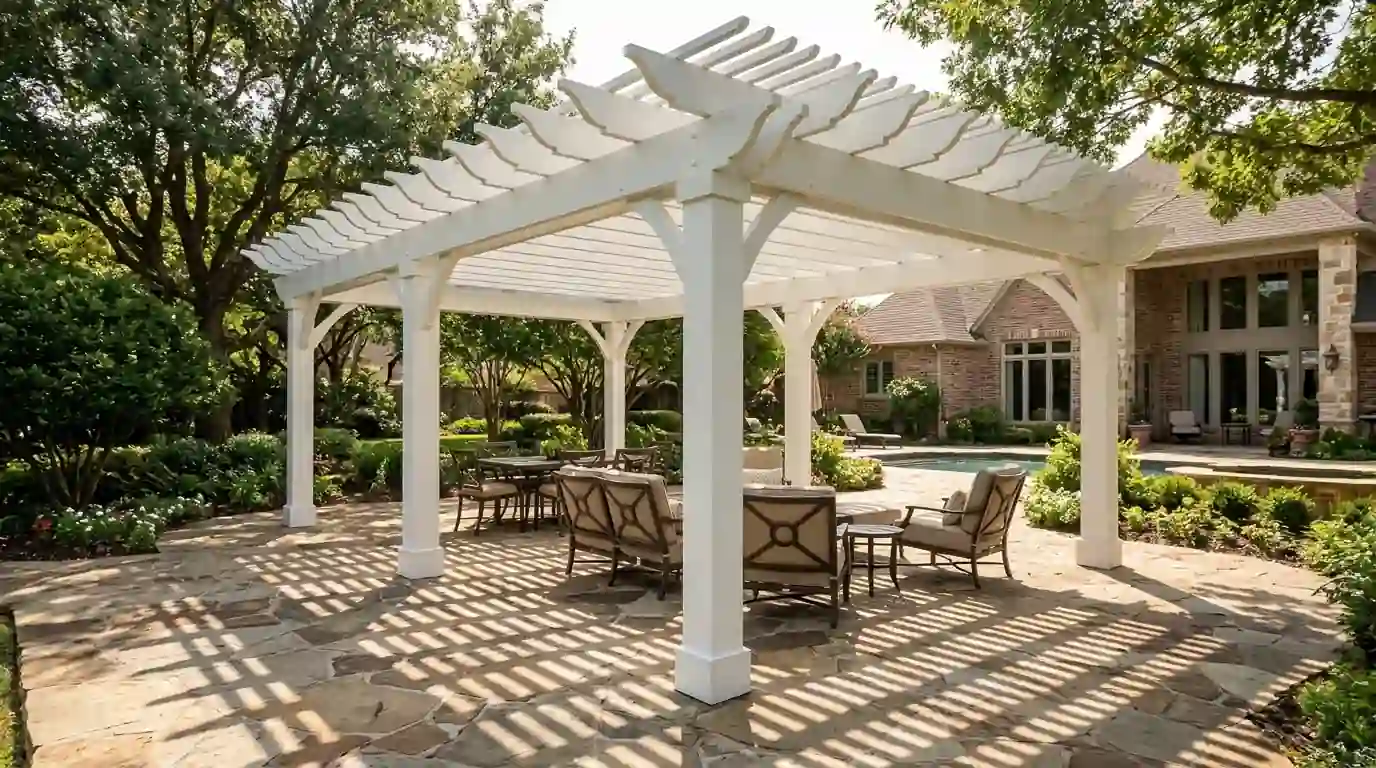
Most backyard pergolas in North Texas are built from cedar or pressure-treated pine. Cedar has natural tannins that rise through water-based paint and leave tan or pink streaks, especially on white and light gray finishes. A stain-blocking exterior primer, often an oil-based or specialty acrylic product, stops that bleed. On a natural cedar look, a solid or semi-solid stain avoids the bleed problem entirely.
Pressure-treated pine needs to be fully dry before painting, and it tends to check and twist more than cedar. Painting it early traps moisture and causes peeling. On newer structures we test moisture before scheduling. Most treated lumber in Dallas heat is ready within two to four months of building.
Older pergolas sometimes have layers of failed latex over the original oil paint. Where that happens, we scrape back to the layer that is still holding tight and prime with an oil-based product so the new coats have a stable base.
The walk-through sets your real number, written line by line.
Many Dallas homes have patio covers attached to the house with a beamed frame and a tongue-and-groove ceiling underneath. Those ceilings are often stained rather than painted, and they collect mildew and spider webs in the corners. We clean them with a mild mildew wash, let them dry and recoat with a matching semi-transparent stain or a clear exterior finish. Ceilings that were never sealed often show dark water lines along the house wall.
Ceiling fans, lights and speakers get covered or removed with your OK, and the house wall and windows under the cover are masked. If the cover ties into the roofline, we check the fascia where it meets the house, since water often leaks there and softens the wood.
Colors usually match the house trim so the structure looks planned rather than added on. Your HOA may need to approve exterior color changes in some neighborhoods. Freestanding pergolas rarely need approval for repainting in the same color, but a new color can.
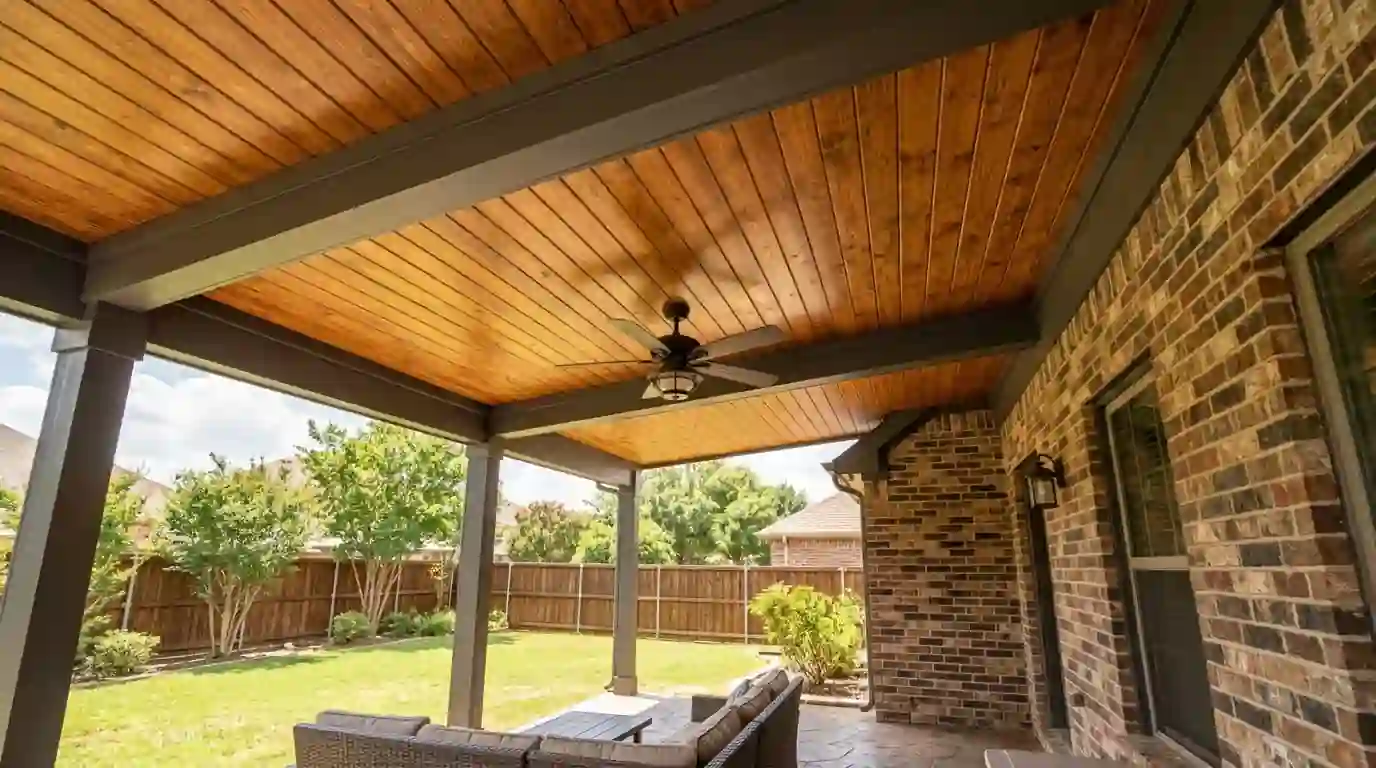
Painting overhead in July is slow work. We start early and plan around shade, since the sunny side of a pergola can reach surface temperatures where paint dries before it levels. Late afternoon storms in spring also limit how much we leave unprimed at the end of each day. Ladders are placed on plywood pads to protect pavers, stained concrete and turf.
If rafters or posts are soft, wood rot repair should come first so new paint is not sitting on damaged wood. Matching the deck and fence in one trip is easy to arrange through deck staining, and nearby trim and fascia can be refreshed with fascia and soffit painting.
Call to set up a visit. We look at the tops of the beams, check for rot and give you a price on paint or stain. Let us know about vines, shade sails or string lights on the structure, since those need to come down or be tied back first.
Paint is peeling on top of rafters and beams
Tan or pink streaks bleeding through white paint
Rafter ends look dark, split or soft
Stained ceiling has mildew or water marks
Gray, weathered wood on an unpainted pergola
Patio cover color no longer matches the house
We check rafter tops, end grain and posts from a ladder and note any rot or deep checks.
Loose paint comes off all sides, checked wood is filled, and surfaces are sanded smooth.
End grain is sealed and cedar gets a tannin-blocking primer so streaks do not come through.
Two coats of exterior paint or solid stain go on from ladders or scaffold, working with the shade.
Masking comes off fans, walls and the patio, and the slab is swept and rinsed.
Stain keeps the wood look and is easier to maintain, since it wears gradually and recoats without scraping. Paint gives a crisp color that matches house trim but needs a tannin-blocking primer and more prep to hold up on the top surfaces. In full Dallas sun, a solid stain is a good middle ground with strong UV protection.
That is tannin bleed from cedar. Water-based paint applied directly to cedar lets the natural extractives rise through and discolor the surface, and rain and heat speed up the bleeding. The fix is to clean the surface, apply an oil-based or stain-blocking primer, and then repaint with your chosen topcoat.
Yes. Aluminum covers need a different prep than wood: cleaning off chalky oxidation, scuffing the factory finish, and priming with a bonding primer made for nonferrous metal. A quality exterior acrylic topcoat then bonds well. We check for dents or loose panels first, since paint will not hide hail damage on metal.
With good prep and a primer suited to the wood, painted pergolas typically go five to seven years on the sides and less on the top faces of the rafters. Stained ones need recoating every three to four years. Washing off pollen, dust and mildew once a year stretches the time between coats.
Cleaning, brightening and penetrating stain for cedar and pressure-treated decks, applied early in the day to beat Dallas heat.
See deck stainingRot repair on sills, door jambs, fascia and siding with epoxy fills or new primed wood, painted to match the house.
See wood rot repairFascia, soffit, window and door trim repaints, including rot fixes and gutters, often done without repainting the whole house.
See fascia, soffit & trim paintingCall and a person answers, day or night. We will set a walk-through and write up every surface before any work starts.