Interior House Painting
Two-coat wall painting with real prep: crack repair, spot priming, sharp cut lines, and furniture moved and covered.
See interior house paintingCracks that come back every summer, doorknob holes, and patches that show through paint are the drywall problems Dallas homeowners call about most often.
Small drywall repairs in Dallas typically run $185 to $465 per patch, including texture match and paint. Larger sections, like a cut-out after a plumbing leak, run about $3.20 to $6.75 per square foot. Most repairs take two visits because joint compound needs to dry between coats. An in-home walk-through sets the real price for your repairs.
The expansive clay under most of Dallas swells when it rains and pulls back during long dry stretches. Slab foundations flex with it, and the stress shows up in drywall as diagonal cracks off the corners of doors and windows, and as cracks along ceiling seams. Interior walls near the middle of the slab often move more than outer walls, so hallways and closet doorways are common spots.
Filling those cracks with spackle and painting over them almost always fails within a year. We open the crack into a shallow V, embed paper or mesh tape in a setting-type compound like USG Easy Sand, and feather it out wide. Setting compound cures chemically and handles movement much better than premixed mud. The finished patch is sanded flat and checked in raking light.
If a crack is wider than about a quarter inch, or doors in that area stick, it is worth having the foundation looked at before patching. We will point that out at the walk-through rather than cover up a structural issue. Patching over an active foundation problem only means paying for the same repair again next year.
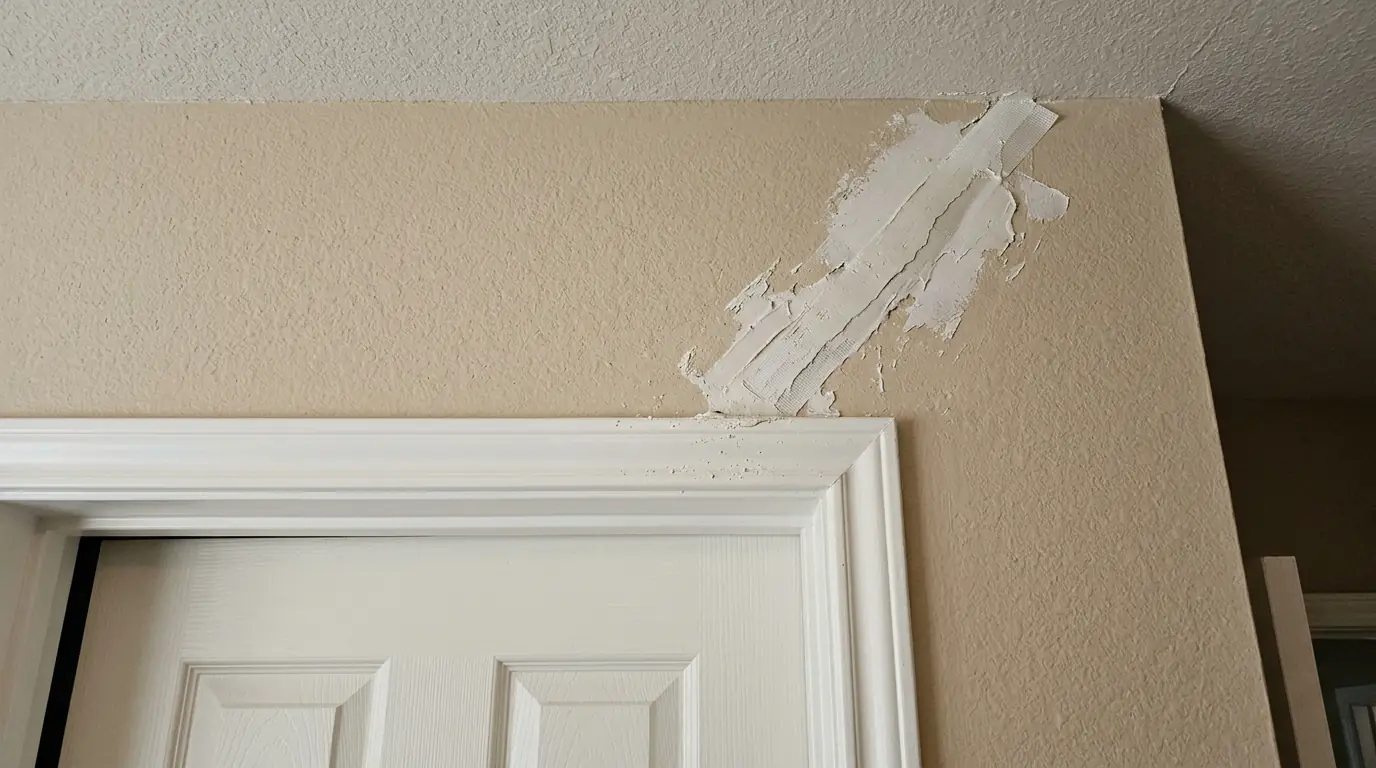
Doorknob holes, anchor holes from old TV mounts, and dents from moving furniture are quick fixes. Small holes get a self-adhesive patch or a California patch, which uses the drywall's own face paper as tape. Larger holes get a new piece of board screwed to backing strips. Closet doors that bang into walls get the same fix, plus a door stop.
Nail pops show up a lot in DFW homes built in the 1990s and 2000s, when crews nailed rather than screwed the board. As the framing dries out, the nail heads push through the paint. We drive a drywall screw beside the nail, set the nail, and fill both.
Corner bead dented by furniture or a vacuum is cut back and replaced with new metal or vinyl bead, then finished like any other seam. Torn face paper from removed tape or hooks is sealed with a primer before mud so it does not bubble.
The walk-through sets your real number, written line by line.
After a supply line leak, a water heater failure, or an attic AC overflow, wet drywall often has to be cut out. Once the area is dry and the plumber or restoration company is done, we replace the board, tape and finish the seams, and match the texture. Insulation in exterior walls is checked and replaced if it got wet.
Any staining around the cut-out gets an oil or shellac blocker before paint. Smoke and water marks over a larger area fall under stain sealing, which is a separate step. Restoration crews often leave a clean cut line a few feet up the wall, which makes the replacement straightforward.
We check the board with a moisture meter before closing anything up. Painting over damp drywall traps moisture and invites mold. If the board reads wet, we wait a few more days or set fans before closing it up.
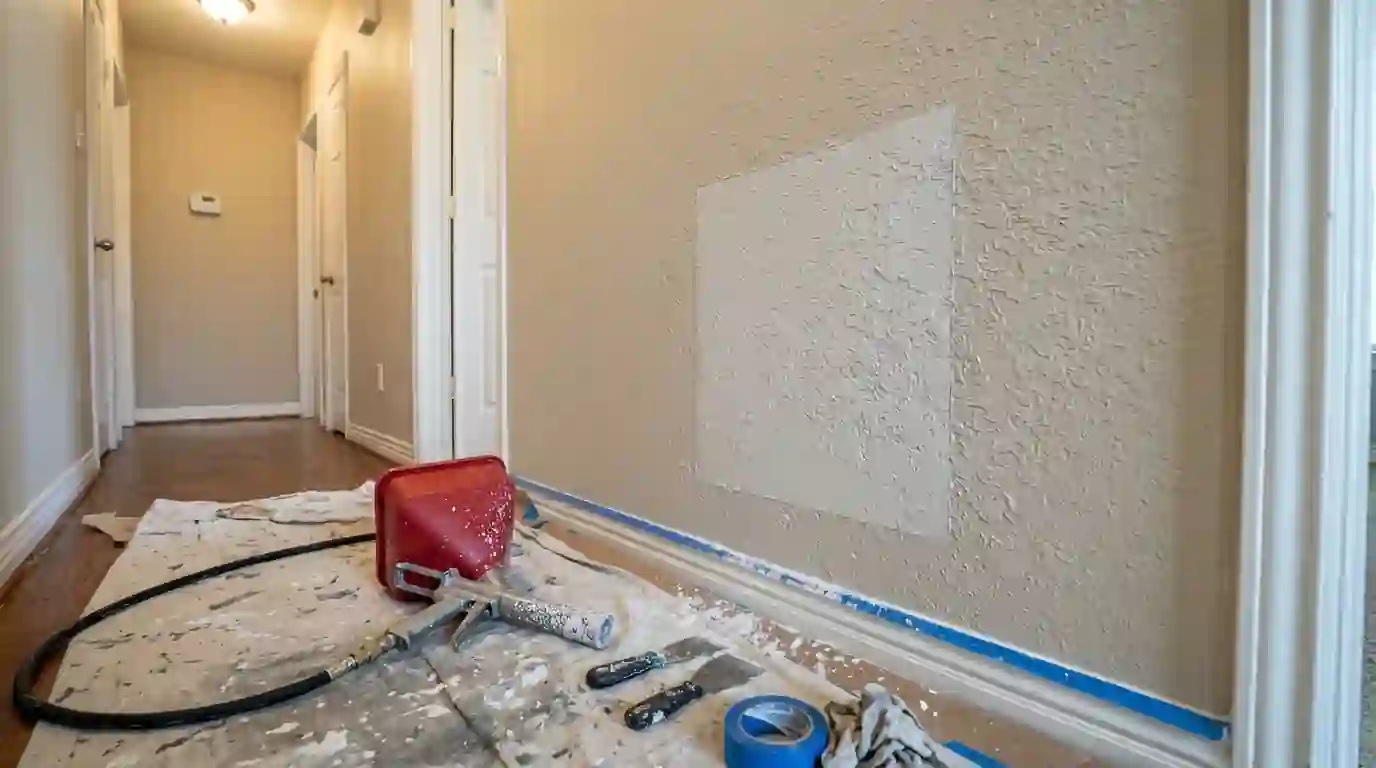
Most DFW drywall has knockdown or orange peel texture, and each crew that built the house sprayed it a little differently. We match with a hopper gun or texture sprayer, adjusting the mix and pressure on a scrap board first. Aerosol cans from the hardware store rarely match well on anything bigger than a few inches. Sponge-textured and hand-troweled walls get matched by hand.
Smooth walls in older East Dallas and Oak Cliff homes are less forgiving. Patches there need a wide feathered skim and careful sanding, and sometimes the whole wall gets a skim coat. That work overlaps with texture and skim coating.
The last step is primer and paint. Painting only the spot rarely blends, so we usually repaint the full wall from corner to corner, or the whole room as part of interior painting. Leftover paint from the original build is handy here, if you still have it in the garage.
Diagonal cracks off door corners after summer
Doorknob hole behind a bedroom door
Nail heads pushing through ceiling paint
Cracked tape seam running across the ceiling
Soft, stained drywall under a sink or AC closet
Old patch you can see through paint
We look at each repair, check for moisture, and note anything that suggests foundation movement.
Cracks are opened, loose tape cut away, nail pops screwed, and damaged board cut out and replaced.
Seams and cracks are taped in setting compound, then finished with two or three feathered coats.
Texture is sprayed to match the surrounding wall after testing the pattern on scrap board.
Repairs are primed and the wall is painted corner to corner so the patch blends.
Most recurring cracks in Dallas come from foundation movement as the clay soil wets and dries. Spackle and paint cannot flex with that. Taping the crack with setting compound holds much longer. If the same crack reopens quickly or keeps getting wider, the foundation may need attention before the wall will stay fixed.
Small patches usually take two short visits: one to tape and fill, and one to sand, texture, and paint after the compound dries overnight. Larger repairs or water-damage cut-outs can take three visits. Setting compound speeds things up compared to premixed mud, but texture and paint still need dry time between steps.
We get very close. Every house is a little different, so we test the mix and spray pressure on scrap board until the size, spacing, and flatness of the knockdown look right next to your wall. Once it is primed and painted, the repair should not stand out from a normal viewing distance.
Yes. Once the leak is fixed and the area is fully dry, we cut out any soft or stained board, replace it, tape and texture it, seal any staining, and paint. If you need paperwork for a claim, we can give you an itemized written estimate that lists each step of the repair.
Two-coat wall painting with real prep: crack repair, spot priming, sharp cut lines, and furniture moved and covered.
See interior house paintingSmooth Level 5 skim coats, knockdown and orange peel matching, and texture changes, sanded and primed for paint.
See wall texture & skim coatingWater rings, smoke, soot, and nicotine sealed with shellac or oil blockers so stains and odors do not bleed through new paint.
See smoke & water stain sealingCall and a person answers, day or night. We will set a walk-through and write up every surface before any work starts.