Ceiling Painting
Even, stripe-free ceiling coats for standard, vaulted, and two-story rooms, with stains sealed before the finish goes on.
See ceiling paintingBrown water rings, smoke film above a fireplace, and nicotine yellow that bleeds through every coat of new paint all need a stain blocker before any finish color.
Stain sealing in Dallas typically costs $265 to $740 per room for spot sealing, and about $1.95 to $3.85 per square foot of floor area for full-house smoke or nicotine sealing with paint. Shellac or oil-based blockers go on first, then two finish coats. The leak or source must be fixed first. An in-home walk-through sets the real number for your rooms.
Water stains, smoke residue, and nicotine contain compounds that dissolve in water. Latex paint is mostly water, so when it goes on, it pulls those stains right back to the surface. You can put three coats of good wall paint over a water ring and still see it a week later. That frustrates homeowners who think they bought the wrong paint.
The fix is a primer that does not reactivate the stain. Shellac-based primers like Zinsser BIN and oil-based primers like Kilz Original or Zinsser Cover Stain lock stains under a barrier that latex cannot dissolve. Waterborne stain blockers exist, but on heavy stains they often lose. For most Dallas homes we reach for shellac first.
Odor is part of the same problem. Smoke and nicotine smells live in the paint film and drywall paper, and shellac seals odor better than any other primer we use. That is why we use shellac on smoke-damaged rooms even when the stains look light.
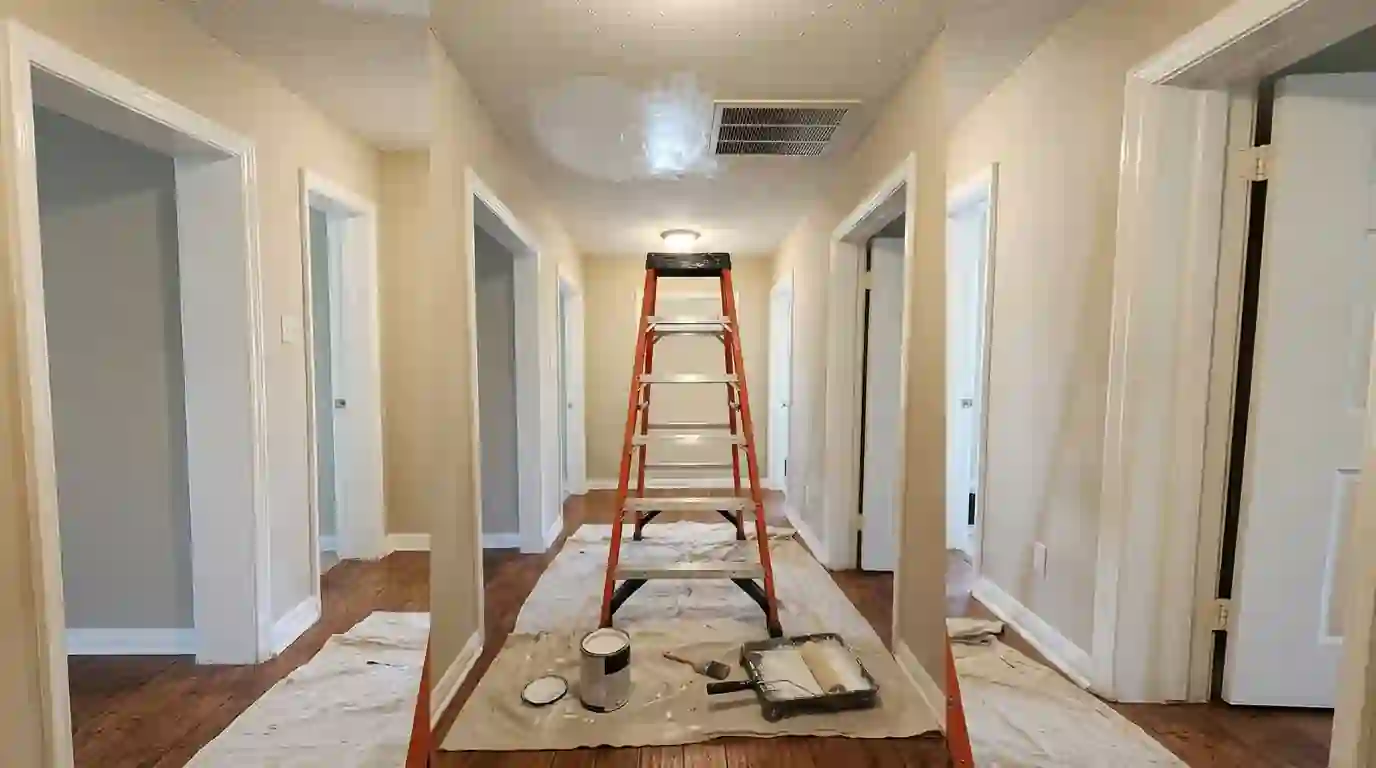
In Dallas, ceiling stains often trace back to the attic. AC systems run hard from late May into October, and a clogged condensate line or rusted drain pan can soak a ceiling in a weekend. Spring hail that cracks shingles leads to slow roof leaks that only show up after storms.
Before we seal anything, the source has to be fixed and the drywall has to be dry, which we confirm with a moisture meter. If the board is soft or sagging, it is cut out and replaced as part of drywall repair before sealing. Painting over wet drywall traps moisture and invites mold, which only creates a bigger repair later.
Stains near exterior walls sometimes come from window flashing or siding leaks, which only show up during heavy spring storms. If we see a pattern like that at the walk-through, we will point it out so the source can be fixed before sealing.
The walk-through sets your real number, written line by line.
Fireplace smoke leaves a gray film on walls and ceilings above the mantel. Candle soot shows as dark streaks above where candles sit and in ceiling corners. Kitchen grease builds up above the range. Each needs cleaning before sealing, usually with a degreaser or a TSP substitute, so the primer can bond.
Nicotine is the toughest. In rental homes and older houses where someone smoked for years, the walls may look fine until fresh paint goes on and turns yellow within days. Full-house nicotine jobs get washed, sealed with shellac primer on every wall and ceiling, and then painted. Ceilings usually carry the heaviest nicotine layer, since smoke rises.
After a small kitchen fire or a furnace puffback, a restoration company handles soot cleanup first. We come in afterward to seal and paint. Soot left on the surface keeps primer from sticking and can smear into fresh paint.
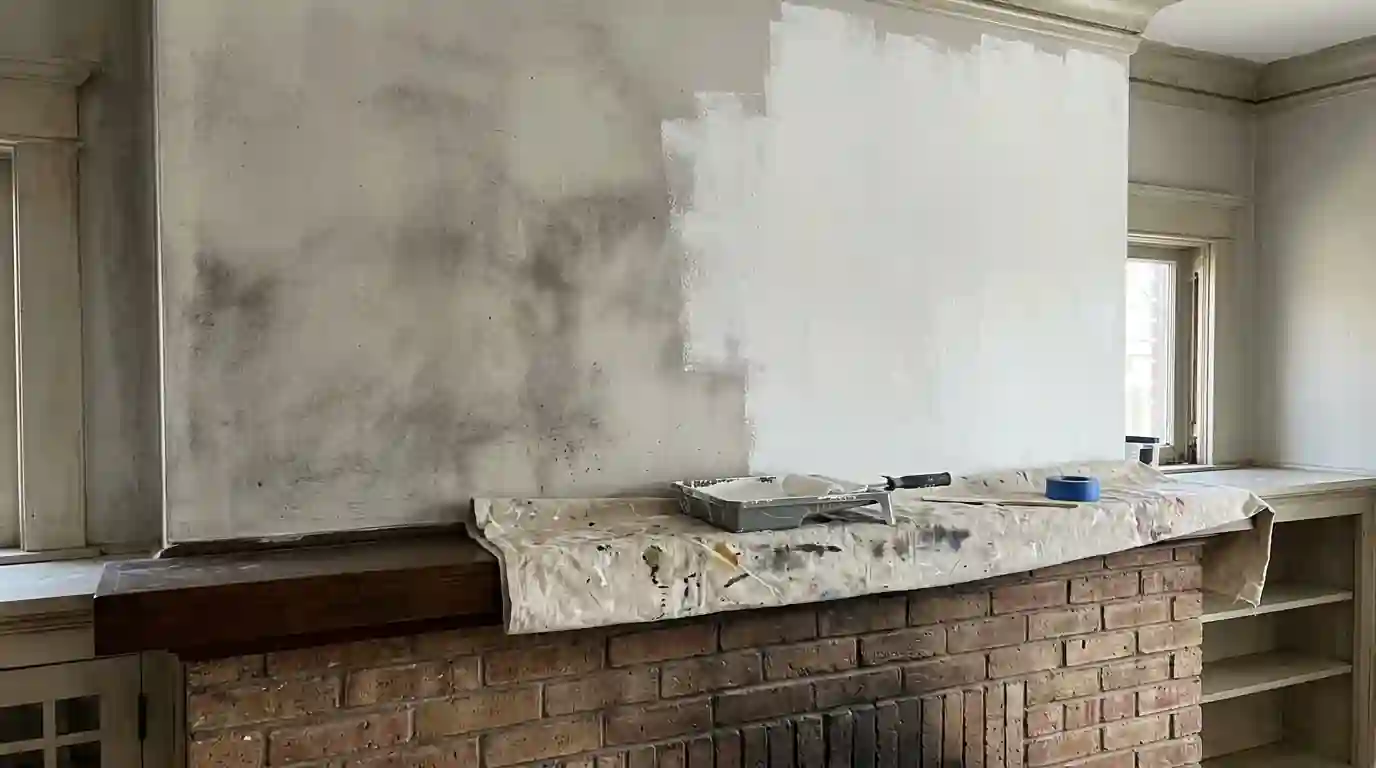
Stain sealing rarely stands alone. Most of the time it is the first step of ceiling painting or a full interior repaint, with stained areas spot sealed and the rest of the room primed as needed. Spot sealing alone can leave a shiny patch, so on lighter-colored walls we often prime the whole plane.
Shellac primer has a strong alcohol smell while it dries, though it clears within an hour or so. We ventilate with fans and open windows, and schedule the heaviest sealing when the house can be aired out. Oil primers linger longer, so we use them only where shellac is not a fit. Most rooms can be used again later the same day.
For homes being prepped for sale or a new tenant, sealing nicotine and smoke is one of the most common tasks we handle before a move-in. Landlords and property managers often have us seal entire units between tenants, which keeps the next renter from noticing old smoke stains or smells.
Brown rings on the ceiling below the attic AC
Gray film above a fireplace or mantel
New paint turning yellow within days
Smoke odor that lingers after cleaning
Dark candle streaks at ceiling corners
Stains bleeding through after DIY touch-ups
We check whether the leak or smoke source is resolved and test moisture levels in stained areas.
Walls and ceilings are washed with degreaser or TSP substitute to remove residue.
Shellac or oil-based stain blocker goes on, with a second coat on heavy stains.
Surrounding areas are primed as needed so the finish coat looks even.
Two coats of wall or ceiling paint go on over the sealed surface.
Yes. Regular primer and wall paint are water-based and will pull the stain back through in a day or two. A shellac or oil-based stain blocker creates a barrier the stain cannot get through. It costs a little more and takes an extra step, but it is the only way to make the stain stay gone.
Sealing is the last part of odor control, not the whole thing. Walls are washed first to remove as much residue as possible. Then a shellac primer on all walls and ceilings locks remaining odor in the drywall. Carpets, drapes, and HVAC ducts also hold smoke, so those may need separate cleaning for the smell to fully go away.
No. Sealing over an active leak just hides the problem until the stain spreads or the drywall gets soft. We ask that the AC line, roof, or plumbing be fixed first. Then we check the drywall with a moisture meter, and once it reads dry, we can seal and paint.
It is commonly used indoors, but it has a strong alcohol smell while drying. We ventilate the room with fans and open windows, and the odor fades within about an hour. People with sensitivities, and pets, may want to be out of that room during application. It lingers far less than oil-based primers do.
Even, stripe-free ceiling coats for standard, vaulted, and two-story rooms, with stains sealed before the finish goes on.
See ceiling paintingCrack, hole, and water-damage repairs taped, textured to match, primed, and painted so the patch does not show.
See drywall repair & patchingTwo-coat wall painting with real prep: crack repair, spot priming, sharp cut lines, and furniture moved and covered.
See interior house paintingCall and a person answers, day or night. We will set a walk-through and write up every surface before any work starts.