Dallas house painting prices for 2026, inside and out
Most Dallas homeowners want a number before they call anyone. Here are the typical 2026 ranges for interiors and exteriors, plus the conditions that move a quote up or down.
Key takeaways
- Interior walls typically run $2.15 to $3.65 per square foot of wall
- A single-story Dallas exterior typically runs $3,180 to $6,950
- Prep and labor hours drive most of the price difference
- Compare quotes by surfaces, coats, products and prep
Typical interior ranges by room and by house
Interior work in Dallas is usually priced by the room or by square foot of wall, not floor. For walls only, two coats over a sound surface, a typical 2026 range for interior painting runs $2.15 to $3.65 per square foot of wall area. Ceilings and trim are priced separately because they take different products and more ladder time.
Room pricing is easier to compare. A 12 by 14 bedroom with walls only typically lands between $465 and $840. Add the ceiling and the baseboards and that same room often moves to $720 to $1,290, mostly because trim is slow brush work.
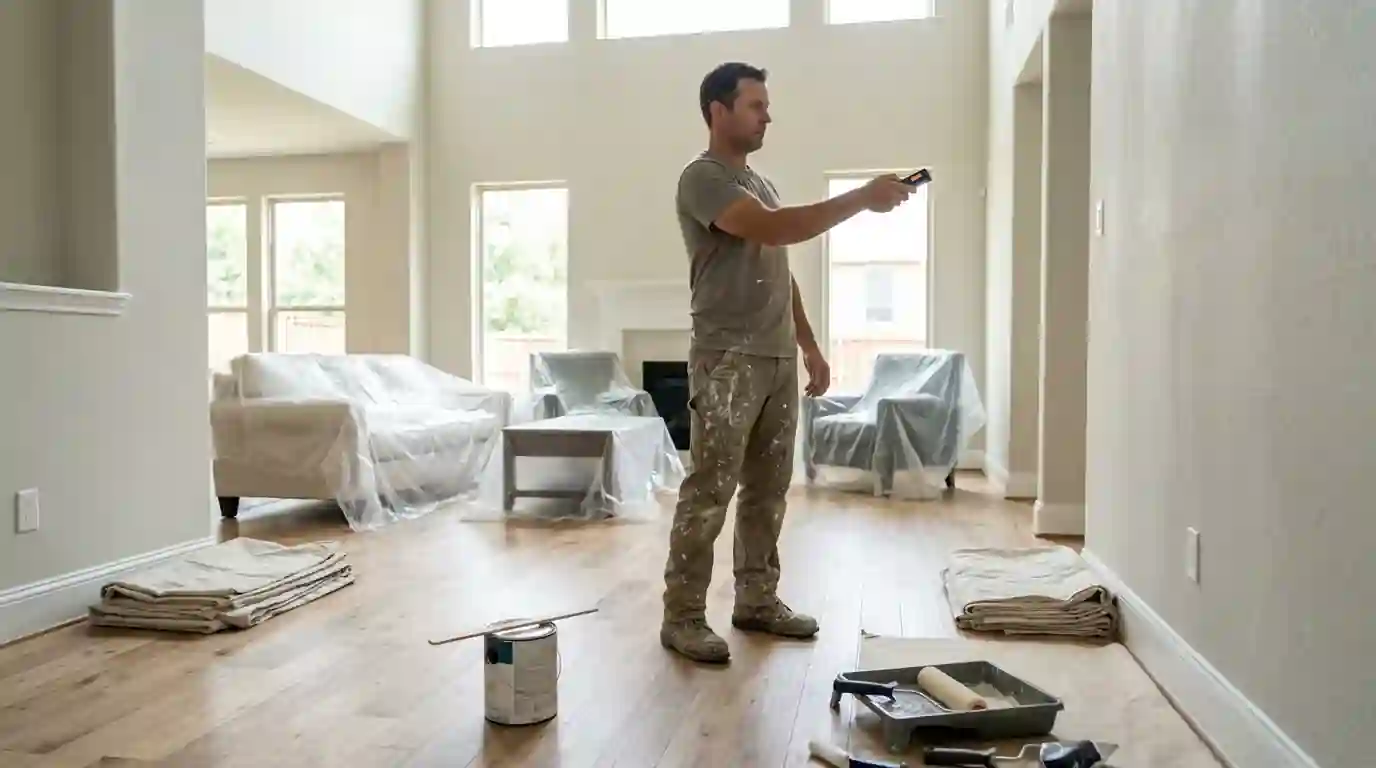
For a whole house, a 2,000 square foot home with walls, ceilings, trim and doors in most rooms typically falls between $6,380 and $11,750. Homes with tall entry walls, open stairwells or many color changes sit toward the top of that band.
- Accent wall in a new color: typically $185 to $395
- Interior doors, both sides with jambs: typically $96 to $168 each
- Kitchen cabinets, painted: typically $3,840 to $7,960
- Popcorn ceiling removal and repaint: typically $2.35 to $4.10 per square foot
Typical exterior ranges for Dallas homes
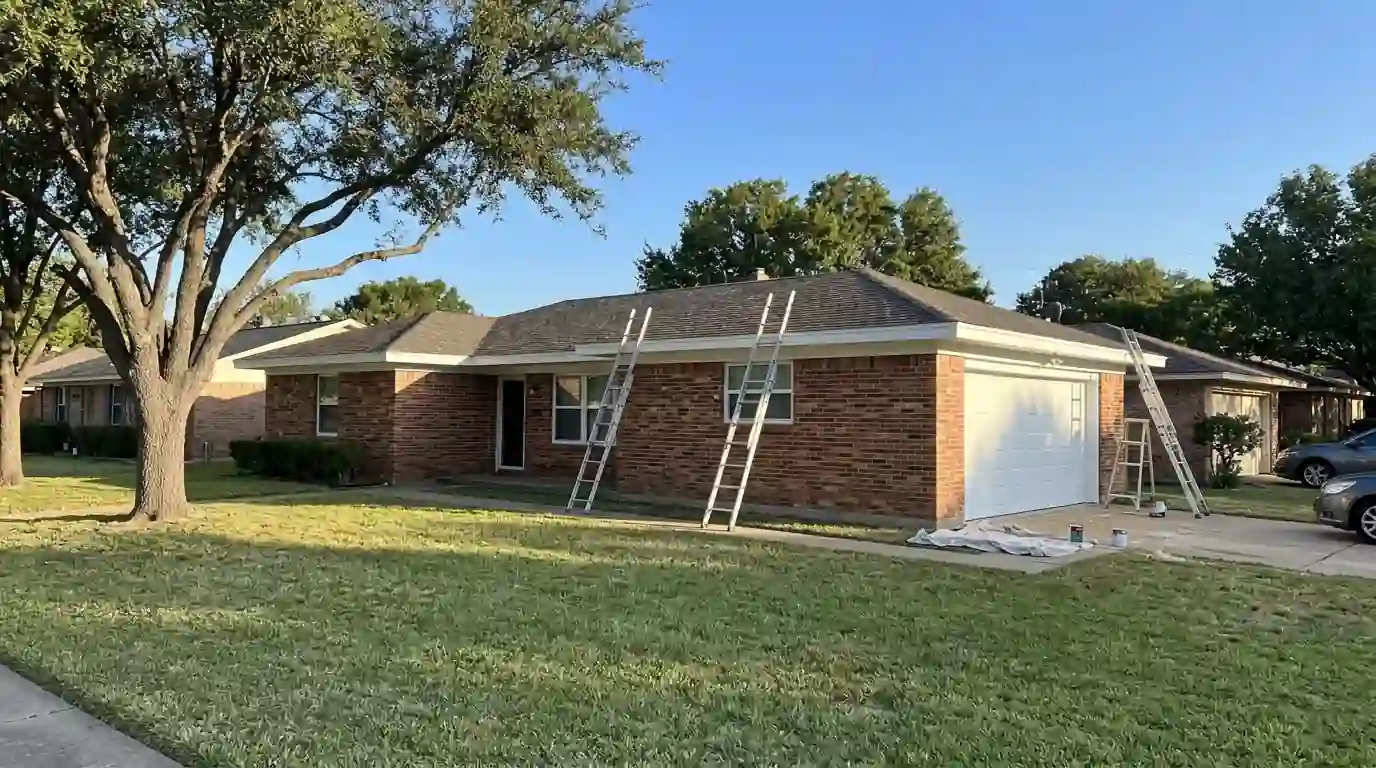
Exteriors depend on the siding material, the height and how much prep the surface needs. A single-story brick ranch where only trim, fascia, soffits, doors and the garage door get paint is the lower end, typically $2,460 to $4,870. That scope is common in 1950s and 1960s neighborhoods where the brick was never painted.
A full exterior repaint of a 2,200 square foot single-story home with siding or painted brick typically runs $3,180 to $6,950. Two-story homes in Frisco, McKinney or Plano with fiber cement siding usually land between $5,640 and $10,380, with tall ladder or lift time making up part of the gap.
Stucco and first-time brick painting cost more than a repaint because the surface soaks up the first coat. Expect a masonry primer line on the estimate and plan for a 15 to 30 percent bump over repainting the same square footage.
Garage doors, front doors and fences are often priced as add-ons. A two-car garage door repaint typically adds $285 to $520, and a front door with fresh trim and hardware masking typically adds $245 to $460, depending on panel detail and how many coats a color change needs.
What actually moves the price
Labor is the largest share of any painting quote, usually 70 to 80 percent. The number follows the hours, and the hours follow prep. Two homes of the same size can be thousands apart because one needs scraping, wood replacement and caulk while the other just needs washing and two coats.
In Dallas the common hour drivers are clay soil cracks at door corners and window returns, hail dings on trim and garage doors, sun-cooked caulk that has split, and soft wood at the bottoms of fascia boards and door jambs. Each of those adds time before any paint goes on.
- Prep condition: peeling, chalking, cracked caulk, rotted wood
- Height and access: second stories, steep yards, pool decks
- Color change: dark to light often needs a third coat
- Product line: premium acrylics cost more per gallon but last longer
- Pre-1978 homes: lead-safe containment and cleanup add hours
- Occupied homes: furniture moving and room-by-room sequencing
Reading a painting estimate line by line
A useful estimate tells you which surfaces are included, how many coats, which product line, and what prep is part of the price. If a quote says only exterior paint, two coats, you have no way to compare it with another quote that lists caulk, spot priming and wood repair allowances.
Look for a separate line or allowance for wood rot repair. Nobody can find every soft board from the ground, so a fair quote names a per-foot or per-board price for replacement found once work starts. That keeps a surprise from turning into an argument.
Ask whether the price covers gutters, the garage door, the front door and any fence or pergola. These are the items most often left off one estimate and included on another, which makes the cheaper quote look cheaper than it really is.
Ways to keep the number down without cutting corners
The easiest savings come from scope, not from skipping prep. Painting walls only and leaving ceilings that are still clean can trim 20 percent or more from an interior job. On an exterior, repainting trim and doors between full repaints stretches out the bigger expense.
Grouping rooms helps too. A crew that paints three bedrooms and a hallway in one visit spends less time on setup, cleanup and travel than it would across three separate visits. Keeping one wall color across connected rooms cuts cutting-in time and leftover paint.
Timing matters in Dallas. Late spring and early fall fill up first for exteriors, so calendars are tighter. Interiors in July and August are often easier to schedule, which can mean a faster start date even if the price is similar.
Ask about splitting a big project across two seasons. Painting the south and west walls plus trim this year and the shaded sides next year is a fair option on homes where only part of the exterior is worn, and it keeps each payment smaller.
Why the walk-through sets the real number
Every range on this page is typical, not a promise. The in-home walk-through is where a painter measures walls, presses a screwdriver tip into suspect trim, looks at caulk lines and counts doors and windows. That visit is what turns a range into a written price.
When you call, have a rough idea of the rooms or sides of the house you want painted and any problem spots you already know about. A walk-through usually takes 30 to 60 minutes for an average home, and the written quote should list everything that was discussed.
Follow-up questions
Why can two painting quotes for the same Dallas house be thousands apart?
Usually because they price different work. One quote may include caulk replacement, wood rot allowances, spot priming and two coats of a premium line, while the other covers one coat with minimal prep. Ask each painter to list surfaces, coats, products and prep in writing, then compare them line by line instead of by the total.
Does painting the inside and outside in the same year save money?
Sometimes a little, mostly through one walk-through, one setup and fewer trips. The bigger benefit is scheduling: exteriors fit spring and fall weather, and interiors can fill the hot summer weeks. Many Dallas homeowners split the work that way and keep the house looking consistent without paying for two rushed jobs.
How much extra should I set aside for problems found during the job?
On an exterior, a cushion of 8 to 12 percent of the quote covers most surprises, usually rotted trim or fascia hidden behind old paint. Interiors rarely need that much unless old wallpaper or water damage turns up. A clear estimate names the unit price for those repairs ahead of time, so any extra cost is predictable.
Want a painter to look at it?
Call and a person answers 24/7. We will set a walk-through and give you a written scope.