Faux Finishes & Decorative Painting
Color wash, strié, metallic glaze and wood grain finishes for Dallas walls, doors and cabinets, with sample boards made first.
See faux finishes & decorative paintingPainted walls can look flat in a well-designed room, and true polished plaster needs trowel skill and cure time that a standard paint job does not allow.
Venetian plaster in Dallas typically costs $11.60 to $23.40 per square foot, depending on the product, the number of coats and how high the polish goes. A feature wall or range hood takes two to four days because each thin layer must set before the next. Expect sample panels first. The walk-through sets the real price for your space.
Traditional Venetian plaster is slaked lime mixed with marble dust, applied with a steel trowel in very thin coats and then burnished until it gains depth and a soft sheen. Acrylic versions look similar, cost less and handle bumps better, but they lack some of the cool, stone-like feel of lime. Both can be tinted to almost any color, from chalk white to deep olive.
In Dallas homes the most common places are range hoods, powder rooms, entry walls, fireplace surrounds and dining rooms. Showrooms and boutique spaces in Uptown and the Design District use it on larger walls where the room size and lighting let the movement show. Even a small range hood surround can carry the whole kitchen when the plaster tone picks up the countertop veining.
It is not a good fit everywhere. Walls that flex, like a wood-framed partition beside a door that slams, may hairline crack over time. We tell you if a location is risky before you commit. Exterior walls in direct Texas sun are another poor fit for most interior plaster products.
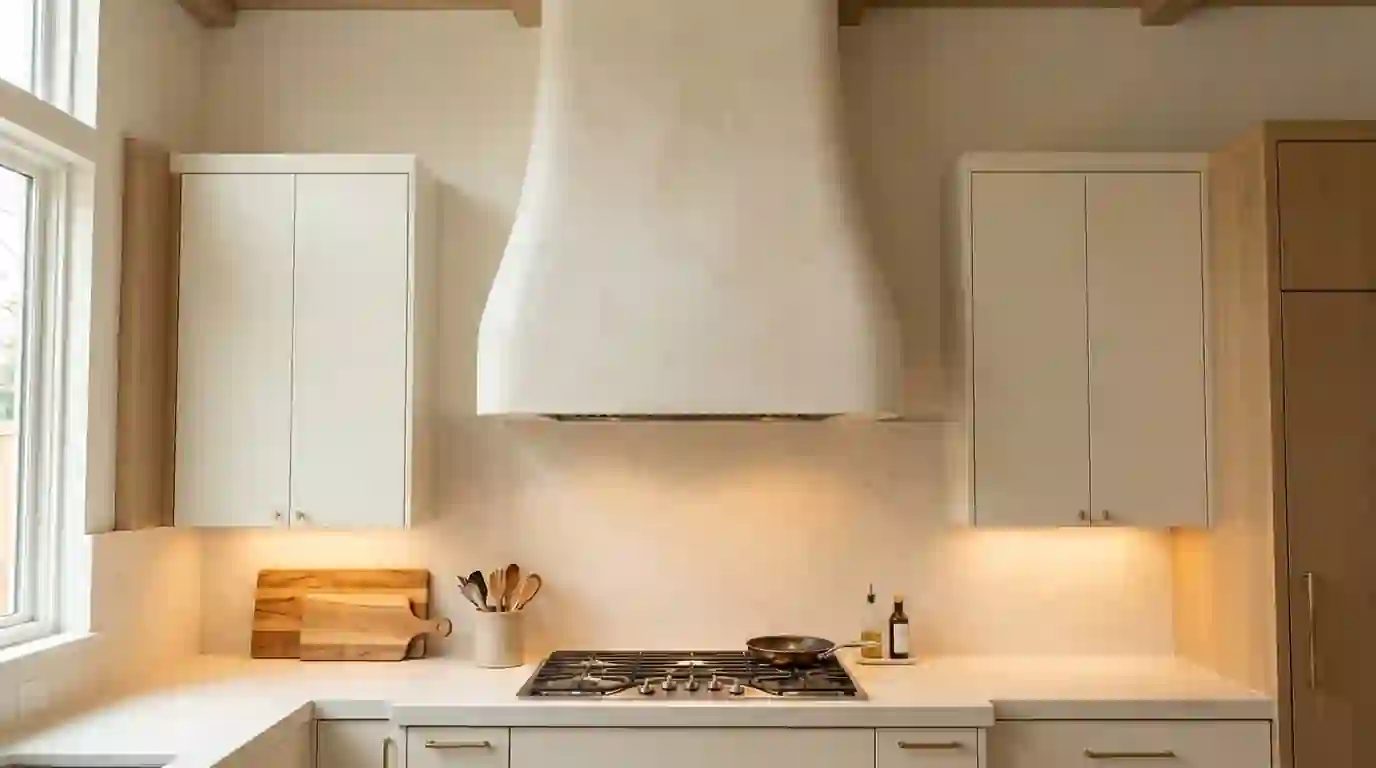
Plaster magnifies whatever is underneath it. Drywall seams, nail pops and texture bumps need to be flattened first, often with a full Wall Texture & Skim Coating on the orange peel and knockdown walls common in DFW builds. Corners are kept crisp with metal or paper bead so the polished edges read clean.
Foundation movement from North Texas clay matters here too. If the room already shows diagonal cracks over doors or stress lines at corners, those need Drywall Repair & Patching with mesh tape and a cure period before plaster goes on. Otherwise the cracks return through the finish.
Once the surface is flat, we roll on a tinted primer made for plaster so the first coat has tooth and an even color base underneath it. We also mask cabinets, counters and floors heavily, since plaster dust and drips are harder to clean up than paint. Outlet covers and switch plates come off and are reset after the final coat.
The walk-through sets your real number, written line by line.
Most polished finishes take three to five passes. Each one is troweled tight and thin, and in a dry Dallas house a coat can be ready for the next within a few hours, though in summer we slow down so the plaster does not set too fast and leave dark burn marks. Dark tints show trowel work most, so they take the most care.
The sheen is controlled by how hard the last coat is burnished. Some clients want a matte, chalky look that reads like old stone, while others want a high polish on a powder room wall. Both use the same material with different finishing work. Tone can be shifted by mixing two tints in the same coat, which gives the soft cloud effect many designers ask for.
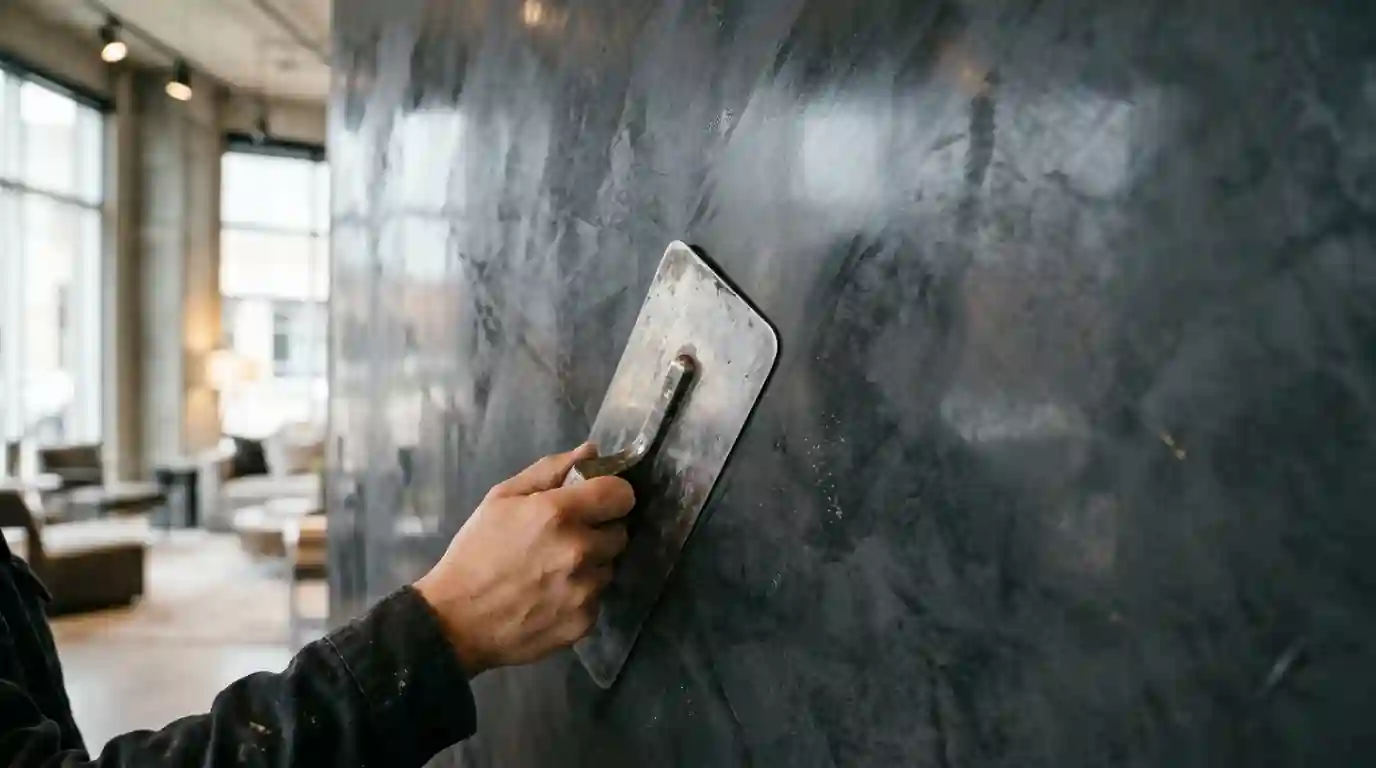
Lime plaster keeps curing and hardening for weeks after it goes on. It breathes, which helps in bathrooms, and it resists mold growth better than most paints. Kitchen work around a range hood should still get a wax or sealer so grease does not soak in.
Small chips can be repaired with the same material and burnished in, and repairs blend most easily when the original tinted mix is on hand. We leave a labeled jar of leftover plaster from your job for exactly that reason. Most marks from daily life can be buffed out with a soft cloth instead of repainted.
If you want a softer decorative look without the trowel cost, Faux Finishes & Decorative Painting like a glazed color wash give a similar mood for less, and they suit rooms where the walls are not flat enough for plaster. We are glad to sample both side by side, and choosing the color on its own is easier with our Color Consultation service.
Range hood that needs a finish beyond paint
Powder room walls that feel plain for the space
Entry or stair wall that needs texture and depth
Old plaster finish chipped near a doorway
Fireplace surround you want to read as stone
Showroom wall where finish quality is part of the sale
We trowel sample panels in two or three tones so you can see them against your floors and cabinets.
Texture is skimmed, cracks are taped and cured, and the wall is sanded flat.
A plaster primer with grip goes on, tinted close to the final color.
Three to five tight coats are troweled on, each allowed to set before the next.
The final coat is burnished to the agreed sheen, then waxed or sealed where needed.
Yes, with a sealer. Lime plaster is hard once cured, and it handles the heat around a range hood well. Grease and splashes are the real concern, so we apply a wax or a penetrating sealer that lets you wipe the surface. Behind a sink or cooktop where water sits regularly, tile or a stone backsplash is still the smarter choice.
Not directly. Plaster is applied so thin that orange peel or knockdown texture shows straight through, and the polish makes every bump more visible. We skim the wall flat first, let it dry and sand it smooth. On most Dallas tract homes that skim coat is part of the price, and it adds about a day to the schedule.
It can. Lime has a little flexibility, but a wall that shifts with clay soil may show hairline cracks over doors and windows. We look for existing stress cracks during the walk-through and repair them before plastering. If your foundation is actively moving, it is wiser to have it checked and stabilized before investing in a polished finish.
Lime plaster is the traditional material. It feels cool to the touch, breathes, ages with soft variation and can be burnished to a deep shine. Acrylic plaster is more flexible, costs less and forgives walls that move or get bumped. Many Dallas homeowners pick lime for a powder room or range hood and acrylic for a busy hallway.
Color wash, strié, metallic glaze and wood grain finishes for Dallas walls, doors and cabinets, with sample boards made first.
See faux finishes & decorative paintingSmooth Level 5 skim coats, knockdown and orange peel matching, and texture changes, sanded and primed for paint.
See wall texture & skim coatingIn-home color sessions with large painted samples, checked against your floors, fixtures and Dallas daylight before any paint is bought.
See color consultationCall and a person answers, day or night. We will set a walk-through and write up every surface before any work starts.