Ceiling Painting
Even, stripe-free ceiling coats for standard, vaulted, and two-story rooms, with stains sealed before the finish goes on.
See ceiling paintingScuffed hallways, builder-flat walls that will not wipe clean, and hairline cracks over doorways make a Dallas home look tired long before the paint actually fails.
Most Dallas interiors run $3.05 to $5.40 per square foot of floor space for walls, with ceilings and trim priced separately. A typical 12 by 14 bedroom lands between $465 and $890. The job covers furniture moving, crack and nail-hole repair, spot priming, two finish coats, and daily cleanup. The in-home walk-through sets the real number.
Most of the time on an interior job goes into prep, not rolling. We pull outlet covers, move furniture to the middle of the room, cover floors with canvas drop cloths, and mask anything that stays. Then every wall gets a raking-light check so dents and old patch marks show up before paint does.
North Texas clay soil swells in spring and shrinks hard in August, and the house moves with it. That movement opens diagonal cracks at door and window corners and splits the caulk where walls meet trim. We open those cracks, tape them with mesh and setting compound, and recaulk with a flexible acrylic so the line holds through the next dry spell. Bigger damage is handled as drywall repair and patching before paint.
Every patch gets spot primed. Skipping that step causes flashing, the dull spots you see on a wall when light hits it sideways, and it is the most common sign of a rushed job. On a typical house we find somewhere between twenty and sixty small repairs, and each one gets the same treatment.
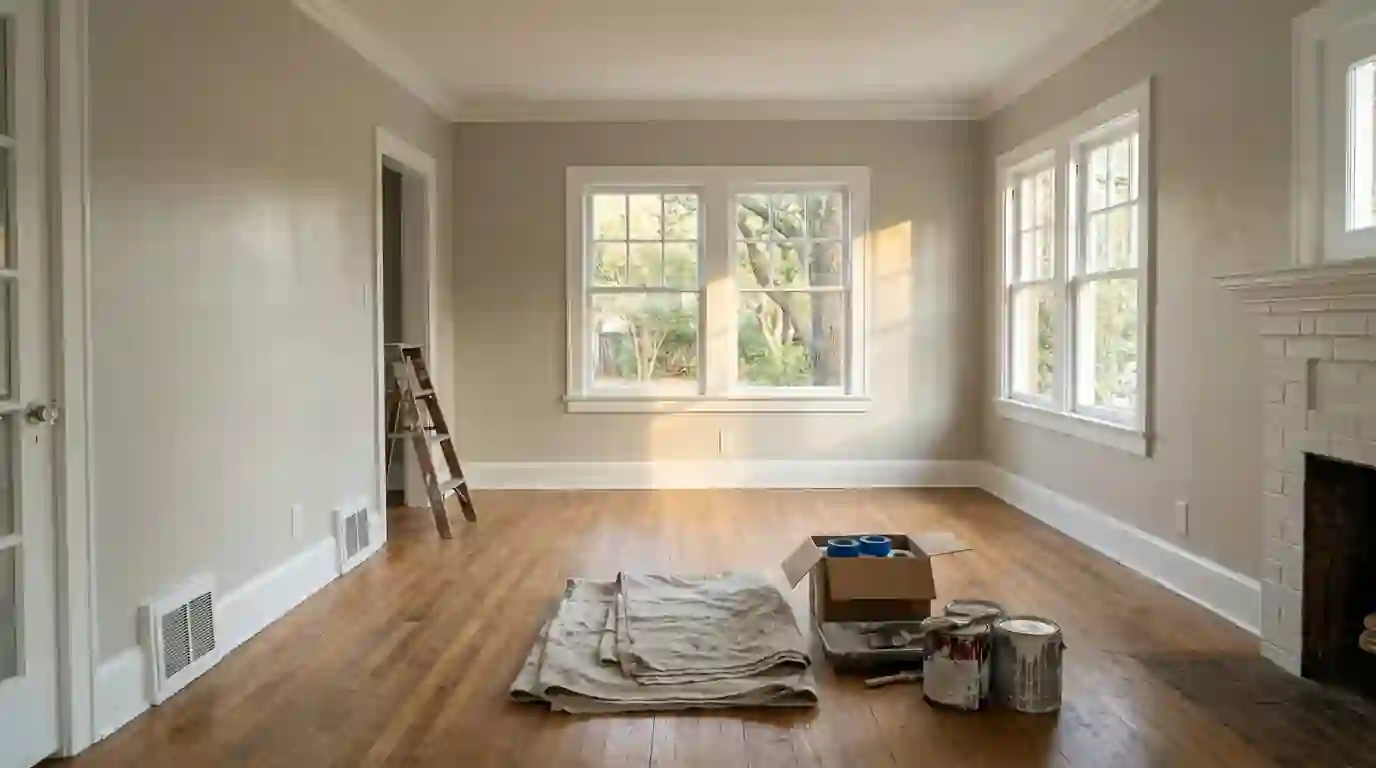
Builders in Frisco, McKinney, and much of North Dallas often leave flat contractor paint on the walls. It looks fine until someone tries to wipe off a fingerprint and leaves a shiny smear. For living areas we usually suggest an eggshell or low-sheen finish, which hides wall texture but still cleans.
Kitchens, baths, and laundry rooms take a satin with mildew resistance. Kids' rooms and hallways take a scrubbable line such as Sherwin-Williams Emerald, Benjamin Moore Regal Select, or PPG Diamond. Ceilings stay flat so they do not show roller marks.
Low indoor humidity during Dallas summers, when the AC runs all day, makes latex dry fast. We keep a wet edge by working one wall at a time from corner to corner, which prevents lap marks on long walls. Fans set to low and doors left open between rooms help the paint level out without drying too fast at the edges.
The walk-through sets your real number, written line by line.
Houses in Lakewood, the M Streets, Kessler Park, and along Swiss Avenue often still have plaster walls, layers of oil paint, and original millwork. Latex will peel off old oil enamel unless the surface is cleaned, scuff sanded, and primed with a bonding primer first. A quick test with a cotton ball and denatured alcohol tells us which kind of paint is on the wall, so the right primer is chosen before anything is opened.
Any home built before 1978 may have lead paint under the newer coats. On those houses we follow lead-safe work practices: plastic sheeting sealed at the floor, misting instead of dry sanding, HEPA vacuums, and wet wipe cleanup at the end of each day. Those steps add time, and we build that time into the schedule and the written number rather than surprising you later.
Plaster also cracks differently from drywall. Fine spiderweb cracks get a skim of patching plaster, and loose sections are reattached with plaster washers before anything is painted. Badly damaged plaster can also be covered with a thin skim coat, which keeps the original walls instead of tearing them out.
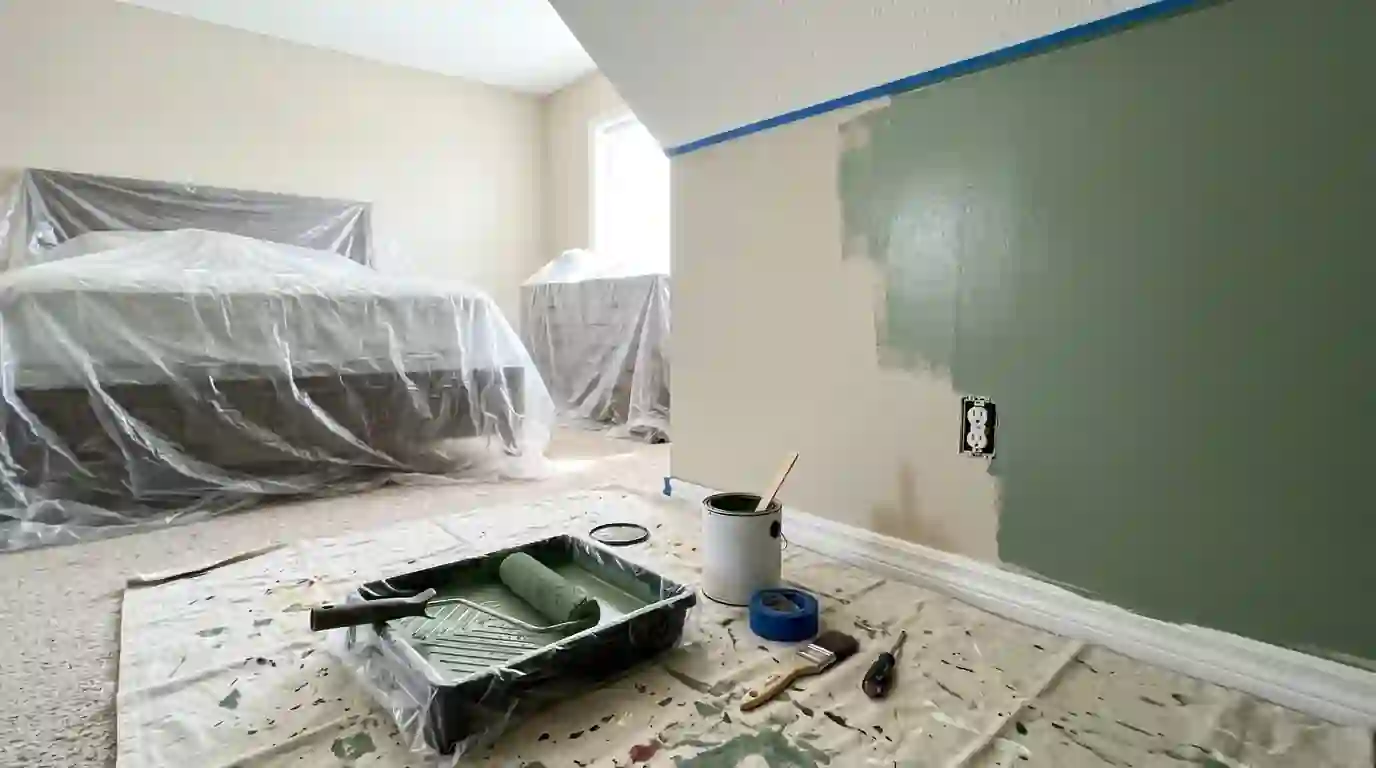
Most families stay home during an interior job. We work room by room, keep one bathroom and the kitchen usable, and put furniture back each evening when the paint is dry enough. A typical 2,000 square foot single-story home takes a crew four to six working days for walls only. In July and August, crews start early and run fans so the house stays comfortable while windows stay shut against the heat.
If you are also thinking about ceiling painting or trim and door painting, it costs less to do them in the same visit because the room is already masked and the furniture is already moved. One setup and one cleanup cost less than two separate trips.
On the last day we walk the house with you under normal lighting, mark any touch-ups with painter's tape, and fix them before we leave. Leftover paint is labeled by room and left in your garage. Touch-up cups and a note of the exact color formula stay with the paint for future dings.
Fingerprints and scuffs will not wipe off flat walls
Diagonal cracks above doors after a dry summer
Caulk lines split where walls meet baseboards
Dull patches show on walls in side light
Old colors make rooms look dated before listing
Paint peeling in strips from old oil enamel
We measure each room, check for cracks and old oil paint, and give you a written number before any work is scheduled.
Furniture moves to the middle, floors get canvas drops, and outlet covers and fixtures come off or get masked.
Cracks are taped and filled, nail holes patched, caulk lines redone, and every repair is spot primed so it will not flash.
Walls are cut in by brush and rolled in two coats, one wall at a time to keep a wet edge.
We review every room with you, fix anything marked, and label leftover paint by room.
Latex is dry to the touch in about an hour and ready for a second coat in two to four hours. It takes around two weeks to fully cure, so we ask that you avoid scrubbing walls or leaning furniture against them during that time. Running the AC helps, since cooler, drier air speeds curing without causing lap marks.
No. The crew moves standard furniture to the middle of each room and covers it. We do ask that you take down wall art, clear small items off shelves and dressers, and move anything fragile or valuable, like electronics or heirlooms. Pianos, safes, and very heavy pieces stay put and we work around them.
Sometimes, but not always. Going from a deep navy or red to a light neutral usually needs a tinted primer first, then two finish coats. We check the existing color at the walk-through and price the extra coat up front, so the number does not change halfway through the job.
It can be, with the right practices. We test suspect surfaces, avoid dry sanding, contain the work area with plastic, use HEPA vacuums, and clean with wet wipes every day. For homes with small children, we usually schedule the rooms with the most surface prep for days when the kids can stay elsewhere.
Even, stripe-free ceiling coats for standard, vaulted, and two-story rooms, with stains sealed before the finish goes on.
See ceiling paintingCrack, hole, and water-damage repairs taped, textured to match, primed, and painted so the patch does not show.
See drywall repair & patchingSanded, caulked, and enameled trim, baseboards, and doors with a hard, wipeable finish that resists chips and scuffs.
See trim, baseboard & door paintingCall and a person answers, day or night. We will set a walk-through and write up every surface before any work starts.