Cabinet Staining & Refinishing
Gel stain to go darker, a full strip to go lighter, and a fresh clear topcoat that stands up to kitchen grease and cleaning.
See cabinet staining & refinishingYour kitchen cabinets are solid wood that still work fine, but the 1990s oak tone or worn white paint makes the whole kitchen look dated and tired.
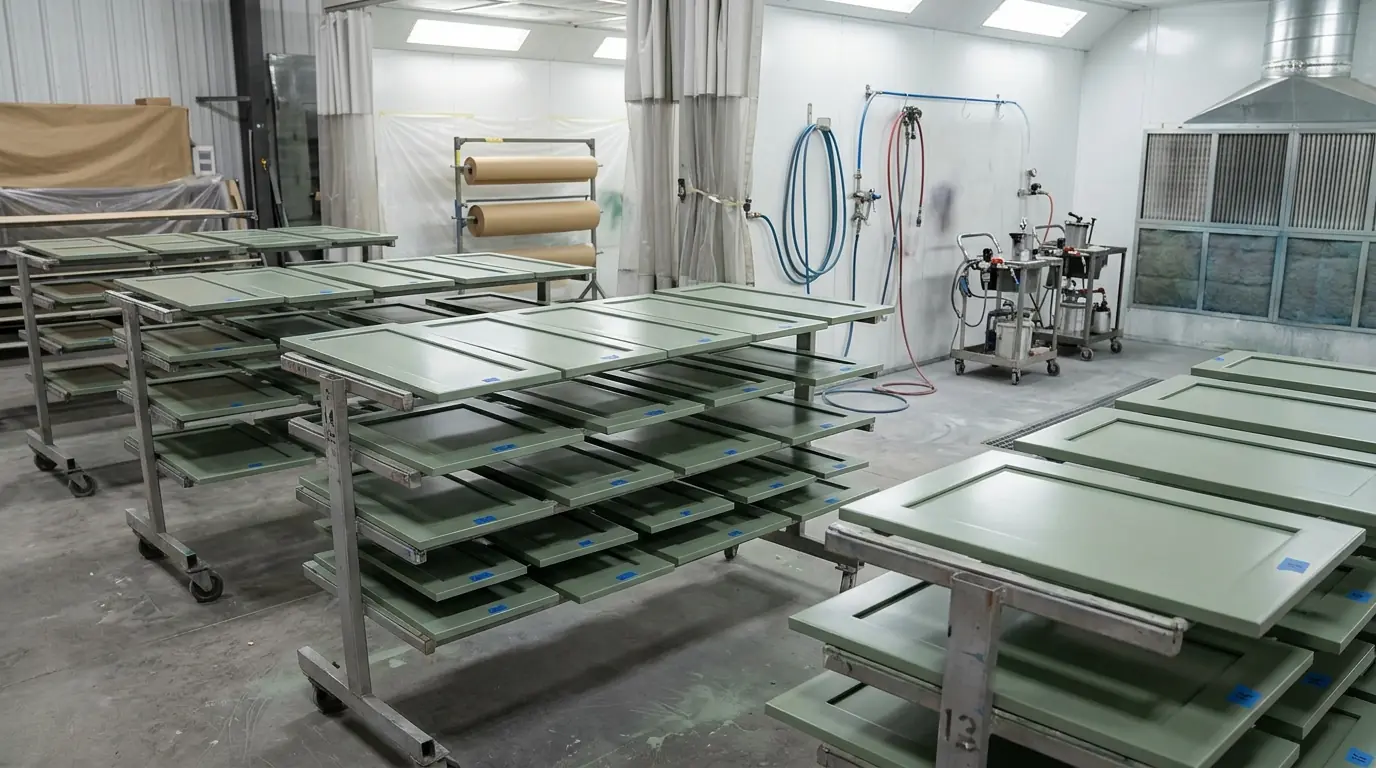
In Dallas, a typical kitchen with 25 to 35 doors and drawer fronts runs $4,380 to $7,940 to paint. We remove doors and drawer fronts, spray them in a controlled shop space, then degrease, prime and spray the cabinet boxes on site. Expect the kitchen out of use for two to three days, and the in-home walk-through sets the real number.
Most peeling cabinet paint we see in Dallas kitchens traces back to one thing: paint went over a greasy, glossy factory finish with no real prep. The area around the range and the trash pull-out carries years of cooking oil and hand grime, and latex wall paint will not hold on that for long. It also tends to fail first on the doors people touch most, which is why a few chipped corners usually mean the whole kitchen was under-prepped.
Our prep starts with a degreaser made for cabinets, followed by a scuff sand with 220-grit pads so the old lacquer has tooth. Then we apply a bonding primer, usually a shellac-based or waterborne bonding product, depending on whether the wood is tannin-rich oak or smooth maple. MDF doors on newer builds in Frisco and Prosper skip the tannin worry but need their routed edges sealed so they do not drink paint and look fuzzy.
Only after the primer cures do we lay down the finish coats. That order is slow, and it is the part that keeps chips off your cabinet edges for years instead of months.
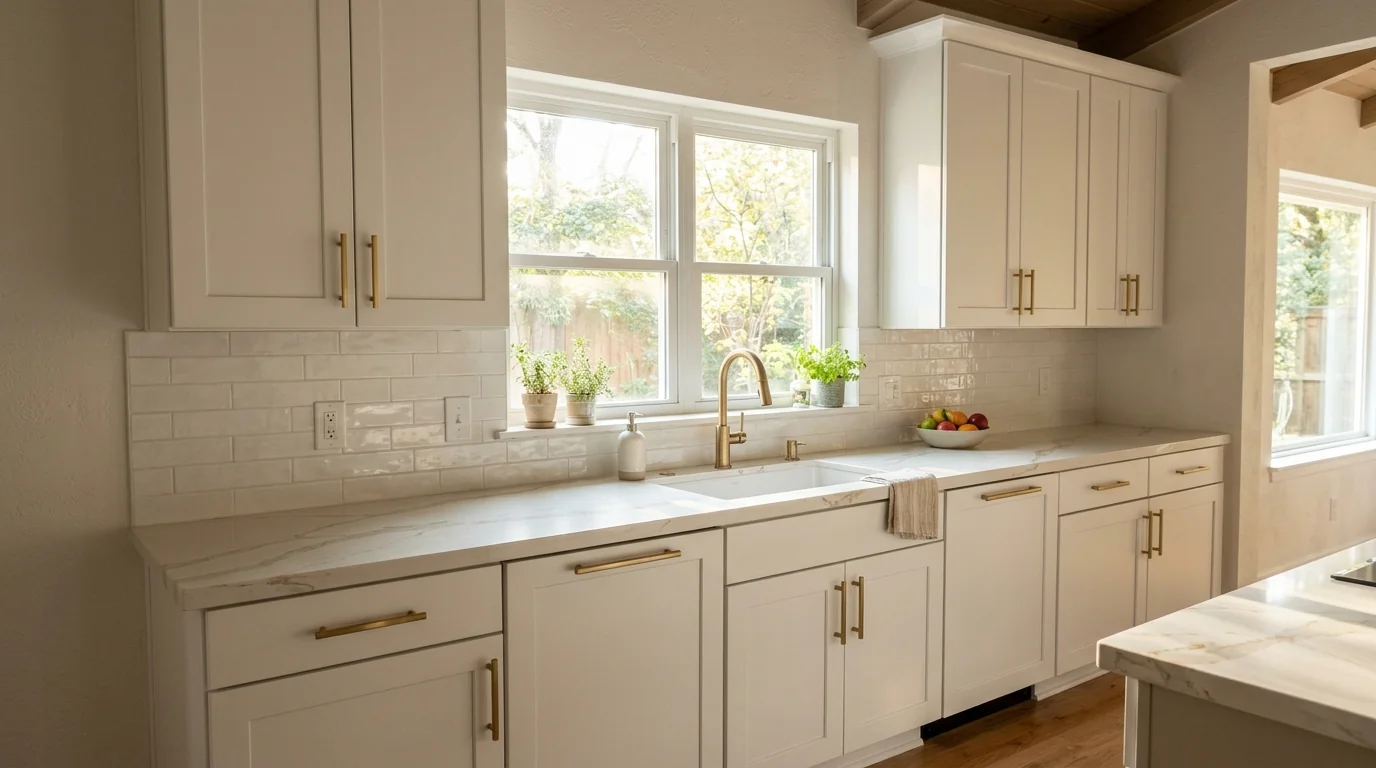
Every door and drawer front gets a numbered tag that matches a tag inside its opening, and hinges go into labeled bags. The doors travel to a dust-controlled spray space where they dry flat, which gives a smoother finish than brushing them upright in your kitchen. Each door gets both faces and all four edges coated, back side first, so the face you see dries last and stays clean.
Inside the home, we mask countertops, backsplash, floors and appliances with plastic and paper, then spray or fine-roll the face frames and end panels. Cabinet interiors are left alone unless you ask for them, since painting shelves adds time and cost without much visual change.
Drawer boxes stay in place; only the fronts come off, unless a front is fixed with hidden screws we cannot reach. Pantry doors, the island back panel and any open shelving with exposed edges are counted during the walk-through so nothing gets missed on paint day.
The walk-through sets your real number, written line by line.
Red oak cabinets, common in 1980s and 1990s homes across Richardson, Garland and North Dallas, have open grain that shows through paint. Some owners like that texture. If you want a smooth slab look, we apply a grain filler before priming, which adds roughly a day to the schedule.
For the finish we typically use a waterborne alkyd such as Sherwin-Williams Emerald Urethane Trim Enamel or Benjamin Moore Advance. These level out well and harden more than standard acrylic. In dry Dallas winters they set quickly; in July and August we keep the spray space below 85 F so the paint does not skin before it flows out.
Paint feels dry in hours but takes about three to four weeks to reach full hardness. Gentle use is fine right away; scrubbing and heavy bumping should wait. For the first month, use a soft cloth and mild dish soap rather than spray cleaners with ammonia or citrus solvents.
Most families stay in the house during cabinet painting. The kitchen is off limits while the boxes are being sprayed and curing, usually two to three days, so plan on takeout or a grill night or two. Doors come back about a week after pickup. Pets need a closed-off room during spray days, since hair in wet enamel shows.
If you are also changing wall color or the trim and baseboards, doing them in the same visit saves a second round of masking. Homeowners who want the wood look kept rather than covered should read about cabinet staining and refinishing instead, and bathroom cabinets can ride along through our vanity painting service.
Call to set up a walk-through. We count doors, check for water damage under the sink, and give you a written number before any tape goes up.
Paint is chipping along door edges and pulls
Oak cabinets look orange next to new floors
Grease film near the range will not wipe off
Previous DIY paint is peeling or tacky
You are selling and the kitchen photographs dated
Cabinet boxes are sound but the finish is worn
We count doors and drawer fronts, check the wood species, and look for swelling or water damage under the sink.
Doors, drawer fronts and hinges come off and get tagged by location so everything goes back exactly where it was.
Every surface is cleaned, scuff sanded and coated with a bonding primer suited to the existing finish.
Doors are sprayed flat in a shop space and boxes are finished on site with two coats of enamel.
We reinstall hardware, adjust hinges so doors close evenly, and walk the kitchen with you to check every face.
With proper degreasing, bonding primer and a urethane-modified enamel, a painted kitchen typically holds up for many years with normal use. The areas that wear first are the doors under the sink and the trash pull-out, where wet hands and kicks are constant. Touch-up paint from your batch is left with you so small nicks can be fixed in minutes.
Yes, but it costs more because the failed coating has to come off first. We sand or chemically strip loose paint down to a sound layer, then prime. If the earlier paint was latex over glossy lacquer, it often has to be removed almost entirely, since new paint is only as strong as what sits under it.
Not by default. Interior shelves get little wear on their visible surfaces and painting them adds a full day of work. Many Dallas homeowners choose to paint only the inside of glass-front uppers, where the interior shows. We price interiors as a separate line on the estimate so you can decide during the walk-through.
Fresh enamel can feel slightly tacky against the frame for the first days, especially in humid spring weather. We add small clear bumpers to each door so paint does not touch paint, and we let doors cure before rehanging. If a door feels like it is grabbing, close it gently and it will release as the coating hardens.
Gel stain to go darker, a full strip to go lighter, and a fresh clear topcoat that stands up to kitchen grease and cleaning.
See cabinet staining & refinishingMoisture-aware prep and hard enamel for bathroom vanities, from powder rooms to double master vanities, done in one or two days.
See bathroom vanity paintingSanded, caulked, and enameled trim, baseboards, and doors with a hard, wipeable finish that resists chips and scuffs.
See trim, baseboard & door paintingCall and a person answers, day or night. We will set a walk-through and write up every surface before any work starts.