Painting brick or limewashing it: how to choose in Dallas
Brick ranches and older brick Tudors are all over Dallas, and many owners want a lighter, fresher look. Paint and limewash both change the color, but they behave very differently over the years.
Key takeaways
- Paint gives a solid color, limewash keeps the brick showing
- Limewash breathes better and suits older, softer masonry
- Paint typically lasts 10 to 15 years, limewash 5 to 7 before a refresh
- Test both on a hidden wall before committing
How each finish works on brick
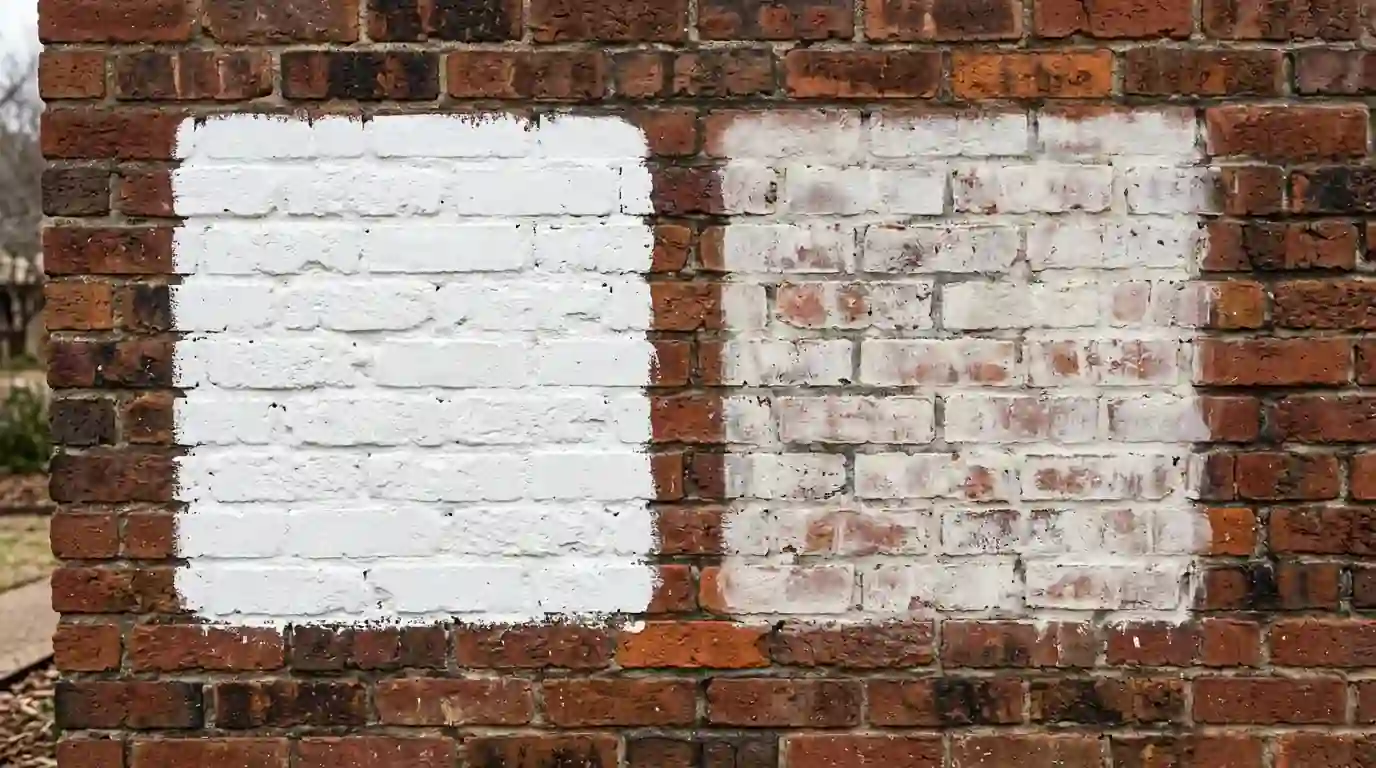
Paint for brick is usually a masonry-rated acrylic applied over a masonry primer. It sits as a continuous film on the face of the brick and mortar, giving a solid, even color that hides the original brick completely.
Limewash is slaked lime mixed with water and pigment. It soaks into the brick instead of sitting on top, and as it cures it hardens back into a thin mineral layer. The result is a soft, chalky, slightly uneven finish that lets some of the brick texture and color show through.
German smear is a third option often confused with limewash. It uses a mortar mix pressed over the brick and partly wiped off, which gives a heavier, rustic look and is close to permanent once it sets.
Mortar also matters. Before either finish goes on, a crew checks for loose, sandy or missing mortar joints. Painting or limewashing over failing mortar hides the problem for a while, but water still finds its way in, so repointing the worst joints first is a common part of the plan on older Dallas homes.
Breathability and why it matters on Texas brick
Brick and mortar take on moisture from rain, sprinklers and the soil, and they need to let it out again. Limewash is very vapor-open, so moisture passes through it easily. That makes it a forgiving choice on homes from the 1920s through the 1950s, where the brick and mortar may be softer.
Acrylic paint is less breathable. If water gets behind the film, from an overflowing gutter or a sprinkler head aimed at the wall, it can push the paint off in blisters and flakes. Using a breathable masonry paint and fixing water problems first lowers that risk a lot.
Efflorescence, the white powdery salt that shows on Dallas brick near the ground, is a warning sign. It means water is moving through the masonry. The salts need to be cleaned off and the water source addressed before either finish goes on.
Looks: solid color or soft, aged character
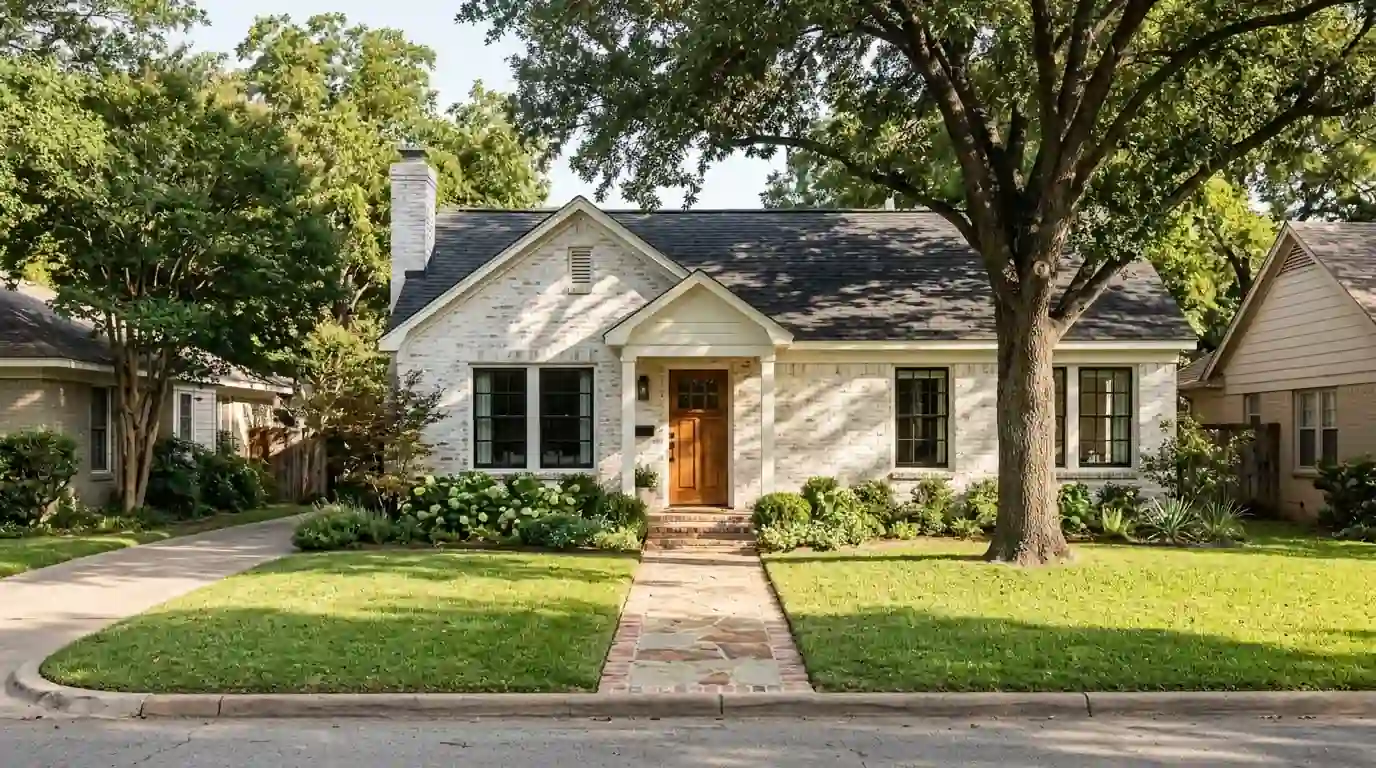
Paint gives the cleanest, most modern look. A white or warm gray painted brick with black window frames is a common choice on remodeled ranches in Lake Highlands and Preston Hollow. Paint also hides mismatched brick from old additions or patched areas.
Limewash suits homes where you want the brick to still read as brick. It works well on older Tudors and cottages in Lakewood, the M Streets and Kessler Park, where a heavy painted finish can look out of place. How much brick shows depends on how far the crew dilutes the mix and how much they wash back.
Limewash colors are limited to lighter, earthy tones because the lime itself is white. If you want a deep navy or charcoal, paint is the only route.
Trim and window colors shape the result too. Limewash pairs well with soft whites, warm creams and muted greens on trim, while painted brick can carry stronger contrast such as black windows against white or charcoal brick against a cream trim color.
How long each lasts and the upkeep
A properly prepped and primed acrylic paint job on brick typically lasts 10 to 15 years in Dallas sun before it needs a full repaint, with touchups near sprinklers or downspouts in between.
Limewash wears gradually instead of peeling. Rain and sun slowly erode it, and more brick shows through over time. Most limewashed homes look good for 5 to 7 years before a refresh coat, and many owners like the way it ages. A refresh is simple because there is no failing film to scrape off.
Cleaning differs as well. Painted brick can be washed gently every year or two to remove dust and pollen. Limewash should be rinsed with a garden hose only, since scrubbing or high pressure takes off the finish faster than weather does.
- Paint: solid color, wide palette, 10 to 15 years typical
- Limewash: soft mottled look, light colors, 5 to 7 years before a refresh
- Paint can peel if moisture is trapped, while limewash simply fades
- Limewashed brick can be painted later if you change your mind
- Neither finish is easy to fully remove once applied
Typical costs for a Dallas brick home
For a single-story brick home with roughly 1,800 to 2,200 square feet of masonry wall, painting brick for the first time typically runs $4,860 to $8,940. That includes cleaning, masonry primer, two finish coats and the trim. Repainting brick that was already painted usually costs less.
Limewash on the same house typically runs $4,170 to $7,630. The material is cheaper, but the application is hand work, and the crew dampens, applies and washes back in sections to get the look you choose. German smear typically runs higher, between $6,920 and $11,480, because it uses mortar and more labor.
These are typical ranges only. Brick that needs repointing, heavy efflorescence cleanup or a second story will move the number, and the in-home walk-through sets the real price.
Which one fits your house
Choose paint if you want a strong color change, a crisp modern look, or need to cover mismatched brick. Choose limewash if you want to keep the character of the brick, own an older home with softer masonry, or prefer a finish that ages instead of peels.
Both are hard to undo, so a sample patch on a less visible wall is worth the time. Ask for a test section of limewash at two dilution levels, or a painted sample board for brick painting, and look at it in morning and late afternoon light before deciding.
If you are torn between shades, a color consultation on site lets you compare samples against your roof, windows and stone accents, which often settles the choice in one visit.
Follow-up questions
Can limewash go over brick that was painted before?
Not directly. Limewash needs to soak into bare, porous masonry, and it will not bond to an acrylic film. The old paint would have to be stripped, which is slow and costly on a whole house. Over painted brick, a breathable mineral or masonry paint in a soft color is the more practical way to get a similar feel.
Will painting my brick hurt resale value in Dallas?
It depends on the street and the quality of the job. A clean, well-chosen painted finish often helps a dated brick ranch, while peeling paint on brick turns buyers away. Limewash tends to read as a lower-risk change on older homes because it keeps the brick character. Recent sales on your street are a useful guide.
How do I keep a limewash finish from looking blotchy?
Blotchy limewash usually comes from uneven wetting or from brick with mixed absorbency. Crews dampen each section before applying, work wet edge to wet edge, and wash back while the lime is still workable. A test patch shows how your specific brick reacts, and a second thin coat evens out spots that absorbed too fast.
Want a painter to look at it?
Call and a person answers 24/7. We will set a walk-through and give you a written scope.