Drywall cracks in Dallas homes: clay soil, seasons and real repairs
Diagonal cracks above doors, split corner tape and gaps along crown molding are common in Dallas homes. The cause is usually the ground under the house, and the repair has to plan for movement.
Key takeaways
- Clay soil movement causes most Dallas drywall cracks
- Wide, growing or offset cracks need a foundation check first
- Lasting repairs use setting compound, new tape and flexible caulk
- Steady soil moisture helps repairs hold
Expansive clay and the seasonal swing
Much of Dallas sits on expansive clay soils, including the Houston Black clay found across the Blackland Prairie. These soils swell when wet and shrink when dry, and the swing can move a slab or pier and beam foundation a measurable amount between a wet spring and a dry August.
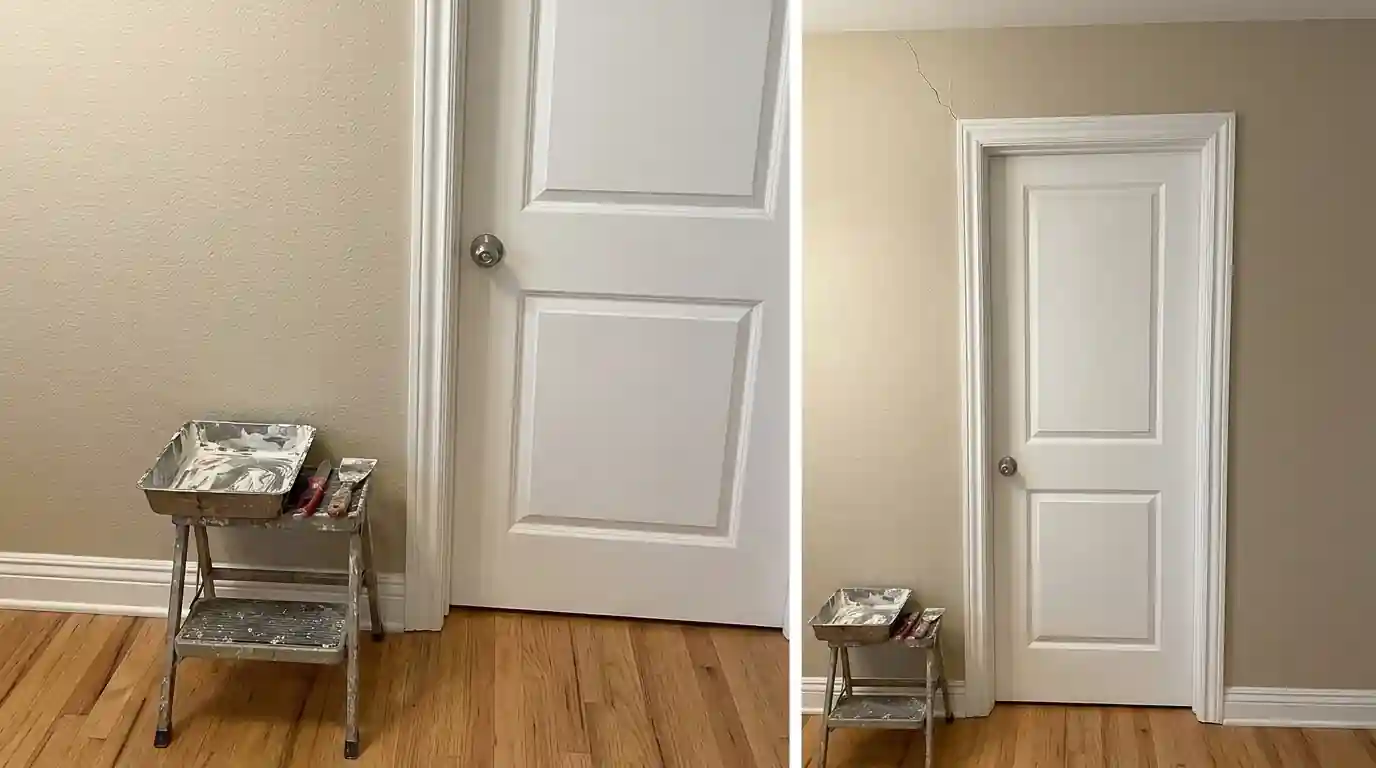
That movement goes straight up into the framing. Drywall is rigid, so when the house shifts even a fraction of an inch, the weakest points crack first: corners of door and window openings, joints between sheets, and inside corners where walls meet ceilings.
Many homeowners notice cracks open in late summer and partly close in winter or after a wet spring. That open and close pattern is a strong sign of soil movement rather than poor drywall work.
Pier and beam homes, common in older neighborhoods like Lakewood, Munger Place and Oak Cliff, move differently from slab homes. Their floors can sag between piers as the soil shifts, which shows up as cracks over doorways in the middle of the house and gaps at the tops of interior walls.
Reading the crack: cosmetic or a warning
Most drywall cracks in Dallas are cosmetic. Hairline cracks running diagonally from the corner of a door frame, tape lines that show through paint, and small gaps where baseboards meet the floor are normal in a home on clay soil.
Some signs point to a bigger issue that calls for a foundation contractor or structural engineer before any repair. Painters can patch drywall, but they cannot fix a foundation.
- Cracks wider than about 1/4 inch or growing month to month
- Doors that stick, swing on their own or will not latch
- Stair-step cracks in exterior brick mortar
- Gaps opening between window frames and the brick or siding
- Floors that slope enough to notice with a marble or level
- Cracks with an offset, one side higher than the other
Why a quick patch keeps coming back
Spackle over a crack and a coat of paint looks fine for a few weeks. Then the house moves again and the crack returns along the same line, often a little wider because the patch was more rigid than the wall around it.
The same thing happens with caulk. Hard, cheap caulk at baseboards, crown molding and window trim splits along its length once the gap opens. In Dallas, that split caulk line is one of the most common things a painter sees on a walk-through.
Paint itself is not the problem. The repair underneath has to be built to flex, or at least to spread the stress over a wider area, so the next small shift does not show.
Plaster walls in 1920s and 1930s Dallas homes add another layer. Old plaster cracks in long lines and can pull away from the wood lath behind it. Those walls usually need plaster washers or a bonding agent and a skim coat rather than standard drywall tape.
How painters repair cracks that move
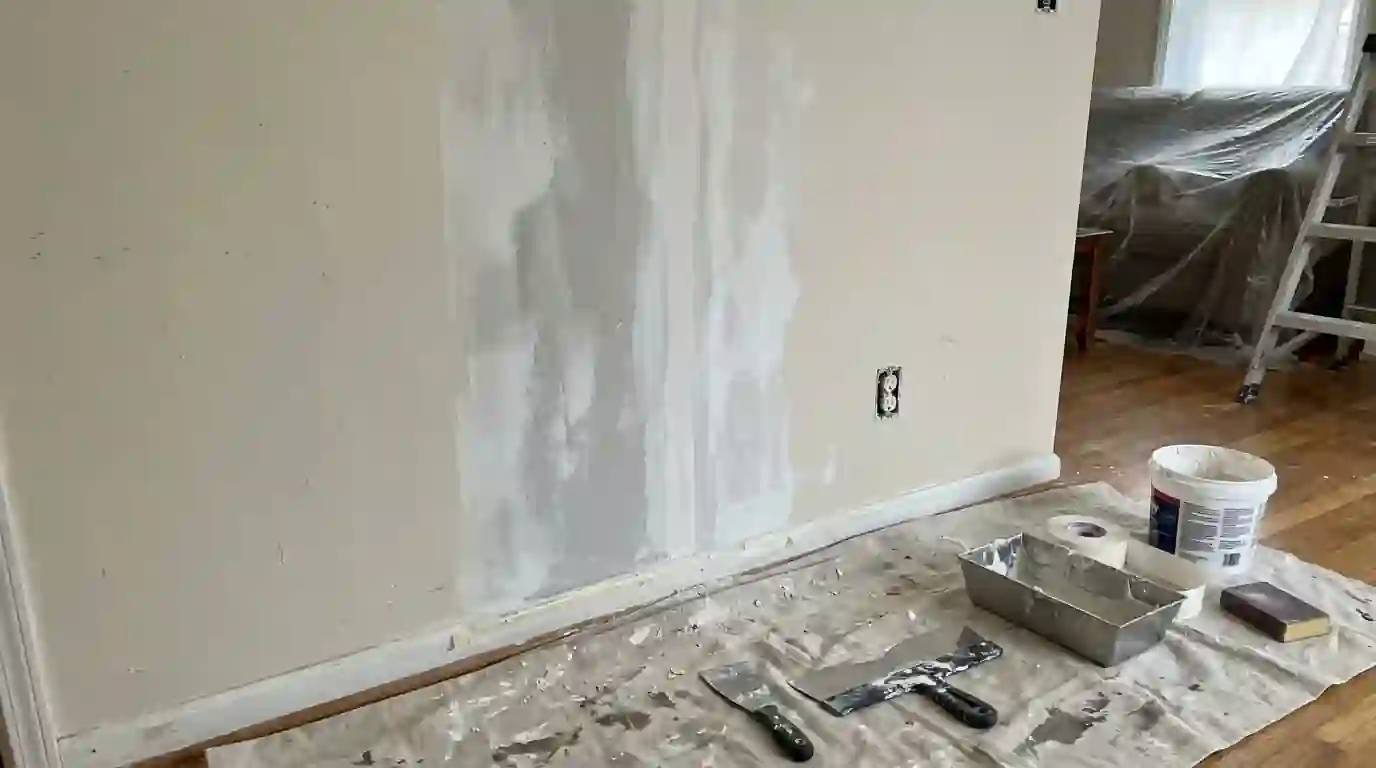
A lasting drywall repair starts by opening the crack slightly with a utility knife so there is room for new material. Loose tape is cut out, and the joint is re-taped with paper or mesh tape bedded in setting compound, which is harder and shrinks less than premixed mud.
On cracks that keep returning at the same door corner, some painters cut back a wider area and use a flexible crack repair tape or fiberglass mesh fabric that spreads the stress. Several thin coats are feathered out wide, often 10 to 14 inches, so the patch disappears under paint.
At trim joints, a high-performance elastomeric or siliconized acrylic caulk with real stretch replaces the brittle old bead. It costs a few dollars more per tube and lasts far longer in a house that moves.
Textured walls add a step. The patch has to be retextured to match orange peel or knockdown before primer and paint, or the repair will flash in raking light. That work is covered under wall texture and skim coating.
Timing repairs around the soil
If you can choose, schedule crack repair and interior painting in the fall, after the summer movement has played out. You see the cracks at their full width, and the repair goes in before the milder months.
Keeping soil moisture steady around the foundation helps every repair last. A soaker hose or drip line around the slab during long dry spells, gutters that drain away from the house, and trees kept a sensible distance from the foundation all reduce movement.
A simple tracking step helps too. Mark both ends of a crack with a pencil and write the date next to each mark. Checking it every month or two shows whether the crack is growing, holding steady or opening and closing with the seasons, which is useful to share with a foundation contractor.
What crack repair typically costs
Repairing cracks as part of an interior paint job is usually affordable. A typical range is $165 to $385 per room for crack repair and spot priming before paint, depending on how many cracks there are and whether the walls are textured.
Larger repairs, such as re-taping a full ceiling seam or rebuilding a damaged corner bead, typically run $285 to $640 per area. The walk-through sets the real number once the crew sees how many openings and seams are involved.
If there are water marks near a crack, ask for stain sealing to be included so the mark does not bleed back through the new paint.
Exterior cracks are a separate item. Gaps in caulk around windows and siding joints let water in, and on the outside of the house those repairs are usually priced as part of the exterior prep.
Follow-up questions
Is a crack above my door a sign of foundation failure?
Not usually. A hairline diagonal crack from the corner of a door frame is one of the most common signs of normal clay soil movement in Dallas homes. It becomes a concern if the crack widens past about 1/4 inch, the door starts sticking or the crack keeps growing. In those cases, a foundation inspection comes before patching.
Should drywall cracks be repaired before or after foundation work?
After. Foundation lifting or pier work moves the house, and that often opens new cracks and closes others. Many foundation contractors suggest waiting a few weeks to a couple of months after the work so the house settles. Then a painter can repair every crack in one visit instead of coming out twice.
Why does caulk keep splitting along my baseboards?
Baseboards are nailed to the wall framing, while the slab moves on its own as the clay underneath swells and shrinks. The caulk joint between them takes the stretch, and brittle caulk cracks fast. Replacing it with a flexible elastomeric or siliconized acrylic sealant, applied in a smooth bead, holds up far longer.
Want a painter to look at it?
Call and a person answers 24/7. We will set a walk-through and give you a written scope.