Stucco Painting
Stucco washing, hairline and wide crack patching, masonry primer and two coats that hold up to North Texas soil movement.
See stucco paintingStucco and block walls in Dallas keep opening hairline cracks as clay soil shifts, and ordinary paint splits right along with them, letting water into the wall.
Elastomeric coating in Dallas typically runs $2.95 to $5.70 per square foot of wall, applied in two coats at roughly 10 to 20 dry mils total. That is several times thicker than standard paint, which is why it bridges hairline cracks. Washing, crack filling and primer are part of the job. The walk-through sets the real number.
Elastomeric is a high-build acrylic coating that stretches and recovers. Applied at the right thickness, it bridges hairline cracks up to about 1/16 inch and sheds wind-driven rain that would otherwise soak into stucco or concrete block. Most products also carry mildew inhibitors, which helps on shaded stucco walls. Think of it as a tough rubber skin over the wall.
It does not fix structural cracks, and it will not hold together a wall that is actively moving. Wide cracks, stair-step cracking in block and gaps that grow each season point to foundation or framing problems that need attention first. We look for those signs first and will tell you when coating a wall would only hide a problem for a few months.
It can also trap moisture in the wrong place. On wood siding or a wall that needs to breathe, a thick elastomeric film can hold water behind it. For those surfaces standard Exterior House Painting with a quality acrylic is the better fit.
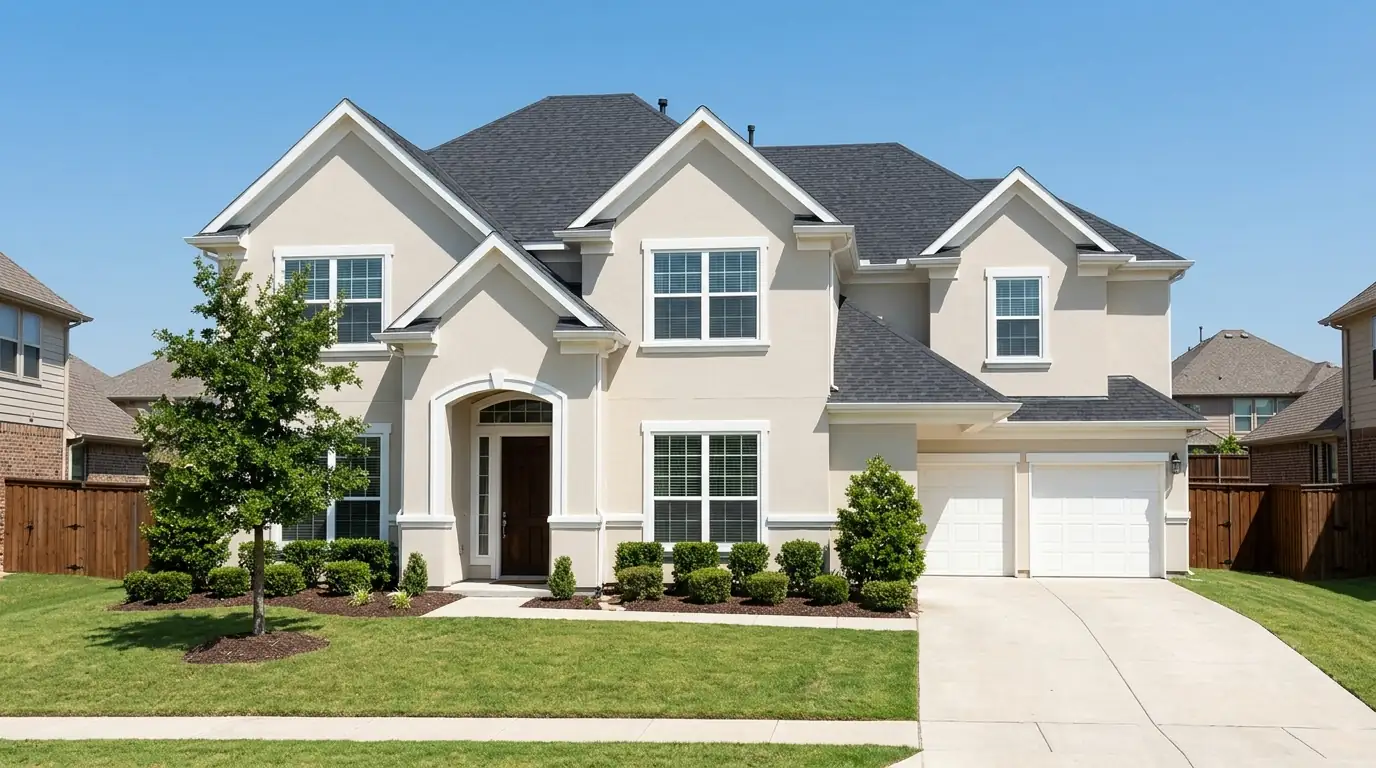
Most of our elastomeric work is on Stucco Painting projects where hairline cracks keep reappearing through regular paint. In Dallas the hot, dry summer followed by a wet spring makes stucco expand and contract more than in milder climates. Sprinkler overspray soaking the bottom of stucco walls every morning adds to the problem.
Commercial block and tilt-wall buildings are the other big use. A building owner can stretch the time between repaints when walls are sealed with a high-build product instead of a thin finish coat. Fewer repaint cycles also means less disruption for tenants and fewer lifts parked against the building. Industrial parks in Garland, Mesquite and along Stemmons Freeway have a lot of painted block that fits this work, and most of it can be coated with tenants still inside.
The walk-through sets your real number, written line by line.
The wall is cleaned first, usually with a low-pressure wash and a mildew treatment on north and shaded sides. Chalky old paint has to be washed off, or the elastomeric will bond to loose powder instead of the wall. Weep screeds at the bottom of stucco walls are cleared so trapped water can still drain out.
Cracks wider than a hairline are opened, cleaned and filled with an elastomeric patching compound or a brushable crack filler. Bare stucco and block get an alkali-resistant masonry primer, because a fresh, alkaline surface can break down the coating and cause it to peel. Patches cure before the primer goes on, which usually means a day between steps.
We also watch the forecast. Elastomeric needs the wall dry and warm enough to cure, and it should not go on when rain is due within a day. In Dallas that rules out a lot of spring afternoons and pushes summer work to early mornings. A dry week in fall is often the ideal window for larger walls.
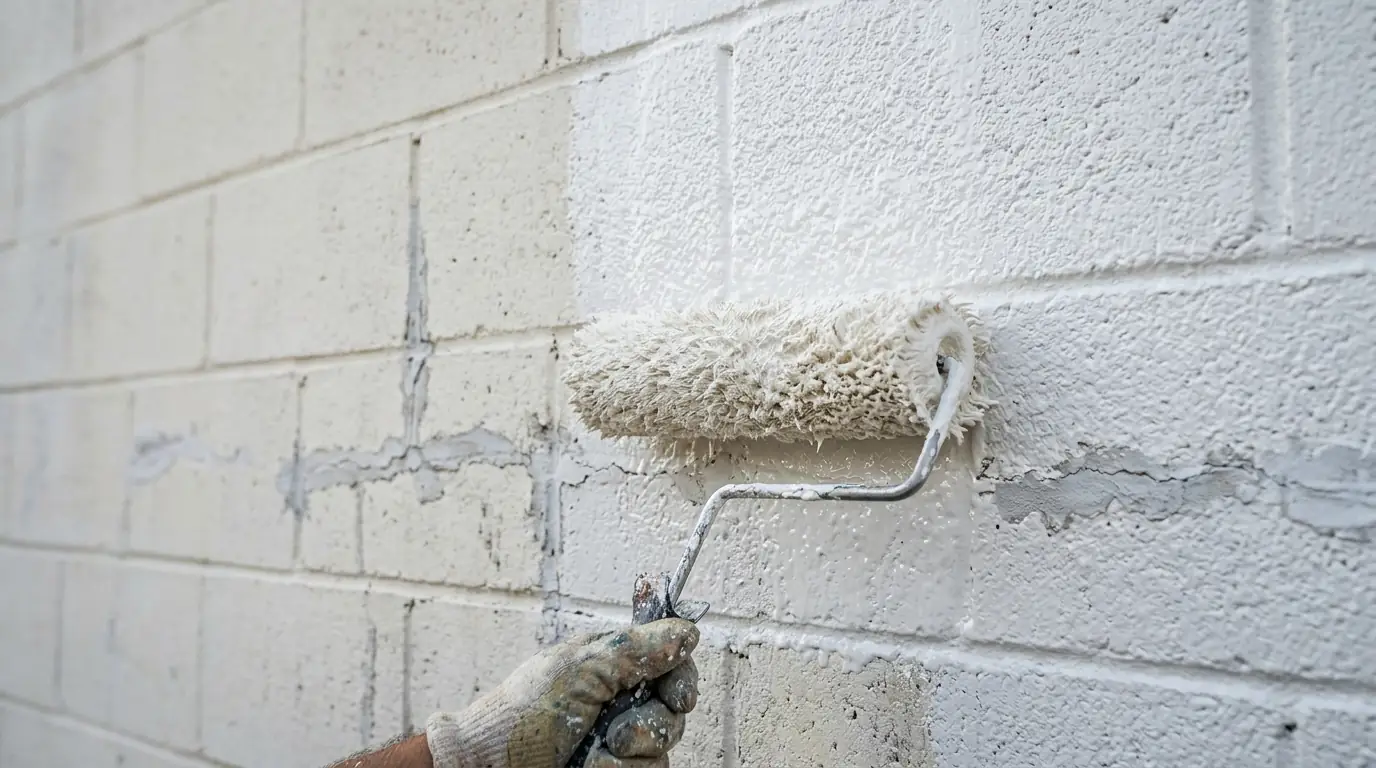
The coating only works at its rated film thickness. We apply it with a heavy-nap roller or an airless sprayer and back-roll, checking wet mil readings as we go so no area is left thin. Two coats are standard. Corners and edges get brushed so the film is not thin where walls meet.
Light colors are the smarter choice in Texas sun. Dark elastomeric heats up, softens and picks up dirt, and it fades faster on south and west walls. Expect a slightly textured, rubbery surface that feels different from regular paint. We bring color samples on actual stucco boards so you can see the texture.
Windows, doors and wood trim are masked off, and Fascia, Soffit & Trim Painting is handled separately with a product suited to each material, so the thick coating stays on the masonry where it belongs. Caulk joints around windows and doors are replaced with a flexible sealant before coating.
Hairline cracks showing through paint within a year
Stucco soaking up water and staying dark after rain
Chalky paint rubbing off on your hand
Map cracking spreading across a stucco wall
Block building walls showing water stains inside
Paint peeling along the bottom of masonry walls
We map cracks, check for moisture and decide which walls suit elastomeric and which do not.
Walls get a low-pressure wash with mildew treatment, and chalky paint is removed.
Cracks are opened and filled with flexible patching compound, then allowed to cure.
Bare or patched areas get an alkali-resistant primer so the coating bonds properly.
Elastomeric goes on in two coats with wet mil checks to reach the rated thickness.
Not exactly. It is highly water resistant and keeps wind-driven rain out of stucco and block, but it is not a below-grade waterproofing membrane. It sheds water from the outside face of above-ground walls. Retaining walls, foundations and planters that hold wet soil against masonry need a different system designed for constant moisture.
Usually, if the existing paint is sound. We test adhesion with tape and wash off chalk before coating. Peeling or flaking areas get scraped and primed. If the old paint is failing across most of the wall, it needs more removal first, because the heavy elastomeric film can pull loose paint away from the wall as it cures.
On properly prepared stucco or block, a two-coat system at full thickness usually holds up noticeably longer than standard exterior paint. South and west walls see the most UV and wear first. Lighter colors, solid crack repair and keeping sprinkler heads aimed away from the walls all help it last. We point out which walls will need attention first.
It hides hairline and map cracks, which make up most of what we see on Dallas stucco. Cracks wider than about 1/16 inch are filled first so the coating has a solid base. Cracks caused by active foundation movement may come back because the wall keeps moving, so we flag those during the walk-through before any money is spent.
Stucco washing, hairline and wide crack patching, masonry primer and two coats that hold up to North Texas soil movement.
See stucco paintingFull exterior repaints with washing, scraping, caulk and two coats, scheduled around Dallas heat and HOA rules.
See exterior house paintingSoft washing for siding, stucco and painted trim, plus surface cleaning for driveways, walks and patios across Dallas.
See pressure washingCall and a person answers, day or night. We will set a walk-through and write up every surface before any work starts.