Trim, Baseboard & Door Painting
Sanded, caulked, and enameled trim, baseboards, and doors with a hard, wipeable finish that resists chips and scuffs.
See trim, baseboard & door paintingOrange oak handrails, scuffed white balusters, and worn risers make the staircase the most dated part of many 1990s and 2000s Dallas-area homes.
Painting a typical staircase in Dallas runs about $1,240 to $3,870, depending on the number of balusters, whether the handrail is restained or painted, and whether treads and risers are included. Most jobs take two to four days because each coat must cure before the stairs take foot traffic. Your real number comes from an in-home walk-through of the stairs.
The common look in Plano, Allen, Flower Mound, and Southlake homes from the 1990s and 2000s is golden oak handrails and treads with white painted balusters and risers. Homeowners now want a darker handrail, crisp white or black balusters, and white risers against stained treads.
Every staircase is a little different, so we break the work into parts and price each one separately. A walk-through lets us count balusters, check whether treads are solid oak or carpet-grade pine, and see what finish is already on the handrail. Pine treads under old carpet usually get painted, while oak treads can be stained.
Wrought iron balusters, common in newer DFW builds, get a different treatment. They are cleaned, scuffed, and coated with a direct-to-metal enamel, the same way we handle wrought iron and metal painting. Loose balusters are reset and glued before painting, since a wobbly baluster cracks fresh paint at the joint.
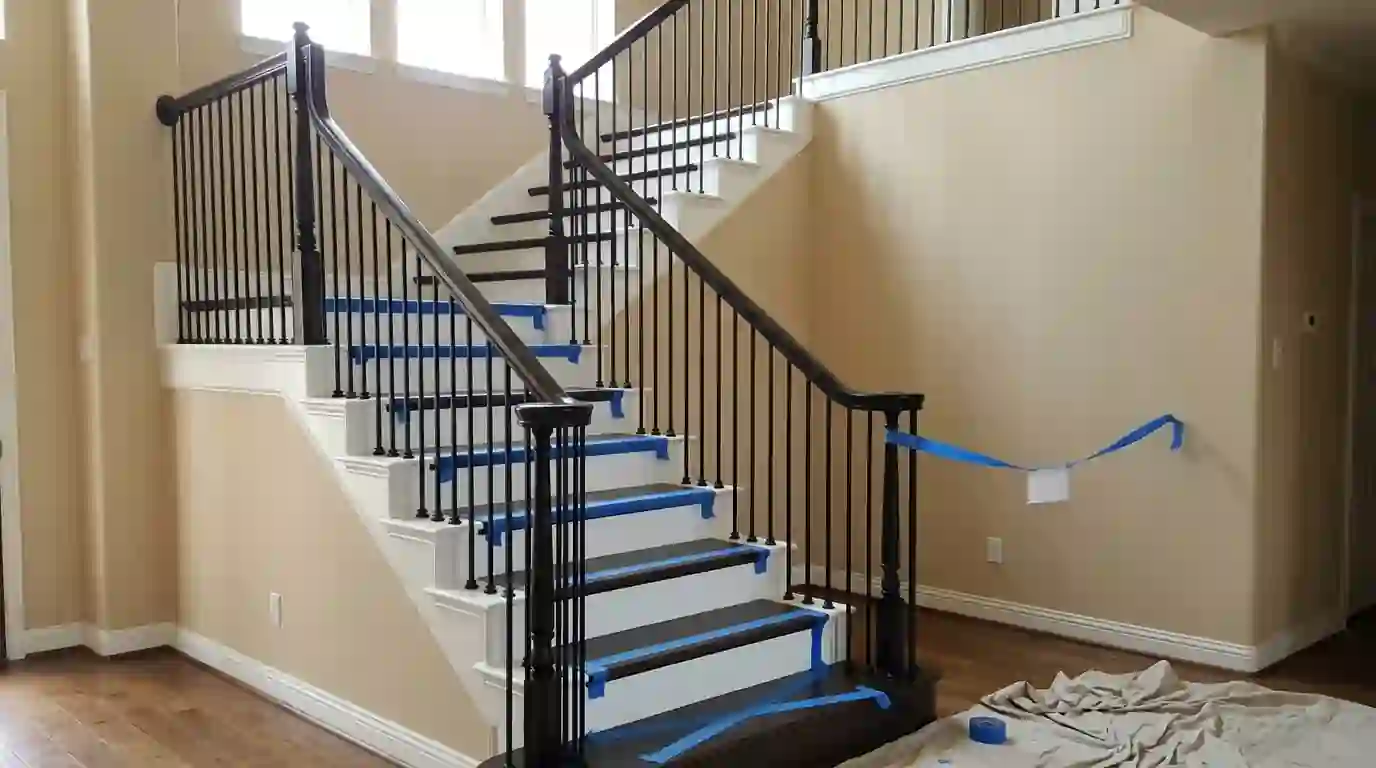
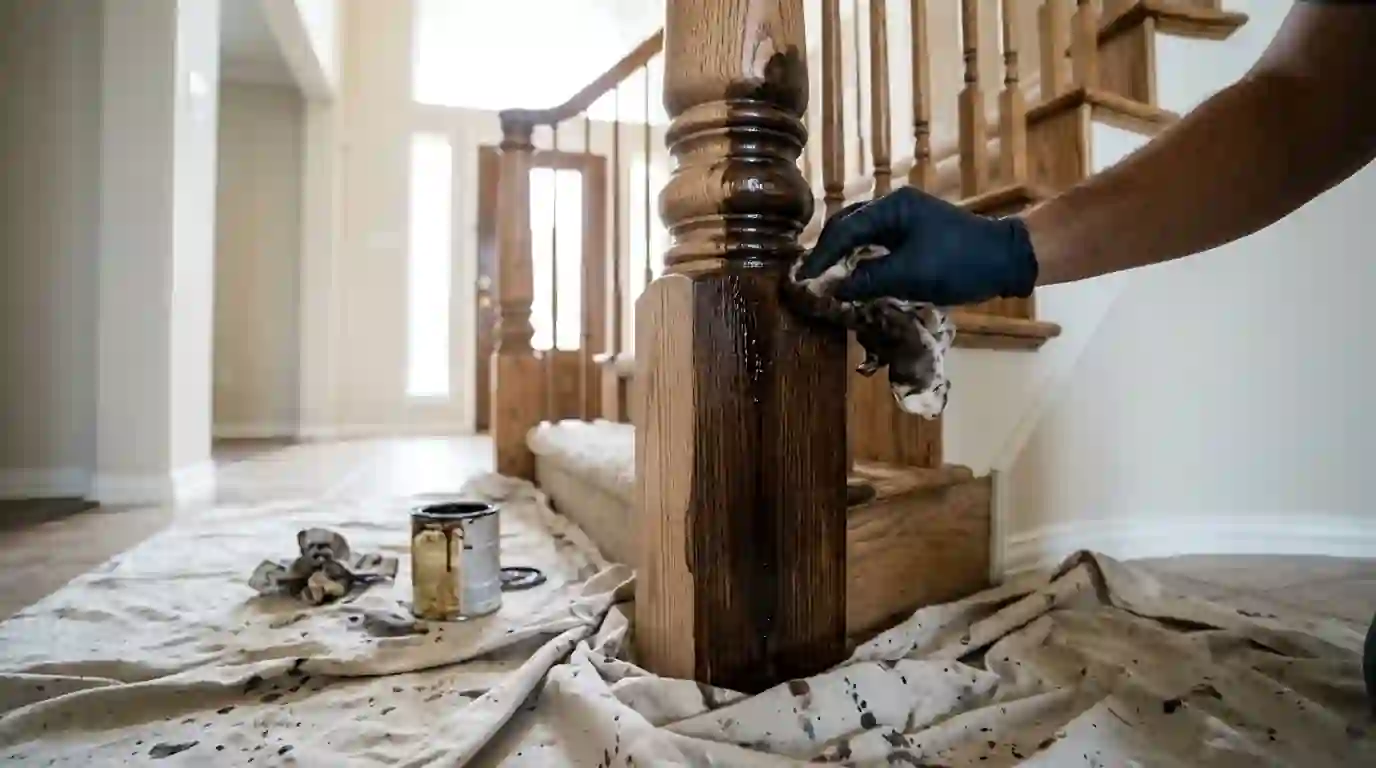
Fully stripping a handrail is slow and messy, especially around turned newel posts. In many cases we can darken oak without stripping by scuff sanding the existing finish and applying a gel stain, such as General Finishes Java or Antique Walnut, which sits on top of the finish instead of soaking in. We test it on the underside of the rail first so you can see the color before committing.
Gel stain is wiped on in thin coats, allowed to dry fully, and sealed with a waterborne polyurethane. The result is a dark, even color that still shows some grain. If you prefer a solid painted handrail, we prime with a bonding primer and use a hard trim enamel instead.
Handrails take more abuse than any other wood in the house, so the topcoat matters. Two to three coats of satin poly hold up to daily hand contact. On treads, we use a floor-grade waterborne poly that resists scuffing from shoes.
The walk-through sets your real number, written line by line.
Most families need their stairs every day. We work on alternate balusters and treads, or one side of the staircase at a time, so there is always a path up and down. Tape and signs mark which steps are wet.
Waterborne finishes dry to the touch in about two hours, but treads need at least 24 hours before light foot traffic in socks, and closer to a week before shoes and rugs. In the dry air of a Dallas summer with the AC running, drying goes faster, though full curing still takes time. Rugs and runners should go back only after that week has passed, since rug pads can mark a soft finish.
Dust control matters on stairs because sanding dust drifts down to the floor below. We hang plastic at the base of the stairs and vacuum with HEPA equipment as we go. Treads are sanded last so dust does not settle onto fresh paint on the balusters.
Staircases are a natural add-on to trim and door painting since the risers, skirt boards, and balusters use the same enamel. Tall stairwell walls and ceilings need ladders and planks, so we plan them with ceiling painting to set up access once. Black balusters against white risers need a careful cut line, so we paint balusters before the risers and skirt boards.
If the treads are worn through to bare wood, a full sand and refinish may be needed rather than a recoat. For natural wood work beyond the stairs, see wood staining and clear coats. Carpeted stairs can have the carpet pulled and the treads painted or stained, which is a popular update in 2000s homes.
On pre-1978 homes with original painted staircases, such as older Swiss Avenue and Munger Place houses, we sand using lead-safe practices, misting the surface and containing dust. Old layers of paint on those staircases are often thick enough to hide detail, so careful sanding brings back the profile.
Golden oak handrail looks dated against new floors
Scuffed and chipped white balusters
Risers marked up by shoes and vacuums
Treads worn through to bare wood
Iron balusters showing rust spots
Peeling paint on newel posts
We count balusters, check the finish on handrails and treads, and agree on paint or stain for each part.
Floors below, walls, and nearby rooms are covered, and plastic goes up at the base of the stairs.
Surfaces are scuff sanded, cleaned, and primed with a bonding primer where paint is going on.
Handrails get gel stain or enamel, balusters and risers get paint, working one side at a time.
Handrails and treads get polyurethane, and we mark cure times before shoes and rugs go back.
Yes. Most handrails stay in place. We scuff the existing finish, wipe on a gel stain in thin coats, and seal it with polyurethane. This works well on oak with an intact factory finish. If the old finish is damaged or the rail has heavy buildup, it may need to be stripped first, which adds time.
Light traffic in socks is usually fine after about 24 hours. Shoes, pets, and rugs should wait about a week so the finish can harden. We work one side at a time on most staircases, so there is a usable path the whole time, and we mark which treads are still wet.
It depends on the rest of the house. Black balusters with a dark handrail and white risers give a modern look that suits many Frisco and Plano homes. White balusters feel more traditional and work in older East Dallas houses. We can paint a few as samples before committing to the whole run.
Yes. Iron balusters are cleaned, scuffed, spot primed with a rust-inhibiting primer where needed, and finished with a direct-to-metal enamel. Brushing each baluster takes time, so iron staircases are priced per baluster. Scuffed or chipped factory finishes on newer iron are common and touch up well.
Sanded, caulked, and enameled trim, baseboards, and doors with a hard, wipeable finish that resists chips and scuffs.
See trim, baseboard & door paintingRust removal, rust-inhibiting primer and durable enamel for iron railings, gates, fences and balconies across Dallas and DFW.
See wrought iron & metal paintingRestaining and clear coat refinishing for trim, doors, beams, paneling and built-ins, from 1920s Swiss Avenue homes to newer builds.
See interior wood staining & clear coatsCall and a person answers, day or night. We will set a walk-through and write up every surface before any work starts.