Ceiling Painting
Even, stripe-free ceiling coats for standard, vaulted, and two-story rooms, with stains sealed before the finish goes on.
See ceiling paintingPopcorn texture traps dust, yellows with age, and dates a 1970s Dallas house instantly, but scraping it without testing first can spread asbestos through the home.
Popcorn removal in Dallas typically costs $1.85 to $3.45 per square foot of ceiling, including containment, scraping, seam repairs, new texture or a smooth finish, primer, and paint. Homes built before the mid-1980s get a lab test for asbestos before any scraping. A typical 1,800 square foot single-story home runs about $3,420 to $6,180. The in-home walk-through sets the final figure for your house.
Acoustic popcorn texture was sprayed on ceilings across DFW from the 1950s into the 1980s, and some of the older mixes contained asbestos. Ranch homes in Richardson, Garland, Mesquite, and Lake Highlands built in those years are where we see it most. Some later mixes were asbestos-free, but there is no way to tell by looking at the ceiling.
Before we touch the ceiling, a small wetted sample goes to an independent testing lab. Results usually come back in two to four business days. If the test is negative, we schedule removal. If it is positive, the ceiling has to go to a dedicated asbestos abatement contractor, and we come back afterward to texture and paint.
Homes built well after the mid-1980s still get a look at the walk-through, but testing is less often needed. We will tell you plainly which case your house falls into. Testing costs far less than cleaning up a contaminated house, so we treat it as a normal first step.
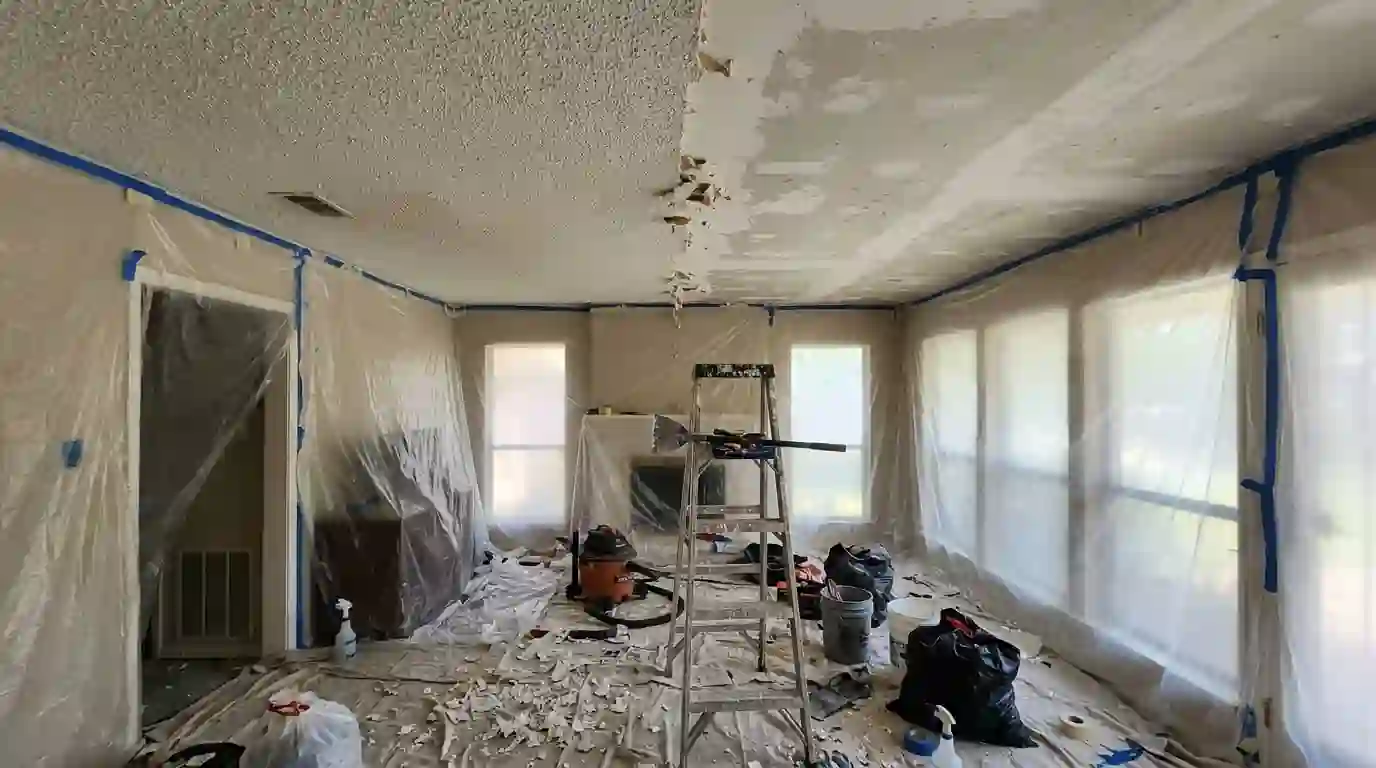
Popcorn removal is the messiest job in interior painting. Everything that can leave the room does, and what stays gets wrapped. Walls are covered in plastic from ceiling line to floor, and floors get plastic plus a layer of rosin paper so wet texture does not soak through. Everything else in the room gets bagged or covered too.
We shut off the HVAC and seal supply and return vents so the system does not pull debris through the house. Light fixtures and ceiling fans come down, and the wiring is capped. Recessed can lights are covered with plastic and tape so wet texture does not drip into the housings.
The texture is misted with water in small sections, left to soak for ten to fifteen minutes, and scraped with a wide blade. Popcorn that was painted years ago does not soften as easily, so it takes more soaking and a slower pace. We keep a shop vacuum running at floor level and change blades often, since a dull edge gouges the drywall.
The walk-through sets your real number, written line by line.
Scraping reveals the real ceiling, and it is rarely pretty. Builders often skipped proper taping and finishing because the popcorn hid everything. Expect visible seams, nail pops, and a few gouges from the blade. Corners and the line where ceiling meets wall usually need the most cleanup.
The lower-cost option is a knockdown or orange peel texture, which hides small flaws and matches most DFW walls. A smooth Level 5 finish takes a full skim coat and extra sanding, so it costs more but looks clean in modern and older homes alike. For more on that work, see wall texture and skim coating.
After the texture or skim dries, the ceiling gets a drywall primer and two coats of flat ceiling paint. Any wall damage from the plastic tape is patched as part of the job. Ceilings that will stay smooth also get a careful check with a work light before primer, since smooth surfaces show every ridge.
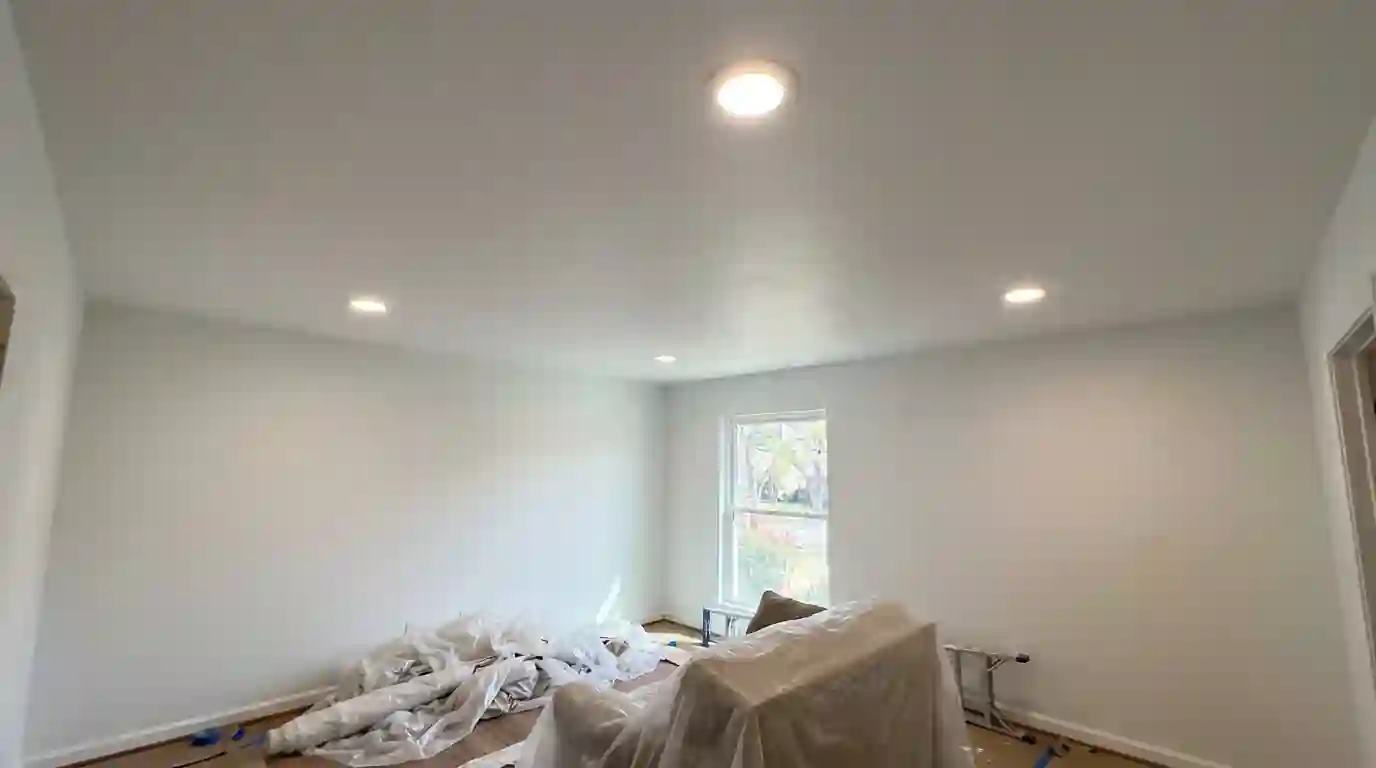
A typical room takes one to two days from setup to final paint, and a whole single-story house takes about a week. Because the HVAC has to be off while scraping, we schedule big jobs in spring or fall when possible, or start very early on summer days. Hot attics in July make ceiling work hard on the crew too, which is another reason we favor cooler months.
Most homeowners combine removal with interior house painting since the walls already need touch-ups after the plastic comes down. Water stains hiding under the popcorn get sealed before the new texture goes on, the same way we treat stains during ceiling painting. Removal also exposes fixture locations clearly, so it is a good time to add recessed lights or move a fan box.
Rooms do not need to be empty for good, only for the removal days. Furniture can usually go back once the primer is on. Plan on one or two rooms being out of use at a time, rather than the whole house at once.
Ceiling texture is flaking onto floors or furniture
Yellowed popcorn that paint will not brighten
Water spots dotting a textured ceiling
Cobwebs and dust stuck in the texture
Planning to sell a 1970s or 1980s home
Remodeling a room and want modern ceilings
We measure ceilings, check the build year, and take a texture sample for lab testing when the house is old enough to need it.
Walls and floors get plastic, fixtures come down, and HVAC vents are sealed off.
Texture is misted, soaked, and scraped in small sections, then bagged and carried out.
Seams are taped, nail pops reset, and the ceiling is textured or skimmed smooth.
A drywall primer and two flat coats go on, then the plastic comes down and walls are touched up.
You cannot tell by looking. The only reliable answer is a lab test of a small sample. In Dallas, ceilings sprayed before the mid-1980s are the ones most likely to test positive. We wet the spot before taking the sample and send it out. If it comes back positive, do not scrape it yourself, because it needs an abatement contractor.
Yes, in most cases. We contain the rooms being worked on and seal the HVAC so debris stays put. You will lose use of those rooms for a day or two and the AC will be off during scraping hours, which is the main inconvenience in summer. Pets are usually happier with a friend or kennel on scraping days.
Up front, yes. Spraying a coat of paint over popcorn costs less than removal. But paint makes the texture harder to remove later, does nothing for flaking, and the ceiling still looks dated. If you plan to stay in the house for years or sell soon, removal usually pays back more than paint.
Wet scraping keeps airborne dust low, but the debris itself is heavy and wet, and it lands everywhere inside the containment. The real dust comes later, during sanding of the new skim or texture. We use pole sanders with vacuum attachments where possible and clean daily, so it stays inside the plastic.
Even, stripe-free ceiling coats for standard, vaulted, and two-story rooms, with stains sealed before the finish goes on.
See ceiling paintingSmooth Level 5 skim coats, knockdown and orange peel matching, and texture changes, sanded and primed for paint.
See wall texture & skim coatingTwo-coat wall painting with real prep: crack repair, spot priming, sharp cut lines, and furniture moved and covered.
See interior house paintingCall and a person answers, day or night. We will set a walk-through and write up every surface before any work starts.