Interior House Painting
Two-coat wall painting with real prep: crack repair, spot priming, sharp cut lines, and furniture moved and covered.
See interior house paintingBaseboards chipped by vacuums, yellowed oil trim, and doors covered in handprints make even freshly painted walls look unfinished and a little neglected.
Trim and baseboard painting in Dallas typically runs $1.65 to $3.10 per linear foot, and interior doors run $135 to $260 each for both sides and the jamb. Price includes cleaning, sanding, caulk, primer where needed, and two coats of enamel. Converting yellowed oil trim to waterborne enamel costs more. The in-home walk-through gives you the actual figure.
Trim is where prep shows most. Baseboards collect dust, grease, and wax from floor cleaners, and doors collect hand oils around the knob. We degrease everything first, then scuff sand with fine grit so the new enamel can grip. Window sills get extra degreasing in kitchens and laundry rooms.
Dallas homes go through a lot of caulk. As the slab moves with the clay soil, gaps open between baseboards and walls, and the joints at window and door casing split. We cut out failed caulk and run new beads of a flexible paintable caulk so the joints stay closed through the next summer. Skipping this step leaves gaps that show up as dark lines within a year.
Dents and gouges in wood or MDF trim get filled with a sandable wood filler, not spackle, which can shrink and crack under enamel. Nail holes are filled and sanded flush, and any loose joints in casing are glued and pinned before caulk.
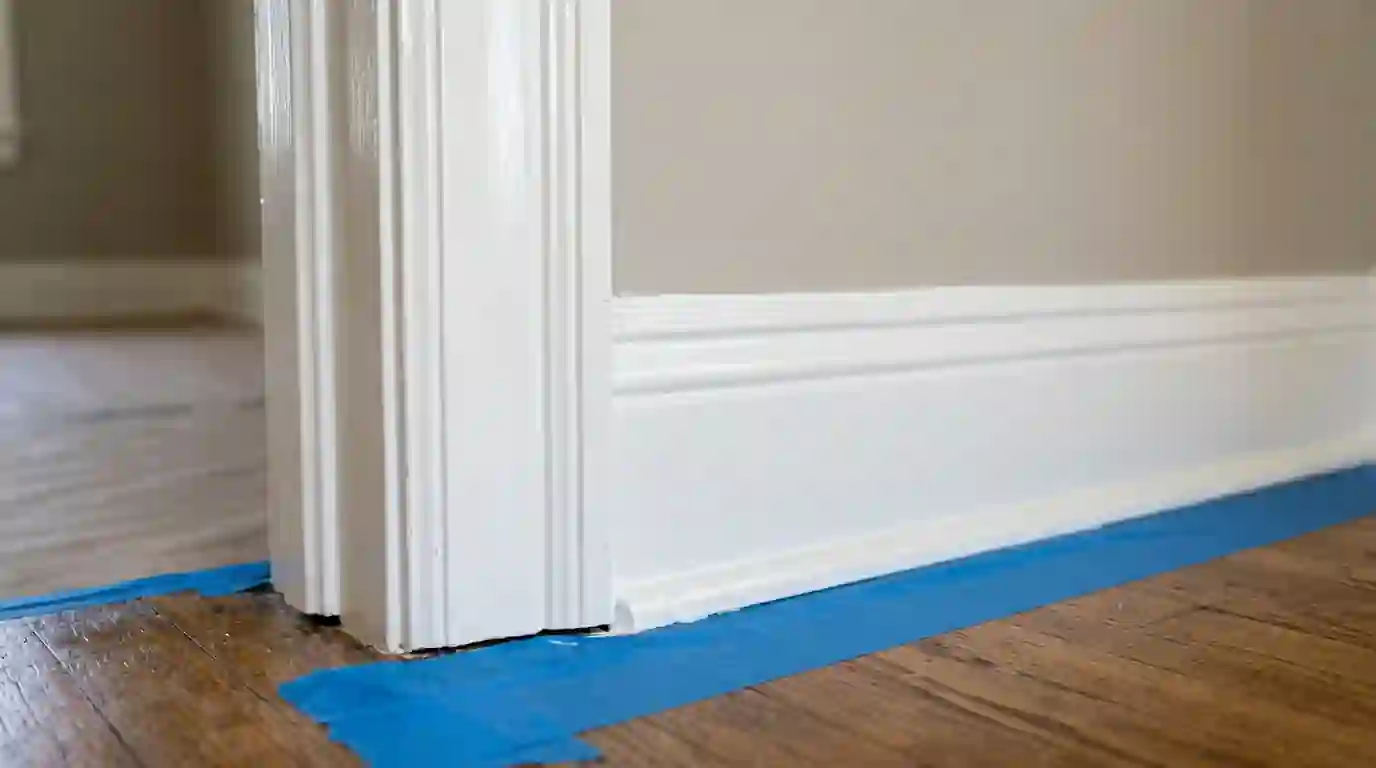
Many homes in the M Streets, Lakewood, Bluffview, and Kessler Park still have original trim coated in oil enamel. Over decades it turns yellow, and latex applied directly on top will peel off in sheets. We test with denatured alcohol: if the paint does not soften, it is oil. On those houses, we always test before we prime.
Oil trim gets a thorough scuff sand and a bonding primer like Sherwin-Williams Extreme Bond or Benjamin Moore Stix before any waterborne topcoat. On pre-1978 homes we use lead-safe practices: wet sanding, plastic containment, and HEPA cleanup. That keeps lead dust out of carpets, vents, and the rest of the house.
Once primed, the trim takes a waterborne alkyd enamel such as Sherwin-Williams Emerald Urethane Trim Enamel or Benjamin Moore Advance. These level out like oil, dry harder than standard latex, and do not yellow. We apply them with a quality brush and, on long flat runs, a small foam roller to keep brush marks to a minimum.
The walk-through sets your real number, written line by line.
Six-panel doors, flat slab doors, and French doors each need a different order of work. Panel doors are painted in a set sequence, panels first, then rails, then stiles, so brush marks run with the grain of each part. Slab doors are rolled with a fine foam roller and tipped off with a brush.
We take doors off their hinges when we can, paint them flat on stands in the garage, and rehang them once they have cured. That avoids drips and lets both sides be finished in one pass. Each door is numbered so it goes back on the right opening.
Doors that cannot come off, like pocket doors or heavy solid-core doors, are painted in place with tape on the floor and hardware removed. Bifold closet doors are taken down and painted flat, then rehung and adjusted so they track properly.
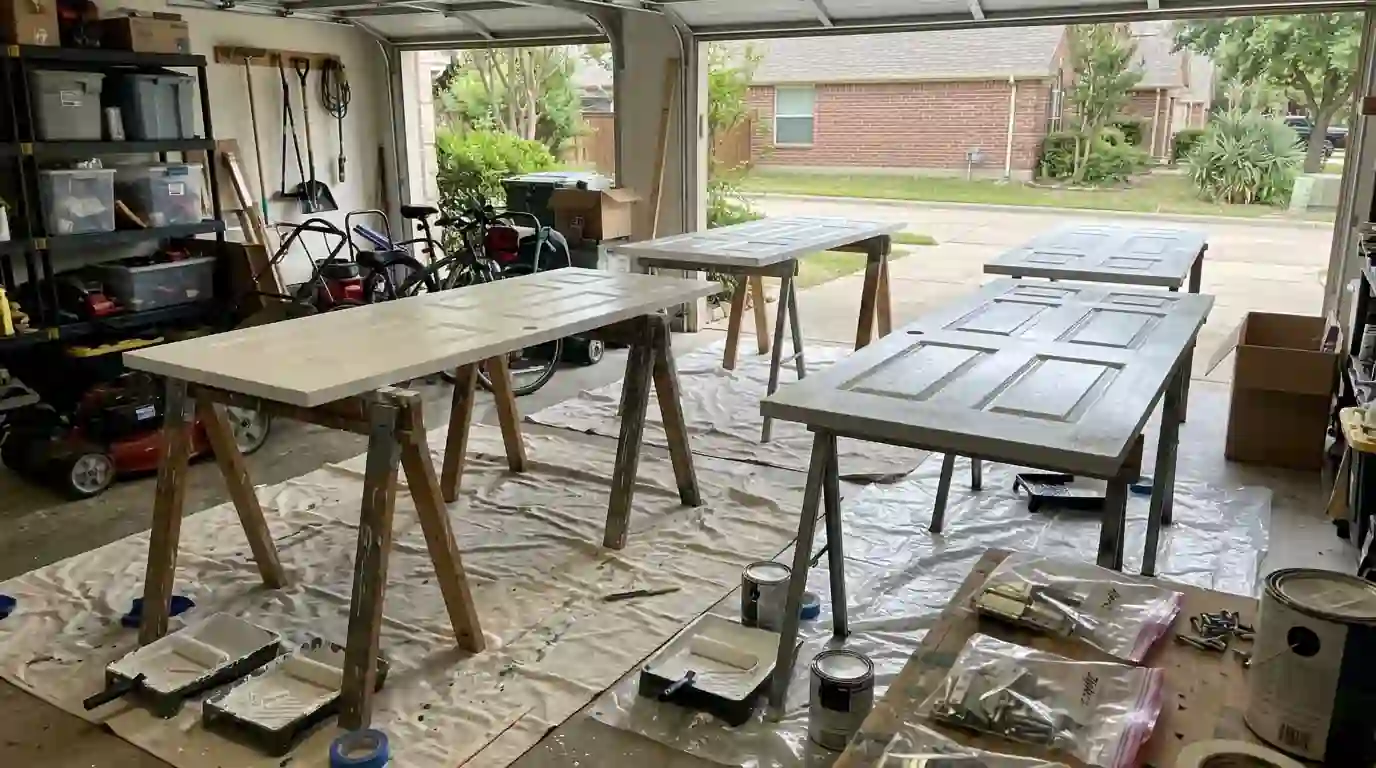
Semi-gloss is the classic trim sheen and the easiest to clean. Satin looks softer and hides small flaws, which suits older homes with wavy original trim. We usually match sheen on doors, casing, and baseboards so everything reads as one system.
Trim is often done during an interior repaint, since the crew paints trim first and then cuts the walls to it. If you have a staircase, staircase and railing painting pairs naturally because the risers and skirt boards use the same enamel. For stained wood trim you want to keep natural, see interior wood staining and clear coats.
Enamel takes longer to cure than wall paint. Keep furniture and rugs off baseboards for a few days, and avoid hanging anything heavy on freshly painted doors for about a week. Plan to leave doors slightly open overnight for the first few days so they do not stick to the stops.
Vacuum chips along baseboards in main rooms
Yellowed trim next to fresh white walls
Gaps opening between baseboards and walls
Handprints and grime around door knobs
Peeling latex over old oil trim
Brush marks and drips on interior doors
We measure linear feet, count doors, and test for old oil paint at the walk-through.
Trim is degreased and scuff sanded, and doors come off their hinges where possible.
Failed caulk is cut out and replaced, and dents are filled with sandable wood filler.
Oil trim and bare wood get a bonding primer before any waterborne enamel goes on.
Trim and doors get two coats, then hardware goes back on and doors are rehung.
Usually a waterborne alkyd or urethane enamel, such as Sherwin-Williams Emerald Urethane Trim Enamel or Benjamin Moore Advance. They flow out smooth, dry hard, and resist the chips and scuffs that baseboards and doors take. They also stay white, unlike old oil enamel, which yellows in rooms that do not get much daylight.
Yes, but only after the right prep. Latex over glossy oil will peel. We clean the trim, scuff sand it, and apply a bonding primer made for oil surfaces. After that, a waterborne enamel bonds well and will not yellow. Skipping the primer is the most common reason DIY trim jobs start peeling within months.
Yes. Top, bottom, and side edges get sealed, which keeps the door from absorbing moisture and swelling during humid spring weather. We keep the edge coats thin so the door still closes without sticking, and we let it cure before rehanging so it does not bond to the stop.
Enamel feels dry in a few hours, but it takes two to three weeks to cure hard. Light dusting is fine after a few days. Wait about two weeks before wiping baseboards with a damp cloth, and avoid harsh cleaners for the first month. Running the vacuum close to the boards right away can scuff the soft finish.
Two-coat wall painting with real prep: crack repair, spot priming, sharp cut lines, and furniture moved and covered.
See interior house paintingBalusters, handrails, newel posts, risers, and skirt boards updated in paint or stain while one side stays walkable.
See staircase & railing paintingDoors removed and shop-sprayed, boxes primed and finished on site, with a hard enamel built for Dallas kitchens used every day.
See kitchen cabinet paintingCall and a person answers, day or night. We will set a walk-through and write up every surface before any work starts.