Cabinet painting, refinishing or new cabinets: a cost and condition guide
A tired kitchen does not always need new cabinets. If the boxes are solid, paint or a new stain can change the room for a fraction of the cost. Here is how to tell which path fits.
Key takeaways
- Solid, dry boxes are worth keeping regardless of finish
- Painting typically costs $3,840 to $7,960 and takes about a week
- Refinishing suits good wood you want to keep visible
- Replace only for layout changes or damaged boxes
Start with the condition of the boxes
The first question is structural, not cosmetic. Open every door and drawer and look at the cabinet boxes, shelves and face frames. Solid wood or good plywood boxes that are square and dry are worth keeping no matter how dated the finish looks.
Particleboard that has swollen under the sink, drawers that have come apart at the corners, or water damage near the dishwasher point the other way. Paint will not fix soft material, and refinishing does not hold on swollen edges.
Many Dallas homes built from the 1970s through the early 2000s have oak or maple cabinets that are structurally fine but look dated. Those are the classic candidates for paint.
A quick test helps: press a fingernail into the underside of a shelf near the sink. If it dents easily or feels spongy, that box has taken on water and needs a closer look before any finish plan.
What painting cabinets involves
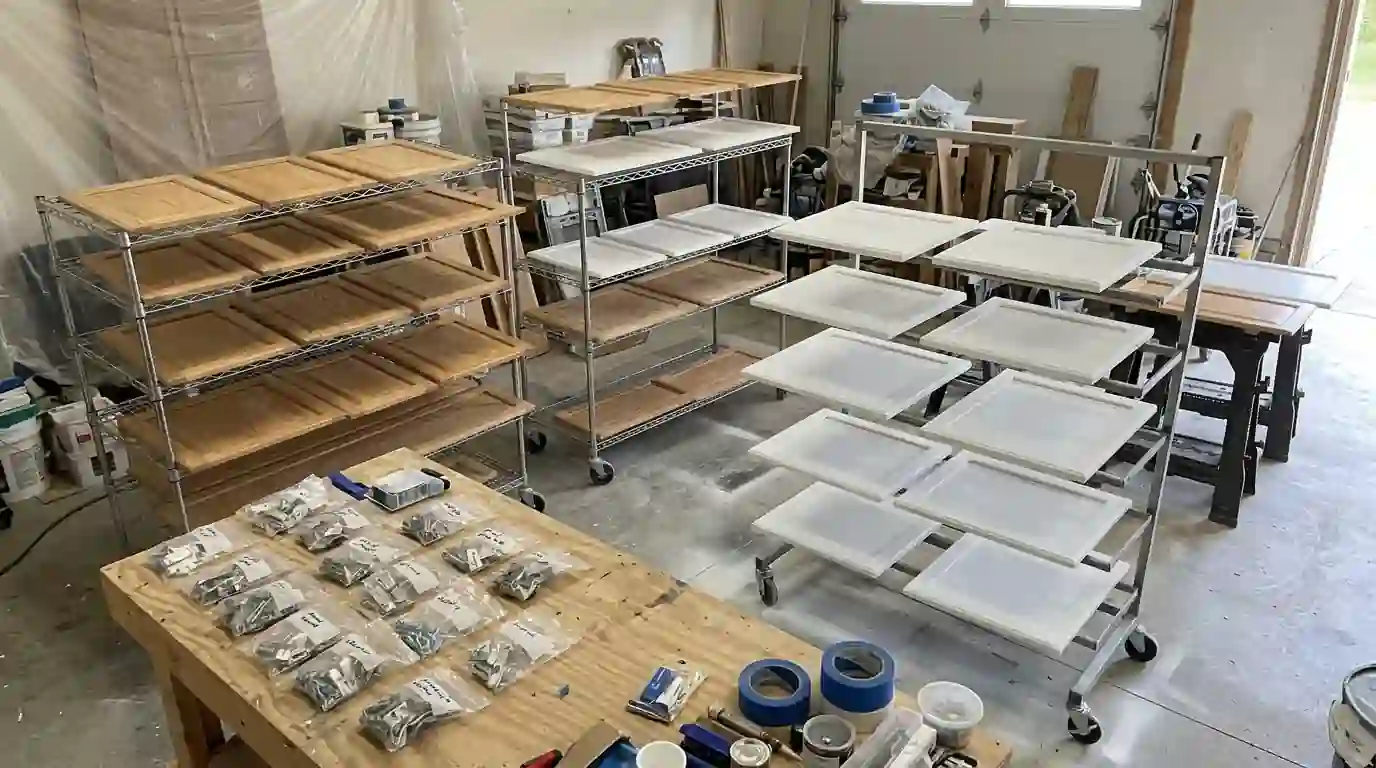
Proper cabinet painting is more than rolling color over the doors. Doors and drawer fronts come off and go to a shop or a staging area, hinges and pulls are bagged and labeled, and every surface is degreased, scuffed and primed with a bonding primer before two finish coats.
The finish coat is the key. Urethane-modified alkyds and waterborne enamels made for cabinets level out smooth and cure hard. Wall paint is too soft for doors that get handled dozens of times a day.
A typical Dallas kitchen with 25 to 35 doors and drawer fronts takes five to eight working days, and the kitchen is usable most evenings. A typical range runs $3,840 to $7,960, with large islands, glass doors and built-in pantries pushing toward the top.
Most painters spray cabinet doors in a controlled area for the smoothest finish, and brush or spray the face frames in place after masking off counters, appliances and floors. The cabinet interiors are usually left as is unless you ask for them, which keeps the price and schedule in line.
When refinishing or restaining makes more sense
If you like wood grain, refinishing keeps it. A light restain can deepen color, even out sun fading or refresh a worn clear coat. Going darker is straightforward. Going much lighter usually is not, because stripping a factory finish back to raw wood on every door is slow and expensive.
Refinishing a kitchen in the same tone or slightly darker typically runs $3,260 to $6,480. A full strip and restain lands closer to the cost of painting or higher, and results depend heavily on the wood species and the original finish.
Refinishing fits cherry, walnut or quarter-sawn oak cabinets where the wood itself is the selling point.
Staining over painted cabinets is a different matter. Once a door has been painted, getting back to a wood look means a full strip, and on many doors the paint has soaked into the grain far enough that a clean stain result is not possible.
When replacement is the right call
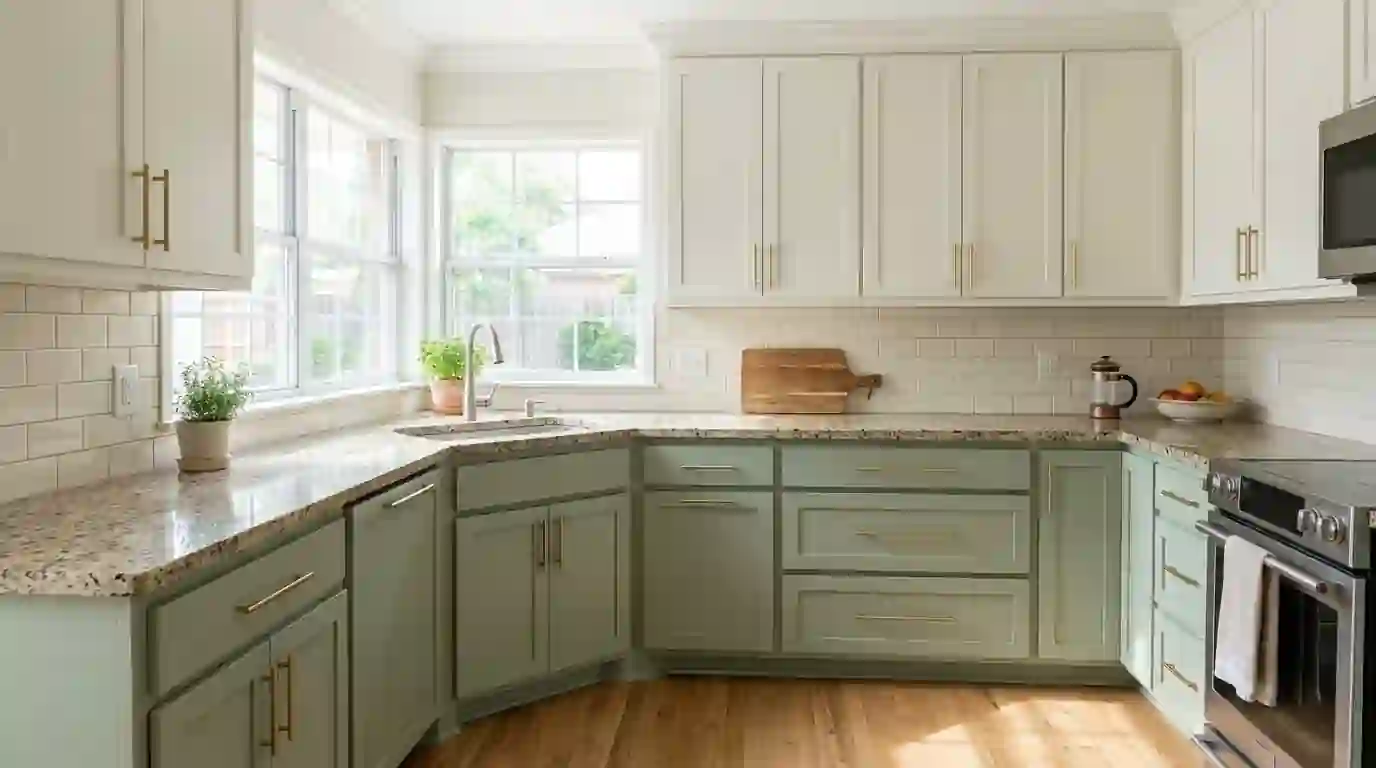
New cabinets make sense when the layout is the real problem. If you want to move the sink, add an island or change where the refrigerator goes, no finish will solve that.
Replacement also makes sense when the boxes are damaged or built from low-grade particleboard. Expect a much bigger budget: for a mid-range Dallas kitchen, new stock or semi-custom cabinets with installation typically start around $14,700 and run past $32,000, before counters, plumbing and electrical.
Replacing cabinets usually means the countertops come off, the backsplash gets redone, and the kitchen is out of service for weeks rather than days.
- Paint: typically $3,840 to $7,960, five to eight working days
- Refinish in the same tone: typically $3,260 to $6,480, about a week
- Replace: typically $14,700 and up before counters, several weeks
- Paint and refinish both keep your existing counters and backsplash
How long each option holds up
A properly prepped and sprayed painted cabinet finish holds up for 8 to 12 years in a busy kitchen, with small touchups around the sink base and the trash pull-out. White and off-white show edge wear sooner than mid-tone colors.
Stained and clear-coated wood hides wear well because small scratches blend into the grain. A fresh clear coat every 8 to 10 years keeps it looking new.
Factory finishes on new cabinets are very hard, but chips on factory-painted doors are harder to repair invisibly than on site-painted doors, which can be touched up with the same product.
Daily habits make a difference with any finish. Wiping spills right away, using a soft cloth instead of abrasive pads, and not hanging damp towels over the sink base door all add years to painted or stained cabinets.
Questions to answer before you decide
Ask yourself three things. Are the boxes solid and dry? Does the layout work for how you cook? Do you want wood grain or a solid color? Two yeses and a color preference usually point to paint.
Also think about the rest of the kitchen. If the countertops are staying, painting or refinishing protects that investment. If counters are being replaced anyway, the cost gap between paint and new cabinets narrows a little, though it rarely closes.
A walk-through takes the guesswork out. A painter can open doors, test the existing finish with a scuff and solvent wipe, and give you a written number for paint or refinish in one visit. If the bathroom vanities match the kitchen, they can be priced at the same time.
If you are still undecided, ask for a sample door. Most painters can prep and finish one door in your chosen color or stain so you can see it against your counters, floors and lighting before committing to the whole kitchen.
Follow-up questions
Will painted cabinets chip in a busy kitchen?
Some wear at high-touch edges is normal after several years, mostly near the sink base, the trash pull-out and the most-used drawers. A bonding primer and a cabinet-grade enamel keep chips small and rare. Because the finish is applied on site, small spots can be touched up with the same product instead of replacing a door.
Can I paint my cabinets myself and save the cost?
You can, but the work is slower than most people expect. Degreasing, sanding, priming and two finish coats on 30 doors with proper dry times take weeks of evenings, and brush marks show on smooth doors. Many homeowners who start themselves call a painter halfway through. If you try it, test one door first and use a cabinet enamel.
Should I replace hardware and hinges when painting cabinets?
New pulls are an easy upgrade, and choosing them before painting helps, because hardware with different hole spacing means filling the old holes first. Hinges are worth replacing if they are worn or if you want soft-close action. Concealed hinges stay hidden, while exposed hinges can be cleaned, refinished or swapped to suit the new color.
Want a painter to look at it?
Call and a person answers 24/7. We will set a walk-through and give you a written scope.