Garage Door Painting
Garage door repaints for faded steel, wood carriage and composite doors, with rust prep, two coats and matching jamb trim.
See garage door paintingDallas garage slabs crack with clay soil movement, grab hot tires in summer, and peel when a cheap epoxy kit goes down over a sealed or damp surface.
A typical two-car garage in Dallas, about 400 to 480 square feet, runs $1,860 to $3,740 for a ground, crack-filled, full-broadcast flake system with a clear topcoat. Most jobs take one to two days, and you can park again after 24 to 72 hours depending on the topcoat. The walk-through sets the real number after a moisture check.
North Texas clay swells after a wet spring and shrinks hard in August, and a garage slab rides that movement. Hairline cracks open at control joints and corners, and a coating laid over them without repair simply shows the crack again within a season. We check for all three during the walk-through. A few drops of water on the slab, a look at the joints and a moisture reading tell us more about how a coating will hold up than the age of the house does.
Heat is the second problem. A tire coming off a July highway can sit near 140 F, and when it parks on a thin water-based garage kit the softened film grabs the tread and lifts. That is called hot tire pickup, and it is the most common failure we see on store-bought epoxy in Dallas garages.
Newer homes in Frisco, Prosper and McKinney add a third issue. Builders often spray a curing compound or clear sealer on fresh concrete, and coatings will not bond to it. Older slabs in Lake Highlands or Casa Linda may have no vapor barrier at all, so moisture pushes up from below and blisters the coating from underneath.
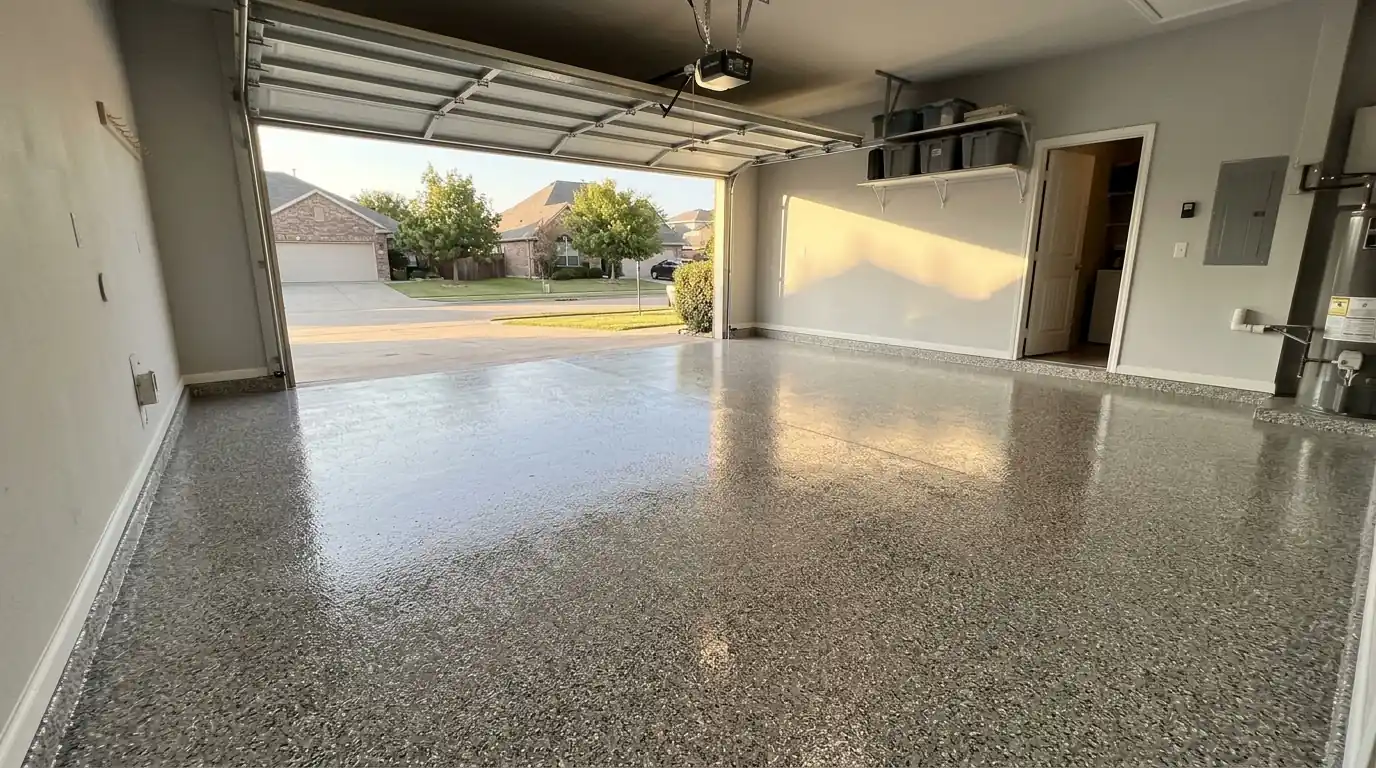
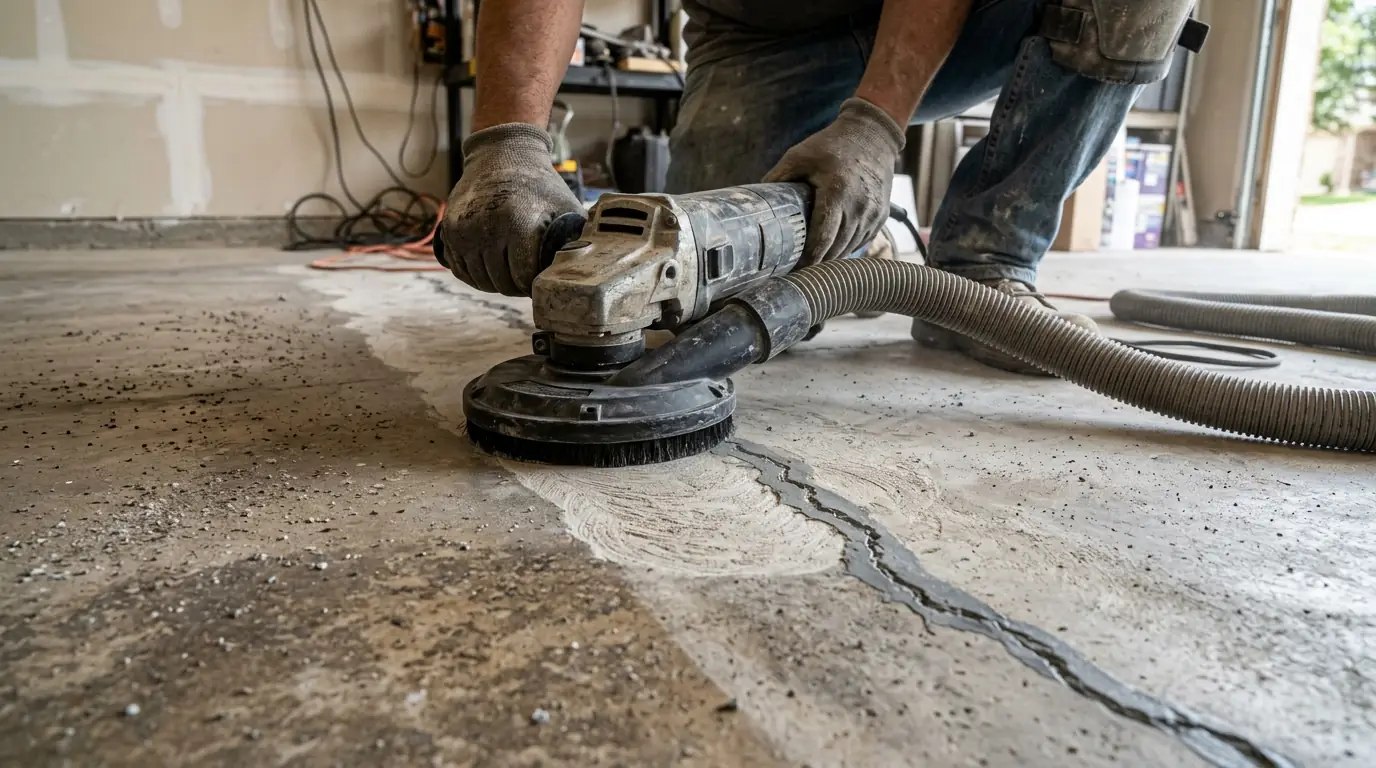
We do not acid etch. Every floor gets diamond grinding with a dust-collected planetary grinder, which opens the concrete to a profile the primer can grip and strips sealers, paint overspray and old coating. Oil-soaked spots are degreased and, if they keep weeping, ground out further.
Before anything is mixed we run a moisture test with a calcium chloride kit or a meter reading. If the slab is pushing too much vapor, we switch to a moisture-tolerant primer rather than gamble on a standard epoxy.
Grinding is loud and takes most of the first morning on a two-car garage. It is also the step that decides whether the floor lasts, so it is the last place we cut time.
The walk-through sets your real number, written line by line.
Most Dallas homeowners choose a 100 percent solids epoxy base coat with a full broadcast of vinyl flake, then a polyaspartic or polyurethane clear coat on top. The flake hides dust and small slab flaws, and the clear coat handles UV from an open garage door without yellowing the way epoxy alone can.
If you need the garage back fast, a polyaspartic system can go down base to topcoat in one day. It cures quickly, which is a real advantage, but it also needs a crew that mixes in small batches during hot weather. Solid color floors with a light aggregate suit workshops and home gyms where flake would be lost under equipment. Polyaspartic also stays clear under sunlight, which matters in garages that face west.
Texture matters more than people expect. We add a fine anti-slip aggregate to the topcoat so the floor is not slick when rain blows in under the door or a wet car drips onto it.
Concrete temperature drives cure time. In July and August a garage can sit above 95 F by noon, so we start early, keep the door down while products are open and work in sections. In January cold slabs slow the cure, and we plan a longer return-to-service window. Fumes from solvent primers are another reason the door stays down while we work, and we ventilate once the products have set.
Plan to clear the garage completely, including shelving that is not bolted down. Many owners pair the floor with Garage Door Painting so the whole garage gets finished in one visit, and a Pressure Washing of the driveway keeps grit from tracking straight onto the new coating.
If the garage walls have dings, dents and nail pops, we can handle Drywall Repair & Patching and paint them before the floor goes down, so no wall work ever happens over a fresh coating. Base trim, water heater stands and the step into the house get masked so the coating line stays clean.
Coating peeling where your tires park
Hairline cracks spreading from the control joints
Oil stains that soak in and never wash out
White powder dusting up from bare concrete
Blisters or bubbles in an old DIY epoxy kit
Garage turning into a gym, shop or showroom
We test the slab for vapor, look for sealers and map every crack before recommending a system.
The full floor is ground with dust collection to open the surface and remove old coatings.
Cracks are chased and filled, pitted spots are patched and the repairs are ground flush.
The epoxy or polyaspartic base goes down in sections and flake is broadcast to full coverage.
Loose flake is scraped and vacuumed, then a UV-stable clear coat with anti-slip texture seals the floor.
Foot traffic is usually fine after about 12 to 24 hours. Cars need longer because tire heat and weight stress the coating while it is still curing. With a polyaspartic topcoat most owners park after 24 to 48 hours. A full epoxy system usually needs closer to 72 hours, and longer in a cold January garage. We give you the exact time for your products on the last day.
Not on its own. A coating bridges very fine hairline lines, but cracks from clay soil movement keep moving. We chase active cracks, fill them with a semi-rigid polyurea and grind the repair flush. Control joints are left as joints so the slab can still flex. If a crack is wider than a pencil or one side sits higher than the other, we tell you before work starts.
Most store kits are water-based and thin, and they rely on acid etching instead of grinding. In a Dallas summer that combination is what leads to hot tire pickup and peeling within a year or two. If a kit is already on your floor and failing, it has to be ground off before a real system goes down, which adds cost to the job.
Yes, but the old film comes off first. Paint, acrylic sealers and builder curing compounds all block adhesion, so we grind the full slab down to clean concrete. Newer homes in master-planned suburbs often have a sealer you cannot see. A quick water drop test during the walk-through tells us whether it is there and how much grinding the floor needs.
Garage door repaints for faded steel, wood carriage and composite doors, with rust prep, two coats and matching jamb trim.
See garage door paintingSoft washing for siding, stucco and painted trim, plus surface cleaning for driveways, walks and patios across Dallas.
See pressure washingCrack, hole, and water-damage repairs taped, textured to match, primed, and painted so the patch does not show.
See drywall repair & patchingCall and a person answers, day or night. We will set a walk-through and write up every surface before any work starts.