Drywall Repair & Patching
Crack, hole, and water-damage repairs taped, textured to match, primed, and painted so the patch does not show.
See drywall repair & patchingPatchy walls after wallpaper removal, mismatched texture from years of repairs, or heavy 1990s knockdown you want gone all come down to resurfacing the wall itself.
Skim coating in Dallas typically costs $2.35 to $4.60 per square foot of wall for a smooth Level 5 finish, and about $1.45 to $2.55 per square foot to retexture with knockdown or orange peel. Price includes protection, compound coats, sanding, and primer. Paint is separate. The in-home walk-through sets the actual price for your walls.
Some walls are past patching. After wallpaper comes off and tears the drywall face, after years of spot repairs in different textures, or after a remodel where new board meets old, the surface looks uneven no matter how good the paint is. In all of these cases, the wall needs a new surface before paint can look even.
Skim coating covers the entire wall with thin layers of joint compound, then sands it flat. The result is one consistent surface that either stays smooth or gets a fresh, even texture. It is the right choice when the drywall is solid, flat, and free of tears.
Retexturing alone, without skimming, works when the wall is sound but the existing texture is dated or patchy. In that case, we spray a new texture over a coat of primer so the new layer bonds and looks even.
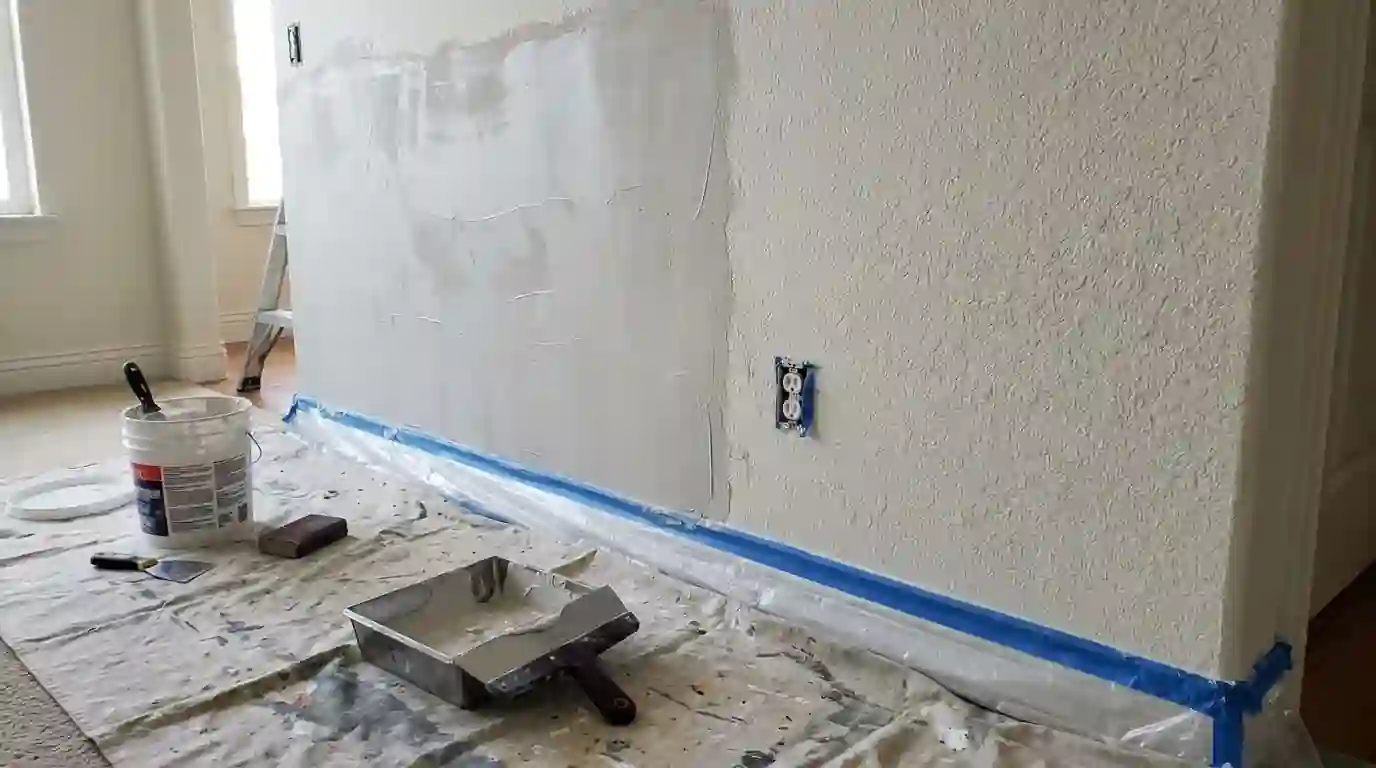
Level 5 is the drywall finish standard where the whole surface is skimmed so board paper and joint compound look identical under paint. It is the finish you want for smooth walls hit by raking light, such as hallways with a big window at the end or rooms with wall-wash lighting. It is also the finish many designers ask for in modern homes with flat or matte paint.
We apply two to three coats of lightweight all-purpose compound with a wide knife or a roller and squeegee system, letting each coat dry before the next. In Dallas summers with the AC running, thin coats dry within a few hours. In damp spring weather, it takes overnight. Wider knives leave fewer ridges and less sanding.
Sanding is done with pole sanders and vacuum attachments to keep dust down. We then check the wall with a work light held flat against it and fix any ridges before primer. Small low spots are filled and resanded until the surface looks flat from every angle.
The walk-through sets your real number, written line by line.
Most homes in DFW, especially those built after 1980 in suburbs like Garland, Mesquite, Grand Prairie, and Carrollton, have knockdown or orange peel texture. Changing one wall's texture without matching the rest of the room looks off, so we usually work room by room. Houses built in the 1990s often have a heavier knockdown than homes from the 2010s, so one pattern does not fit all.
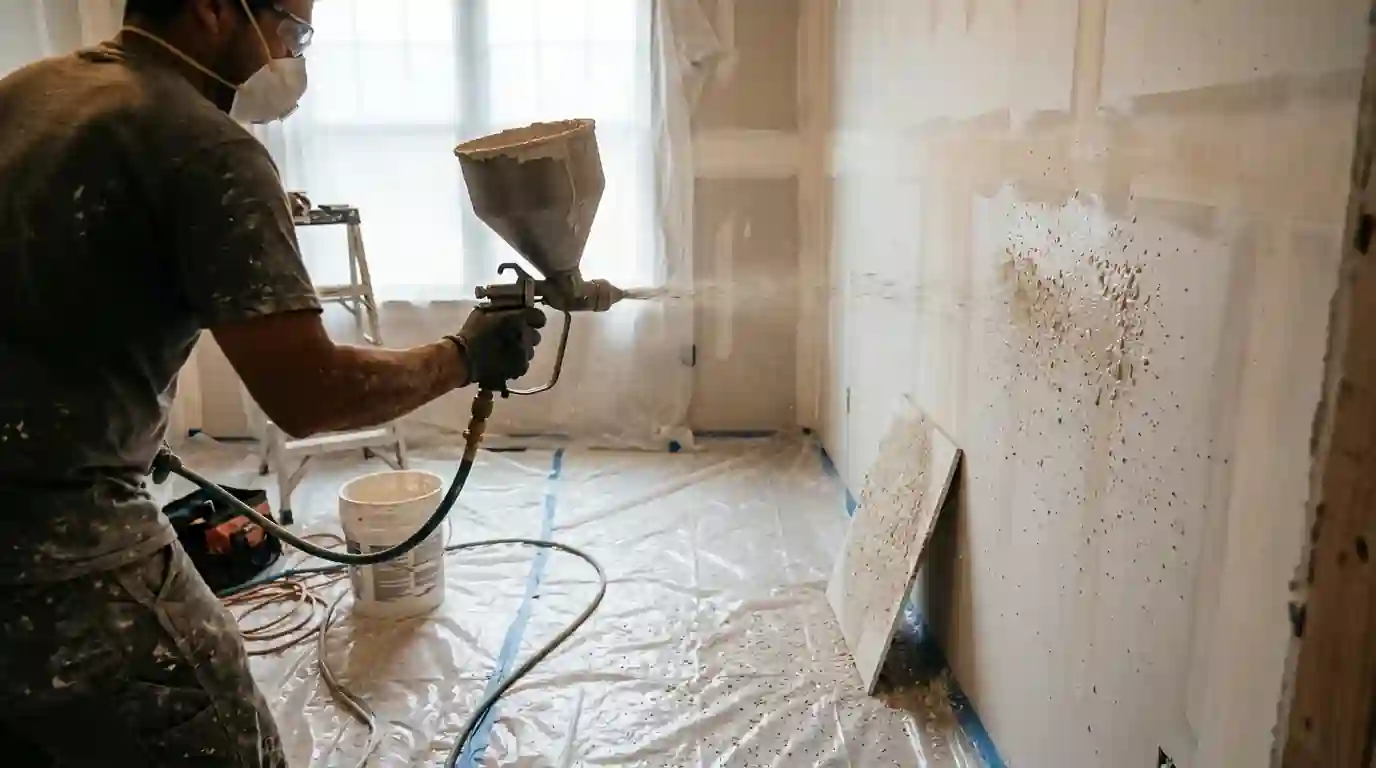
Knockdown is sprayed with a hopper gun, allowed to set for a few minutes, then flattened with a wide knife. Splatter size, timing, and knife pressure all change the look. Orange peel is sprayed thinner and left alone. We test patterns on scrap board until they match your existing walls.
When the goal is to go from heavy knockdown to a lighter texture or smooth, we skim first to fill the old texture, then apply the new finish. That adds a day or two but gives a much cleaner finish than spraying new texture over old.
Fresh compound is very porous. Painting straight over it gives a blotchy finish with dull and shiny spots. Every skim or retexture job ends with a drywall primer such as Sherwin-Williams ProMar 200 Primer, or a high-build primer for smooth walls, which also hides fine sanding scratches. A good primer coat also shows any last flaws before the finish color goes on.
Most resurfacing jobs flow straight into interior house painting. If the job started with wallpaper removal, the walls are sealed first so the compound does not bubble on torn drywall paper. For smaller damage, drywall repair and patching may be all you need. Skipping that step is a common reason resurfaced walls look patchy after paint.
On plaster walls in older homes along Swiss Avenue or in Munger Place, we use a setting compound or plaster skim that bonds to the original surface, and follow lead-safe practices on any pre-1978 paint. That skim is thinner than drywall work and gets extra drying time between coats.
Torn drywall paper after wallpaper removal
Several different textures on the same wall
Heavy knockdown you would rather have smooth
Patches visible under window light
Fine spiderweb cracks across old plaster
New drywall that does not match old walls
We check the surface in raking light and agree on smooth, knockdown, or orange peel.
Floors, trim, outlets, and windows get covered, and furniture is moved out or to the middle.
Thin coats of joint compound go on and dry between passes, or texture is sprayed and knocked down.
Walls are sanded with vacuum-attached tools and checked with a work light for ridges.
A drywall primer goes on so the new surface takes paint evenly.
Skim coating covers the whole wall with thin layers of joint compound to make it flat and uniform, often to a smooth finish. Retexturing sprays a new pattern like knockdown or orange peel over an existing wall. Skimming takes longer and costs more, but it is the only way to get a smooth wall from a textured or damaged one.
Yes. The texture is filled with two or three skim coats until the wall is flat, then sanded and primed. It is a common request in Dallas homes built in the 1990s and 2000s. Expect the job to take three to four days per room because each coat must dry before the next goes on.
Compound itself is not messy when applied, but sanding creates fine dust. We cover floors and furniture, seal off doorways with plastic, and use vacuum-attached sanders to collect most of the dust at the source. Cleanup happens daily, so the rest of the house stays livable during the work.
Yes, smooth walls show dents and patches more clearly, especially under side light. That is why Level 5 skimming matters: it gives the whole wall the same surface. Once painted with a matte or eggshell finish, a properly skimmed smooth wall looks clean and holds up well in normal use.
Crack, hole, and water-damage repairs taped, textured to match, primed, and painted so the patch does not show.
See drywall repair & patchingPaper, borders, and glue removed with steam and enzyme solution, torn drywall sealed, and walls left ready for paint.
See wallpaper removalTested, contained popcorn removal with ceilings retextured or finished smooth, then primed and painted in the same job.
See popcorn ceiling removalCall and a person answers, day or night. We will set a walk-through and write up every surface before any work starts.