Fascia, Soffit & Trim Painting
Fascia, soffit, window and door trim repaints, including rot fixes and gutters, often done without repainting the whole house.
See fascia, soffit & trim paintingSoft, crumbling wood at window sills, door frames and fascia lets water into the wall, and painting over it only hides the damage for a season.
Typical wood rot repair in Dallas runs $185 to $640 per spot for sills, trim and fascia ends, and $1,270 to $3,460 for a house with rot in several areas. The work includes cutting out soft wood, hardening sound wood, fitting new stock or epoxy filler, priming and painting. The in-home walk-through sets the real number.
Rot needs water and time, and Dallas houses supply both at predictable spots. Window sills, the bottom of door jambs, fascia under gutter corners and the lower boards of siding are the places we find it most. Each of these spots stays wet longer than the wood around it.
Sprinklers that spray the wall every morning keep the bottom few inches of trim and siding damp. Gutters that overflow during spring storms soak fascia ends. Both turn a small paint crack into soft wood within a few seasons.
Older homes in Lakewood, Munger Place and Kessler Park often have original wood windows and trim. That old-growth wood is dense and worth saving, so we repair it in place when the damage is limited. Replacing it with modern finger-jointed pine often leads to new rot sooner.
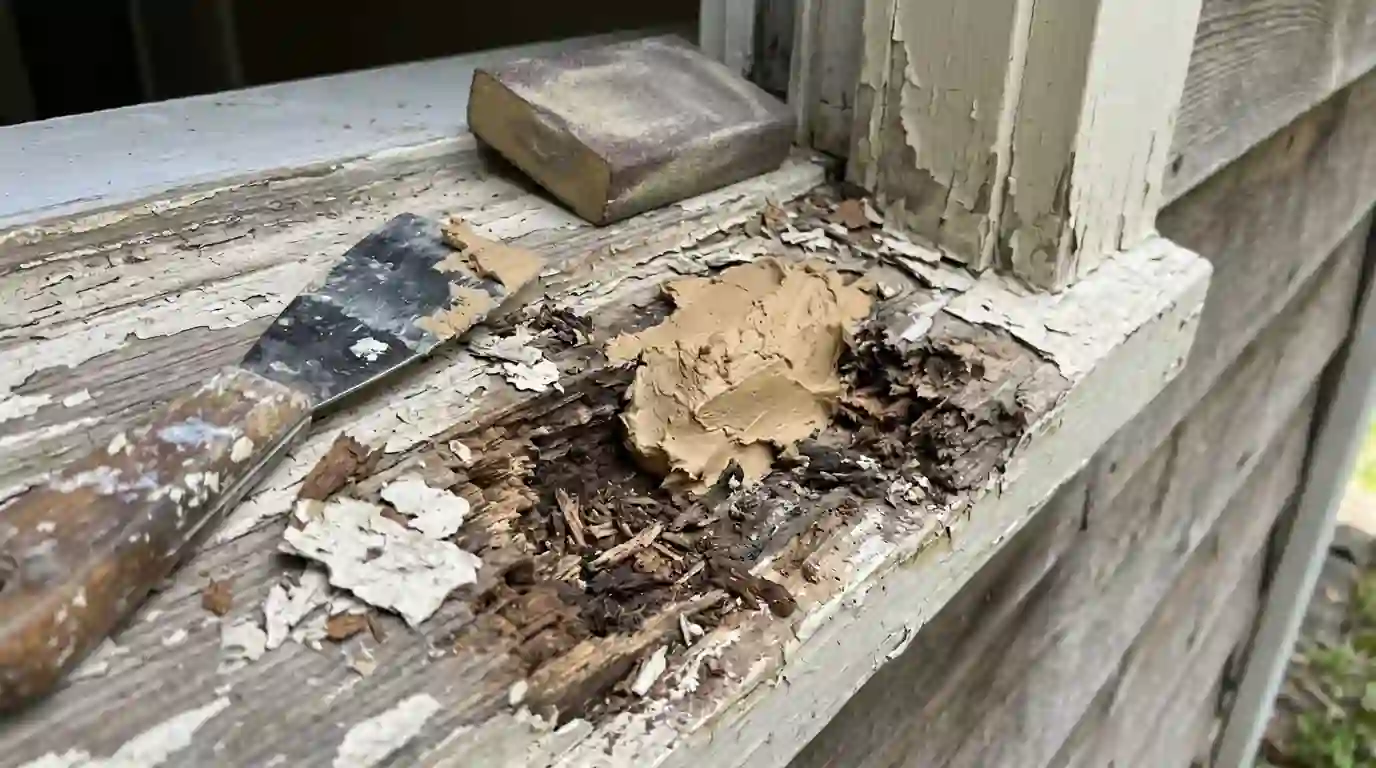
We probe suspect wood with an awl. If it sinks in, the wood is soft. Small areas of rot are dug out, treated with a wood hardener and filled with a two-part epoxy filler such as Abatron, then shaped and sanded to the original profile.
Larger rot gets cut back to sound wood and replaced with a new piece. We match the profile where we can, using primed pine, cedar or PVC trim, and we prime all six sides and cut ends before installing. Fasteners go into sound framing, and nail holes are filled and sealed.
Rot that runs into the framing behind the trim, such as studs, sill plates or rafter tails, is beyond a paint crew's repair. We will tell you if we find it, so you can bring in a carpenter before painting goes ahead. Warning signs include a sagging roofline, soft floor near a door or rot that keeps going past the trim edge.
The walk-through sets your real number, written line by line.
New wood will rot again if the water source stays the same. During the repair we look for the reason: a missing drip edge, a clogged gutter, failed caulk or a sprinkler head aimed at the wall. Without that step, a repair can fail within two or three seasons.
We add a small drip cap above windows where water has been running down the trim, and we leave a gap between new trim and the roof or concrete so wood is not sitting in standing water. Kickout flashing at roof-to-wall joints may also be missing, which sends water straight behind trim. We flag it so your roofer can add it.
For doors, rot at the jamb bottom often comes from a missing sweep or splash off the porch. After the repair, a fresh coat on the front door and frame seals the end grain and makes the entry look finished. A new door sweep or threshold seal stops splash from reaching the jamb again.
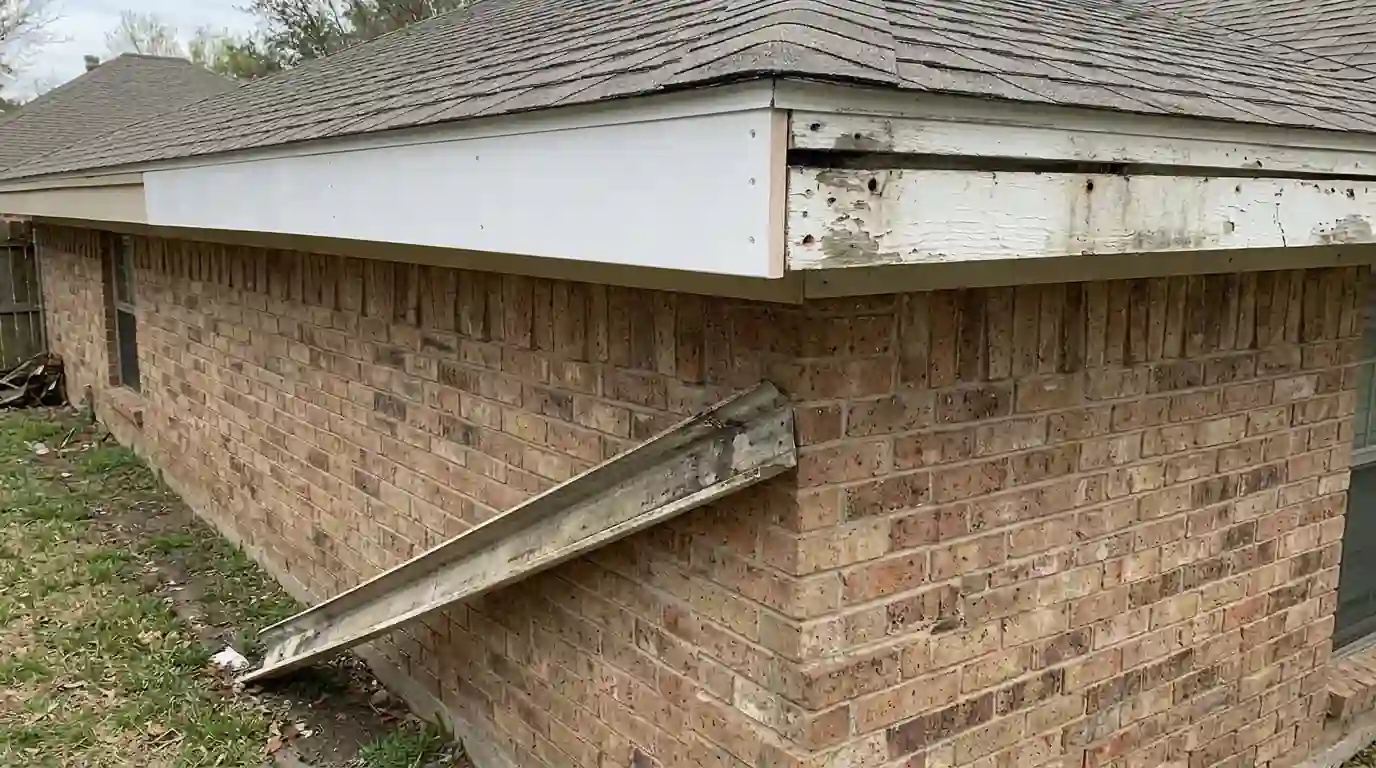
Most rot repair we do is found during a walk-through for exterior painting or trim painting. Handling it in the same visit avoids paying twice for ladders, setup and paint matching. It also lets us price rot and paint together on one written quote.
Repaired areas are primed the same day and painted with the rest of the trim, so you do not see patches. Epoxy repairs are sanded flush and disappear under the finish coat. New wood needs primer before sun hits it, so priming happens the same afternoon.
If you only need a few spots fixed before selling or after a home inspection, we can do a repair-only visit. We price each spot during the walk-through so you can decide what to handle now and what can wait. Each spot shows its own price, so a buyer's repair request is easy to answer.
A screwdriver sinks into a window sill
Paint bubbling or cracking at the bottom of a door frame
Fascia sagging or soft at a gutter corner
Dark, swollen ends on bottom siding boards
A home inspection report flagged wood rot
Mushroom-like growth or crumbling wood at trim
We probe every suspect board with an awl and mark each soft area on the house.
Rot is dug out or cut back to sound wood, and the cause of the water is noted.
Small spots get hardener and epoxy, and larger ones get new primed wood or PVC.
Repairs are sanded to the original profile, primed and caulked at every joint.
Repaired areas get finish coats matched to the existing trim color and sheen.
For small and medium spots, yes. Two-part epoxy filler bonds to hardened wood, does not absorb water and can be shaped to match old profiles. It works well on sills and window trim on older Dallas homes. For long or deep rot, a new piece of wood or PVC is usually the stronger and cheaper choice.
In most cases. Many standard profiles from the 1940s through 1970s are still sold at lumber yards. For unusual or very old trim on homes in historic neighborhoods, we rebuild the shape with epoxy or use the closest stock profile on less visible sides of the house.
Not if the water source is handled. We point out the cause, such as a clogged gutter, failed caulk or a sprinkler head, and fix what is within our scope. New wood is primed on all sides before installation, which slows moisture uptake. Keeping caulk and paint in good shape keeps rot away.
Rot in trim, sills, fascia and siding boards is routine work for our crews. If the rot has reached framing, like studs, sill plates or rafters, that is carpentry. We will show you what we find and tell you which part needs a carpenter before we paint over anything.
Fascia, soffit, window and door trim repaints, including rot fixes and gutters, often done without repainting the whole house.
See fascia, soffit & trim paintingFull exterior repaints with washing, scraping, caulk and two coats, scheduled around Dallas heat and HOA rules.
See exterior house paintingSiding repaints matched to the material: Hardie fiber cement, old wood lap siding, vinyl and engineered wood panels.
See siding paintingCall and a person answers, day or night. We will set a walk-through and write up every surface before any work starts.