Siding Painting
Siding repaints matched to the material: Hardie fiber cement, old wood lap siding, vinyl and engineered wood panels.
See siding paintingDallas sun bakes south and west walls until paint chalks, cracks and peels, and a quick spray-over without real prep usually fails again within a few summers.
A typical Dallas exterior repaint runs $3,180 to $6,950 for a 2,200 sq ft single-story home and takes three to six working days. The work covers washing, scraping, caulking, spot priming and two coats of exterior acrylic on body and trim. The in-home walk-through sets the real number after we check siding condition, height and rot.
Our crews start every exterior with a wash, because chalk and dust left on the wall stop new paint from gripping. After the walls dry, we scrape loose paint, sand glossy edges and spot prime bare wood, masonry or galvanized metal with a primer matched to that surface. We also remove house numbers, light fixture covers and hose reels so the paint line runs clean behind them.
Caulking comes next. North Texas clay soil swells after rain and shrinks in drought, and that movement opens joints around windows, corner boards and trim. We cut out caulk where it has failed and run a fresh elastomeric bead so water stays out of the wall. Joints wider than a pencil get foam backer rod first so the caulk bead sits at the right depth.
Two finish coats go on body and trim, usually a satin or low-sheen acrylic on siding and a semi-gloss on trim. Sherwin-Williams Duration, Benjamin Moore Aura and PPG Timeless are common picks, and we can talk through how each holds color under strong UV. We list the exact product and sheen on your written price so you know what goes on the house.
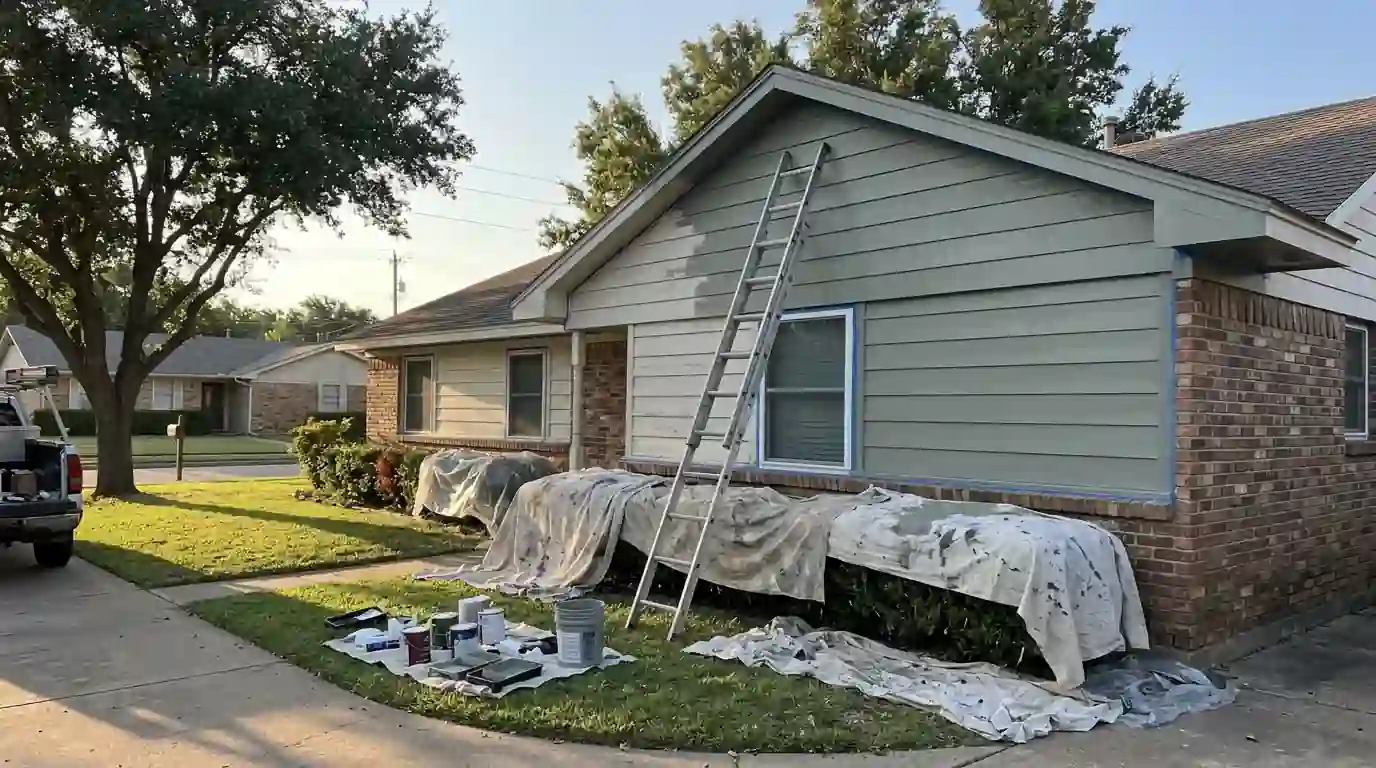
Paint labels list a surface temperature ceiling, often around 90 F, and a west wall in July can pass that before noon. We schedule crews to start early, follow the shade around the house and save the hottest walls for the cooler morning hours. On a typical single-story ranch, that means the east side gets painted first thing and the west side waits for late shade or the next early start.
Spring brings hail, and one storm can dent siding, chip trim and knock paint off fascia in a single afternoon. If your home took hail, we sort out what needs repair versus what only needs paint, so you are not paying to coat a dented board. We can also paint after roofers and siding crews finish storm repairs, so new boards are primed and blended with the rest of the house.
Low humidity on windy days makes acrylic dry too fast, which leaves lap marks on long runs of siding. Crews keep a wet edge, work one wall section at a time and stop when the wind kicks up dust that would stick to fresh paint. Fresh paint also needs a few dry hours before dew sets in, so crews wrap up exposed walls by mid-afternoon in spring and fall.
The walk-through sets your real number, written line by line.
Homes from the 1920s through the 1950s in Lakewood, Swiss Avenue, Kessler Park and Bluffview often carry many layers of old paint on wood siding and trim. On any house built before 1978 we follow lead-safe work practices: plastic sheeting on the ground, wet scraping and HEPA vacuum cleanup. Lead-safe setup takes extra time, and that time shows as its own line on your price.
Newer homes in Frisco, McKinney and Prosper usually have fiber cement siding and stucco accents, and the paint is often only fading. Those jobs need less scraping but careful caulk work, because builder-grade caulk shrinks and splits after a few Texas summers. Our siding painting page covers fiber cement in more detail.
Many master-planned neighborhoods require HOA color approval before a repaint. We can supply the paint brand, color names and sheen for your application, and we wait for approval before the first coat goes on. Color changes in these neighborhoods often have to stay within a builder palette, so we bring large samples from the approved list.
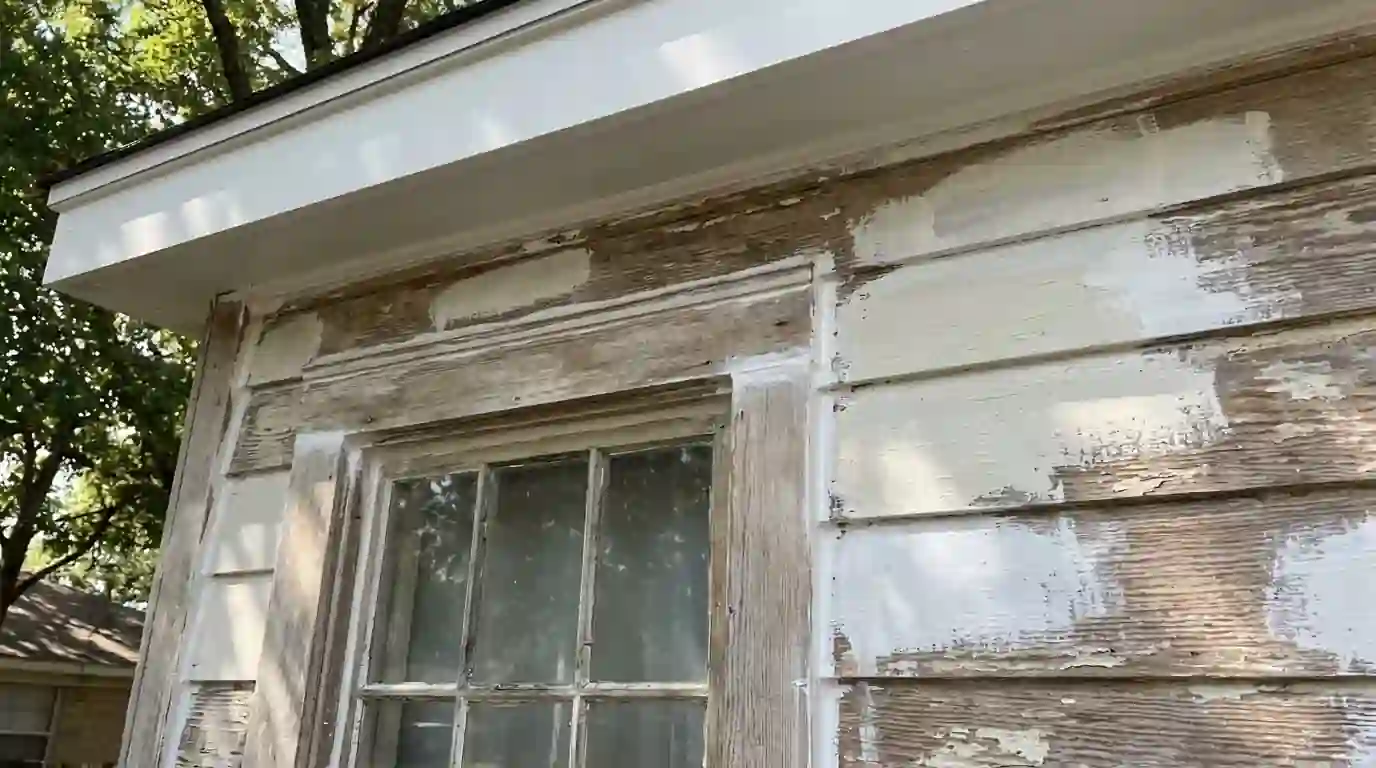
Paint will not hold on soft wood. During the walk-through we press on window sills, fascia ends and door frames, and any rot we find gets cut out and replaced as part of wood rot repair before priming. Each replaced board is primed on all sides before it goes up.
Brick and stone need a decision of their own. Some owners want painted brick, others want a softer limewash finish, and many want the masonry left natural with only the trim refreshed. We explain how each choice changes future upkeep. Brick that stays natural gets masked carefully along every trim line so no paint lands on its face.
If the walls are coated with mildew, dirt or heavy chalk, a separate wash day may be needed. We tell you up front whether your home needs that extra step and what it adds to the price, so there are no surprises once the crew arrives. Gutters packed with leaves may also need clearing before the crew can reach the fascia behind them.
Paint chalks onto your hand when you touch it
Peeling or flaking on south and west walls
Open gaps in caulk around windows and trim
Color faded unevenly between sun and shade sides
Soft or swollen wood at sills and fascia
An HOA notice asking you to repaint
We walk the whole exterior, check for rot and failed caulk, and measure for a written price.
Walls are washed to remove chalk, dust and mildew, then left to dry before prep starts.
Loose paint comes off, damaged wood is replaced, and failed joints get fresh caulk.
Bare spots get primer, then two finish coats go on during the cooler hours of the day.
We walk the house with you, touch up anything you point out and haul away debris.
Spring and fall give the widest painting windows, with mild days and cooler walls. Summer work is fine with early starts and shade-chasing, since most acrylic paints need the surface below about 90 F. Winter jobs depend on overnight lows, because many products need 35 to 50 F for several hours after application. We plan each day around the forecast.
On a well-prepped house, a quality acrylic usually holds up seven to ten years on the body, with south and west walls wearing first. Trim and fascia often need a touch-up sooner because they take direct sun and runoff. Hail, sprinklers hitting the walls and skipped caulk work all shorten that span.
No. Most owners head to work and keep the crew lead's number for questions. We do need access to an outdoor faucet and power, gates left open and pets kept inside. Sprinklers should be turned off a day before washing and stay off until the final coat has dried.
Only if you want it painted. Painting brick is close to a one-way decision, so we talk it through first. Many Dallas owners keep natural brick and paint only the trim, or choose a breathable mineral paint or limewash instead of acrylic. We price the brick as its own line so you can decide.
Siding repaints matched to the material: Hardie fiber cement, old wood lap siding, vinyl and engineered wood panels.
See siding paintingFascia, soffit, window and door trim repaints, including rot fixes and gutters, often done without repainting the whole house.
See fascia, soffit & trim paintingSoft washing for siding, stucco and painted trim, plus surface cleaning for driveways, walks and patios across Dallas.
See pressure washingCall and a person answers, day or night. We will set a walk-through and write up every surface before any work starts.