Elastomeric Wall Coating
High-build coating for cracked stucco and block that bridges hairline cracks and keeps wind-driven rain out of the wall.
See elastomeric wall coatingStucco on Dallas homes cracks as clay soil moves, and plain paint over those hairline cracks lets water in and leaves dark stains running down the wall.
Painting stucco on a typical 2,400 sq ft Dallas home runs $3,890 to $7,640. The work includes washing, filling hairline cracks with elastomeric patch, priming repaired spots and two coats of masonry acrylic or one heavy elastomeric coat. Wall height, crack count and texture depth change the price, and the in-home walk-through sets the real number.
Stucco is rigid cement, and the homes it covers sit on expansive clay. When the soil swells after a wet spring and shrinks in an August drought, the house shifts slightly and the stucco cracks at window corners, control joints and roof lines. Cracks running diagonally from the corners of windows and doors are the classic sign of this movement.
Hairline cracks are cosmetic at first, but they let water reach the lath and building paper behind the wall. Over a few seasons that shows up as rust stains, bubbling paint or soft spots near the base of the wall. In Dallas, the worst staining usually shows below cracks on south walls after spring storms.
Many homes built after 2000 in Frisco, Prosper and Las Colinas use synthetic stucco or acrylic finish coats over foam. Those systems need different patch materials than traditional three-coat stucco, so we check which one you have before quoting. Traditional stucco sounds solid when tapped, while synthetic systems sound hollow and give slightly when pressed.
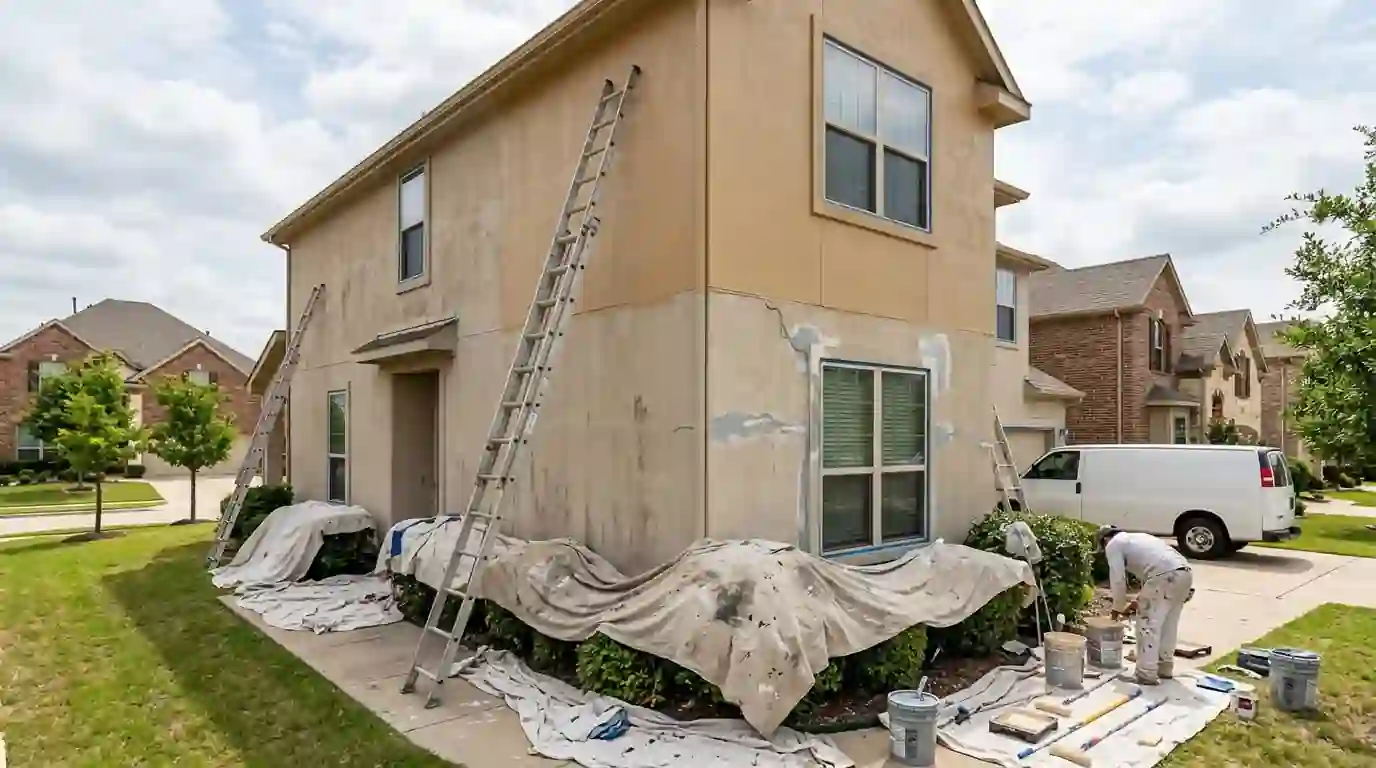
We wash the walls at low pressure to remove chalk and dirt without eroding the texture. Hairline cracks get brushed-in elastomeric patch, and wider cracks are opened slightly and filled with a stucco patch that matches the surrounding texture. We feather patch edges with a sponge float so repairs blend into sand or dash finishes.
Patched areas are primed with a masonry primer so they do not flash through the finish coat. Then we spray and back-roll two coats of a masonry acrylic such as Sherwin-Williams Loxon or SuperPaint, working paint into the rough texture so pinholes do not show. Stucco can take close to twice the paint of smooth siding, and the price reflects that.
If the wall has many recurring cracks, we may suggest an elastomeric wall coating instead. It goes on thick and stretches as the wall moves, which bridges small cracks that standard paint would split over. Elastomeric costs more and changes the sheen slightly, so we show you a sample first.
The walk-through sets your real number, written line by line.
Stucco texture changes how color looks. Heavy dash or Santa Barbara textures throw small shadows, so a color often reads darker on the wall than on a chip. We roll out a sample on a sunny wall before you commit. Morning and evening light can shift the same tan from warm to almost gray.
Darker stucco colors soak up heat on west walls, which adds stress at cracks. Light and mid-tone earth colors usually hold up longer in Dallas sun and show less fading near the roofline and around window heads. Shades in the sand, clay and soft olive range also hide dust and splash well.
Stucco homes often have stone accents, wood beams or metal railings. We paint around stone cleanly and can coat beams or iron railings in the same visit so everything finishes together. Stone gets masked tight, and any overspray is cleaned off the same day.
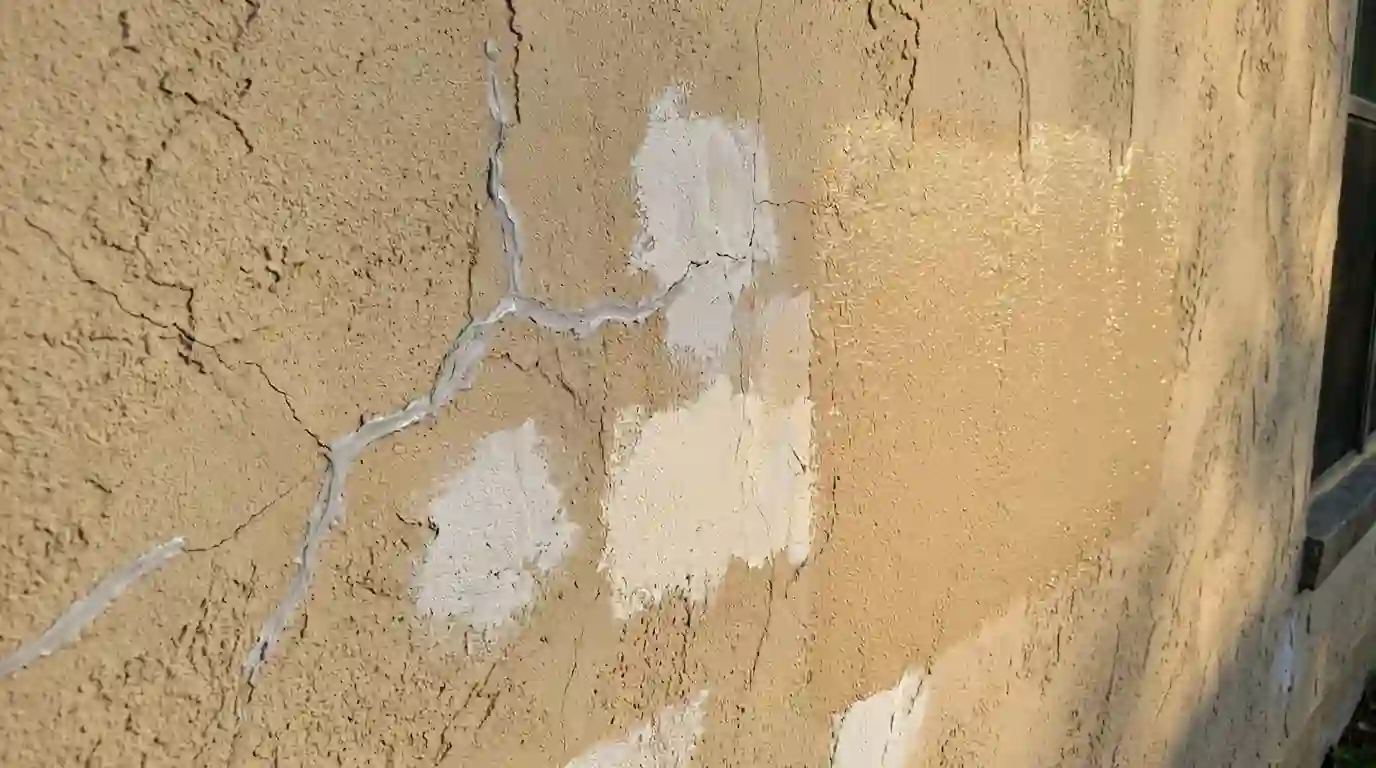
Paint cannot fix stucco that has pulled away from the wall, sounds hollow when tapped or is soft near the ground. Those areas need cutting out and replacing by a stucco crew before we paint, and we mark them during the walk-through. Fresh stucco patches then need several days to cure before primer goes on.
Weep screeds at the base of stucco walls let trapped water drain out. We keep them clear of paint and caulk, because sealing them shut can hold moisture behind the wall and cause the very damage you are trying to prevent. We also keep mulch and soil pulled back from the screed so it can drain.
Stucco that is only faded and lightly cracked is a good candidate for paint. Most Dallas stucco homes fall into this group, and a careful repaint can make a 15-year-old wall look close to new from the street. The fresh finish also seals small openings that were letting wind-driven rain into the wall.
Hairline cracks spreading from window corners
Dark streaks running down below cracks
Faded color near the roofline and window heads
Chalky residue when you rub the wall
Old patches that show as a different color
Paint bubbling near the base of the wall
We tap walls for hollow spots, map cracks and check whether the stucco is traditional or synthetic.
Walls are washed at low pressure to clear chalk and dirt without eroding the texture.
Hairline cracks get elastomeric patch, and wider cracks get a texture-matched stucco patch.
Every patched spot gets masonry primer so it does not flash through the finish.
Paint is sprayed and back-rolled into the texture, keeping weep screeds clear.
Yes. Synthetic stucco and acrylic finish systems take a 100 percent acrylic or elastomeric paint well. The difference is in the patching, since cement patch does not bond well to foam-backed systems. We use acrylic-based patch on synthetic walls and check for soft or damaged spots near the ground, which can mean water has gotten behind the system.
Some may, because the soil under Dallas homes keeps moving. Elastomeric patch and paint stretch with small movements and hide most hairline cracks for years. Wide cracks that keep growing usually point to foundation movement, and paint cannot stop that. We will tell you which cracks look structural so you can have them checked.
High pressure can blow out the texture, drive water behind the wall and open existing cracks. We use a low-pressure rinse with a cleaner that loosens dirt and mildew. The surface then dries a full day before patching and priming, since stucco holds water longer than siding.
Most single-story Dallas stucco homes take four to six working days, including the wash, a dry day, crack repair and two coats. Two-story homes or walls with heavy crack repair can take longer. Summer jobs start early and follow the shade, because hot stucco dries paint too fast and causes lap marks.
High-build coating for cracked stucco and block that bridges hairline cracks and keeps wind-driven rain out of the wall.
See elastomeric wall coatingFull exterior repaints with washing, scraping, caulk and two coats, scheduled around Dallas heat and HOA rules.
See exterior house paintingSoft washing for siding, stucco and painted trim, plus surface cleaning for driveways, walks and patios across Dallas.
See pressure washingCall and a person answers, day or night. We will set a walk-through and write up every surface before any work starts.