Kitchen Cabinet Painting
Doors removed and shop-sprayed, boxes primed and finished on site, with a hard enamel built for Dallas kitchens used every day.
See kitchen cabinet paintingYour stained cabinets have faded, turned orange or worn through at the handles, and you want a richer wood tone without tearing out solid cabinetry.
A typical Dallas kitchen costs $5,260 to $9,870 to restain and refinish. Going darker can often be done with a gel stain over the scuffed existing finish. Going lighter, or fixing blotchy maple, means stripping to bare wood first. Either way, a new clear topcoat finishes the job, and the in-home walk-through sets the real number.
Stain is translucent, so it can only add color, never take it away. Turning golden oak into a walnut or espresso tone is a reasonable job, because a gel stain can sit on top of the old clear coat after a scuff sand and build color in layers. It is also the more forgiving project, since small scuffs in the old finish disappear under the darker color.
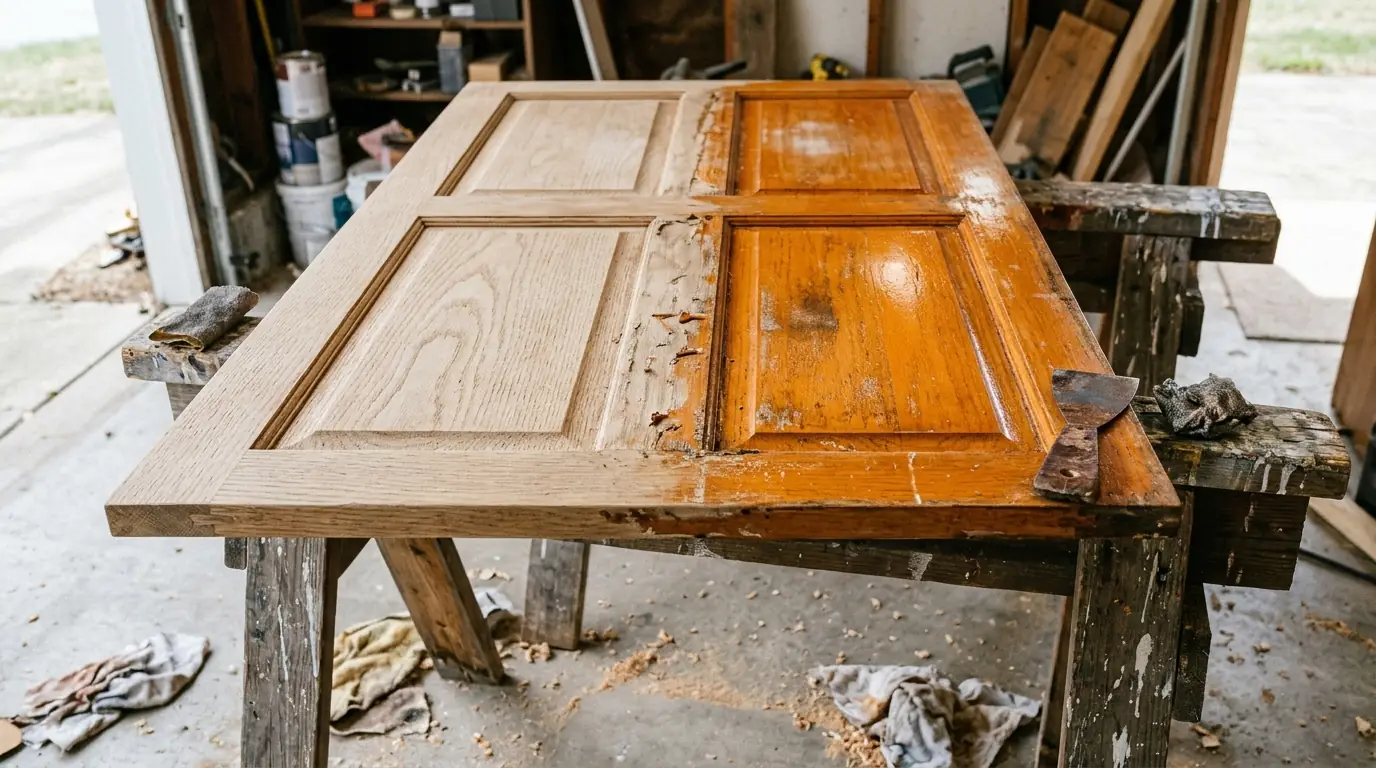
Going from dark cherry to a natural or white-oak look is a different project. The old finish and stain have to come off with a chemical stripper and sanding, and some pigment stays in the pores no matter what. We test a hidden panel, such as the back of an end cabinet, before committing to a lighter target color.
During the walk-through we show you samples on your actual wood, because the same stain reads very differently on red oak, maple and hickory. Lighting changes the read as well, so we look at samples under your kitchen lights and near a window.
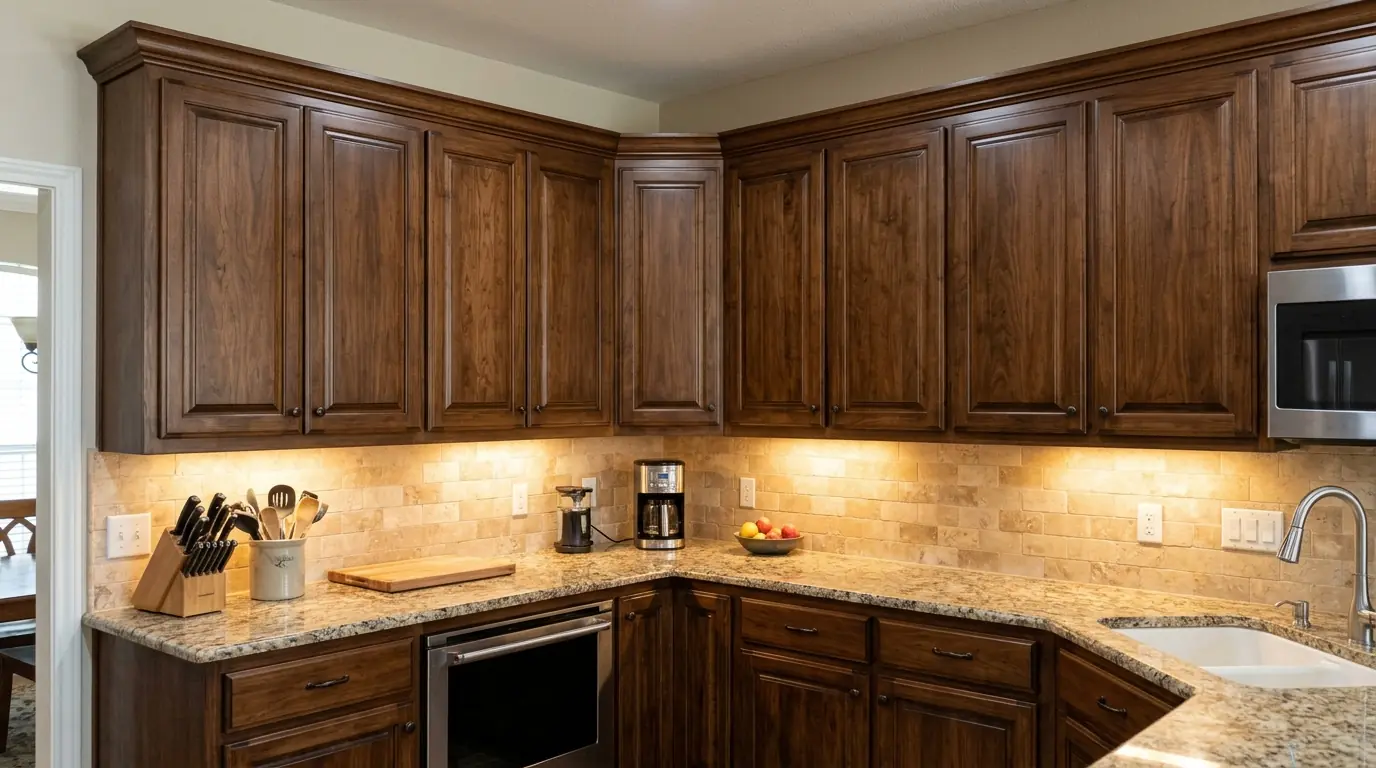
Maple, birch and cherry absorb stain unevenly, leaving dark patches where the grain is soft. On these woods we apply a pre-stain conditioner or use a gel product that sits nearer the surface. Red oak, which fills a lot of 1990s kitchens in Plano and Mesquite, takes stain evenly but can push toward orange as it ages.
Toning is often the answer for that orange cast. A thin tinted clear layer with a touch of green or brown neutralizes the warmth without hiding the grain. It is subtle work, and it is why we do not price these jobs from a photo.
Hickory and knotty alder, popular in Texas ranch-style kitchens, have such strong natural color swings that we usually recommend a mid-tone stain to tie the boards together. A very light stain on hickory makes the contrast look busier, not calmer.
The walk-through sets your real number, written line by line.
The clear coat does the protecting. For on-site work we usually apply a waterborne polyurethane or a urethane-modified clear in satin, which stays clearer than oil-based finishes and does not yellow over light wood. Where cabinets get heavy use, we add a third clear coat on the lower doors. Oil-modified clear is an option if you want a warmer, slightly amber look on dark walnut tones.
Dallas summers send hard sun through west and south windows, and it fades stain on cabinets near the glass. A clear with UV absorbers slows that fade. We also seal the backs and edges of doors, because unsealed edges take on moisture near the dishwasher and sink and can cause the finish to lift.
Each coat is sanded lightly with fine abrasive before the next, so the final surface feels smooth rather than gritty with trapped dust. Hardware goes back on only after the last coat has set overnight, so screws do not crack fresh film around the holes.
Not every kitchen needs a full color change. If the stain color is fine but the clear coat is dull and worn at the pulls, a clean, scuff and recoat brings back the sheen for far less money. We point that out during the visit when it applies. Kitchens where only the lower doors look worn sometimes need just those doors recoated, with the uppers cleaned and left alone.
If the wood is damaged, mismatched from past repairs, or wrapped in thermofoil, painting the cabinets is often the more honest choice. Stained wood elsewhere in the house, such as doors, beams or built-ins, falls under our interior wood staining work, and it is worth matching tones in one visit.
Call and we will bring stain samples, check how the existing finish reacts to solvent, and tell you which path makes sense for your cabinets. Bring a floor sample or countertop chip to the visit if you have one, since stain is easiest to pick next to the surfaces it will live with.
Clear coat is worn through around knobs and pulls
Oak cabinets have turned noticeably orange
Stain color clashes with new wood floors
Finish feels sticky or gummy near the stove
Sun has faded doors closest to the windows
Water marks show on the sink base doors
We check how the old topcoat reacts to solvent and sample stain on a hidden panel of your actual wood.
Doors come off for scuffing or stripping, depending on whether you are going darker or lighter.
Blotch-prone woods get a conditioner, then stain is applied in thin layers until it matches the approved sample.
Two to three coats of satin clear go on, with light sanding between coats and sealed door edges.
Doors and hardware go back on, hinges are adjusted, and we check color consistency across the whole kitchen with you.
Partly. Red oak has pink undertones and dark open pores that hold old stain, so it will never look exactly like white oak. After stripping, we can use a toner to cancel the pink and a matte clear to keep the look soft. We always show a sample on a hidden panel before you decide.
Waterborne clear coats dry to the touch within a couple of hours and can be handled the next day. Full hardness takes about two to three weeks. Dallas winters, with drier air, speed that up a little. Until then, wipe spills quickly and avoid harsh cleaners or abrasive pads on the doors.
In most Dallas kitchens, yes, by a wide margin. Refinishing reuses the boxes, doors and layout, so there is no demolition, plumbing work or countertop removal. New semi-custom cabinets for the same kitchen often cost several times as much. Refinishing makes sense when the boxes are solid wood and the layout still works for you.
Thermofoil and laminate are plastic surfaces with no wood grain to take stain, so they cannot be restained. If the thermofoil is peeling at the edges, that layer usually has to be removed and the MDF underneath primed and painted. We will tell you at the walk-through whether your doors are solid wood, veneer or wrapped.
Doors removed and shop-sprayed, boxes primed and finished on site, with a hard enamel built for Dallas kitchens used every day.
See kitchen cabinet paintingRestaining and clear coat refinishing for trim, doors, beams, paneling and built-ins, from 1920s Swiss Avenue homes to newer builds.
See interior wood staining & clear coatsMoisture-aware prep and hard enamel for bathroom vanities, from powder rooms to double master vanities, done in one or two days.
See bathroom vanity paintingCall and a person answers, day or night. We will set a walk-through and write up every surface before any work starts.