Repainting Hardie and fiber cement siding in Frisco, McKinney and Prosper
Many homes in Collin and Denton County suburbs have fiber cement siding. It holds paint well, but builder and factory finishes eventually fade, and repainting it right takes specific prep.
Key takeaways
- Builder paint on fiber cement often fades within 7 to 10 years
- Wash gently, replace failed caulk and spot prime bare areas
- Use a 100 percent acrylic in satin or low luster
- A proper two-coat repaint typically lasts 10 to 15 years
Why fiber cement still needs paint
Fiber cement is made from cement, sand and cellulose fibers. It does not rot, does not feed termites and stays very stable, which is why builders in Frisco, McKinney, Prosper, Allen and Celina use so much of it. It is not maintenance-free, though. The bare board is porous, and the paint is what keeps water out.
Some newer homes came with factory-finished siding in a baked-on color. Others were primed at the factory and painted by the builder on site. Builder paint jobs are often a single coat of contractor-grade paint, and that coat is usually the first thing to fail.
On the south and west faces of a DFW home, builder paint commonly looks faded and chalky within 7 to 10 years. Factory finishes usually hold color longer, often 12 to 15 years before a repaint makes sense.
It helps to know which kind you have before you call. Builder paperwork, the HOA architectural file or a closer look at a hidden corner can show whether the boards were factory finished or painted on site. Either way, the repaint process is similar, but factory finishes often need less spot priming.
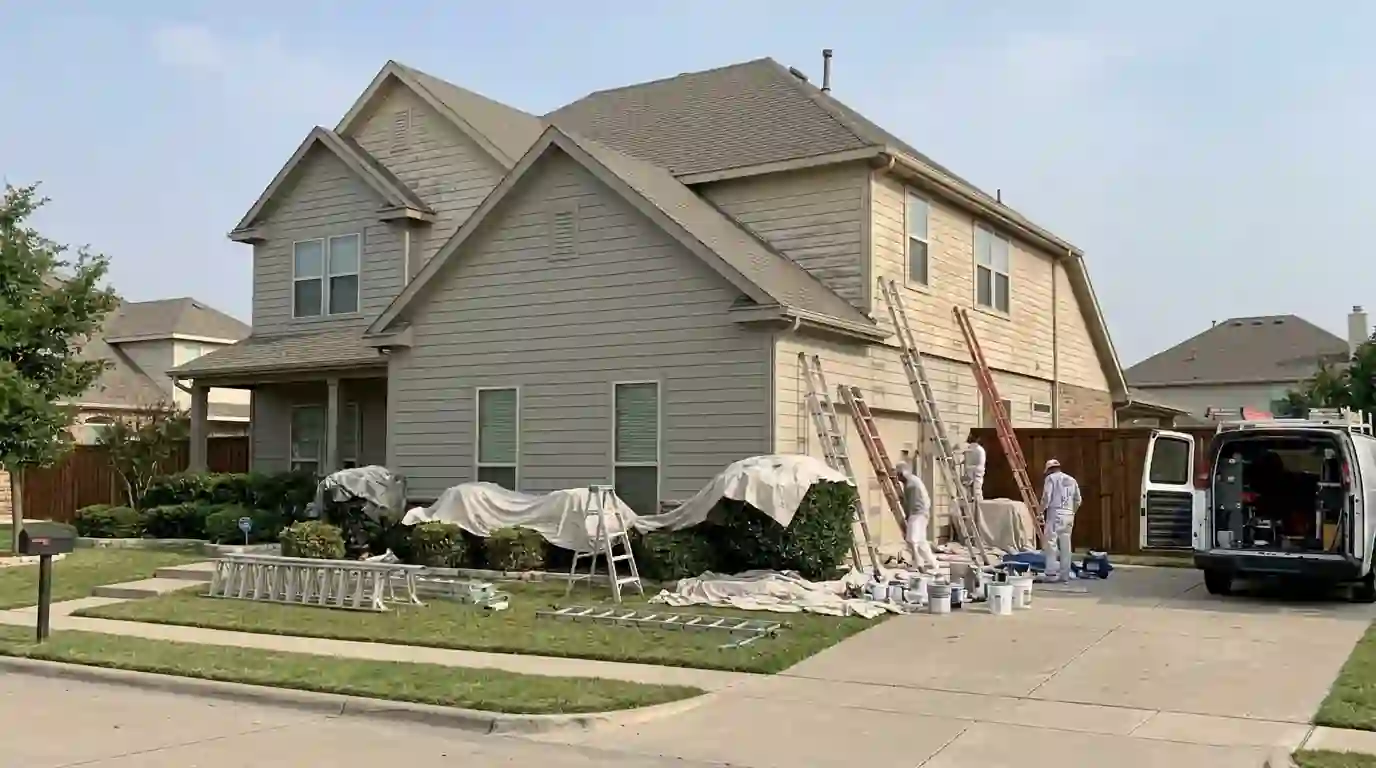
Signs your siding is ready for a repaint
Fiber cement does not show distress the way wood does. Boards do not split or cup, so problems are easy to miss until the color looks tired. These are the signs painters look for.
The bottom row of boards needs extra attention. Fiber cement should sit with a gap above the soil and above roof lines, and when mulch or sprinklers keep that bottom edge wet, the board can swell, crack or flake apart. Damaged boards should be replaced before painting.
- Chalk on your palm after rubbing a sunny wall
- Visible fading on south and west walls compared to the north side
- Open or cracked caulk at butt joints, windows and trim
- Paint worn thin on the bottom edges of the lowest boards
- Hail chips on boards, corner trim and window casings
- Mildew or algae on shaded north walls
Prep that matters on fiber cement
Washing comes first. A low-pressure wash with a mild cleaner removes chalk, dirt and mildew. High pressure close to the board can scar the surface and drive water into joints, so crews keep the tip back and the pressure moderate.
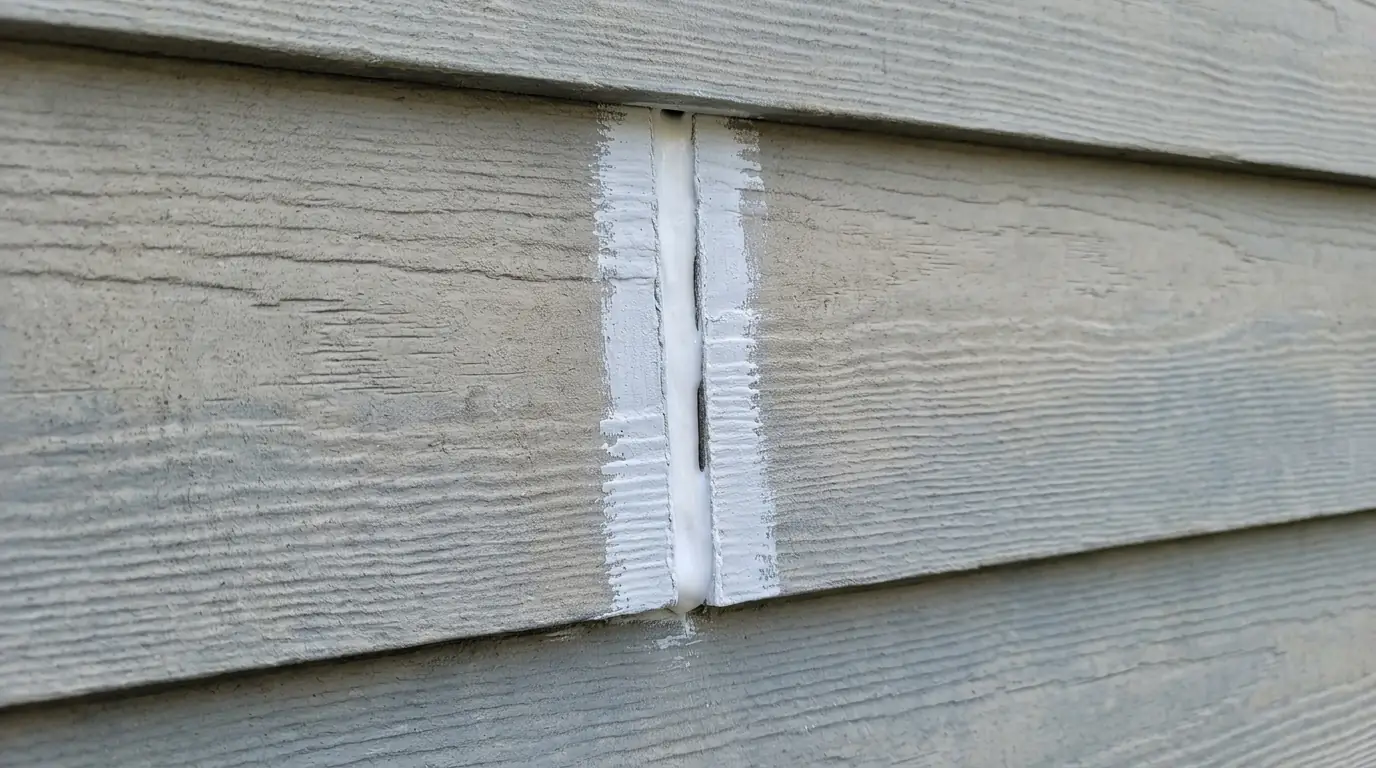
Caulk is the next big item. Many builders caulked the butt joints where boards meet end to end, and Texas heat splits that caulk within a few years. Failed caulk is cut out and replaced with a quality elastomeric sealant made for exterior siding. Some installers flashed butt joints instead of caulking them, and those joints should be left as built.
Any bare spots, such as cut ends or areas where hail knocked off paint, get spot primed with an alkali-resistant masonry primer. Fiber cement is alkaline, and a primer made for that keeps the topcoat from failing early.
Nail heads and trim boards need a look too. Face-nailed boards sometimes show rust spots or popped nails, which get set, spot primed and filled. Fiber cement trim and corner boards are checked for cracks at the ends, where they tend to split when nailed too close to the edge.
Choosing paint and color
A 100 percent acrylic exterior paint is the standard choice for repainting fiber cement. Premium lines from Sherwin-Williams, Benjamin Moore and PPG all include products rated for masonry and cement board, and they flex with daily heat swings without cracking.
Satin and low-luster finishes are the most common on fiber cement in DFW. They shed dust better than flat paint, and they do not exaggerate the board's wood-grain texture the way a higher gloss can.
Very dark colors on fiber cement in full Texas sun absorb a lot of heat. That stresses caulk joints and makes boards move more. If you want a dark body color, ask about heat-reflective versions, and in HOA communities remember that the committee needs to approve the color before work starts.
In HOA neighborhoods, it often makes sense to match the body color already approved for your house and change only trim or door accents. That keeps approval simple while still giving the home a fresh look from the street.
Typical costs in DFW suburbs
For a two-story fiber cement home of 2,800 to 3,400 square feet in Frisco, McKinney or Prosper, a full repaint of siding, trim, fascia, soffits and doors typically runs $6,240 to $11,370. Single-story homes of 2,000 to 2,400 square feet typically land between $3,690 and $6,810.
Price drivers include how much caulk needs replacing, the number of colors, how much stone or brick has to be masked around, and steep lots or tight side yards that slow ladder work. The in-home walk-through sets the real number.
Trim and fascia and soffits are usually included in the same project, since they wear faster than the siding and look worn next to fresh body color.
Stone and brick accents add masking time. Many DFW homes mix fiber cement with stone wainscot or brick on the front, and every edge between siding and masonry needs careful taping or cutting in by brush, which shows up in the labor hours.
Timing and how long a good repaint lasts
Fall and spring are the easiest seasons in DFW for siding work, with mild days that let crews paint every side without chasing shade. Summer work is still possible with early starts and a sequence that keeps crews off sun-baked walls.
A two-coat repaint with quality acrylic over proper prep typically lasts 10 to 15 years on fiber cement, longer than the builder coat it replaces. Keeping sprinklers off the walls, cleaning gutters and washing the siding every couple of years all help it get there.
For more on the process and what is included, see siding painting, and if the house has not been cleaned in a while, pressure washing is the usual first step.
Follow-up questions
Can factory-finished fiber cement siding be painted?
Yes. Once the factory finish is faded or chalky, it accepts a quality acrylic topcoat after cleaning. The surface needs a thorough wash to remove chalk, and any bare or damaged spots need primer first. A small test area checked after a few days confirms that the new paint is sticking well before the crew coats the whole house.
Should every gap in fiber cement siding be caulked?
No. Gaps at trim, windows and some butt joints get sealed, but the horizontal laps where one board overlaps the next should stay open so water can drain out. Caulking those laps traps moisture behind the siding. A painter should seal the joints designed to be sealed and leave the drainage paths alone.
Do cracked fiber cement boards need replacing before painting?
Cracked, swollen or broken boards should be replaced first, since paint will not hold a damaged edge together and water will keep getting in. Small chips and nail pops can be filled and primed instead. Replacement boards have to match the original profile and texture, so the walk-through checks what is available for your home.
Want a painter to look at it?
Call and a person answers 24/7. We will set a walk-through and give you a written scope.