How to prep your home before painters arrive
A painting crew handles drop cloths, masking and furniture covering, but a few hours of prep on your side makes the job faster, cleaner and less disruptive. Here is what helps most.
Key takeaways
- Clear three feet along every wall being painted
- Secure valuables and keep pets away from the work
- Turn off sprinklers and clear a path around the exterior
- Store labeled touchup paint indoors, not in the garage
A week before: plan the schedule and the rooms
Ask your painter for the order of rooms or sides of the house so you know which spaces will be off-limits each day. Most interior jobs move room by room, with each room out of use for one to two days.
Plan around daily life. If you work from home, set up in a room that will be painted last. If a bedroom is being painted, decide where everyone will sleep that night, since fresh paint smell lingers for a day or so even with low-odor products.
Confirm colors and sheens in writing before the start date. Changing a color on the morning of the job delays everything while new paint is mixed.
Tell the painter about anything unusual before day one: an alarm code, a gate that sticks, a room that must stay closed, or a neighbor's driveway that should stay clear. A short list on the kitchen counter saves time on the first morning.
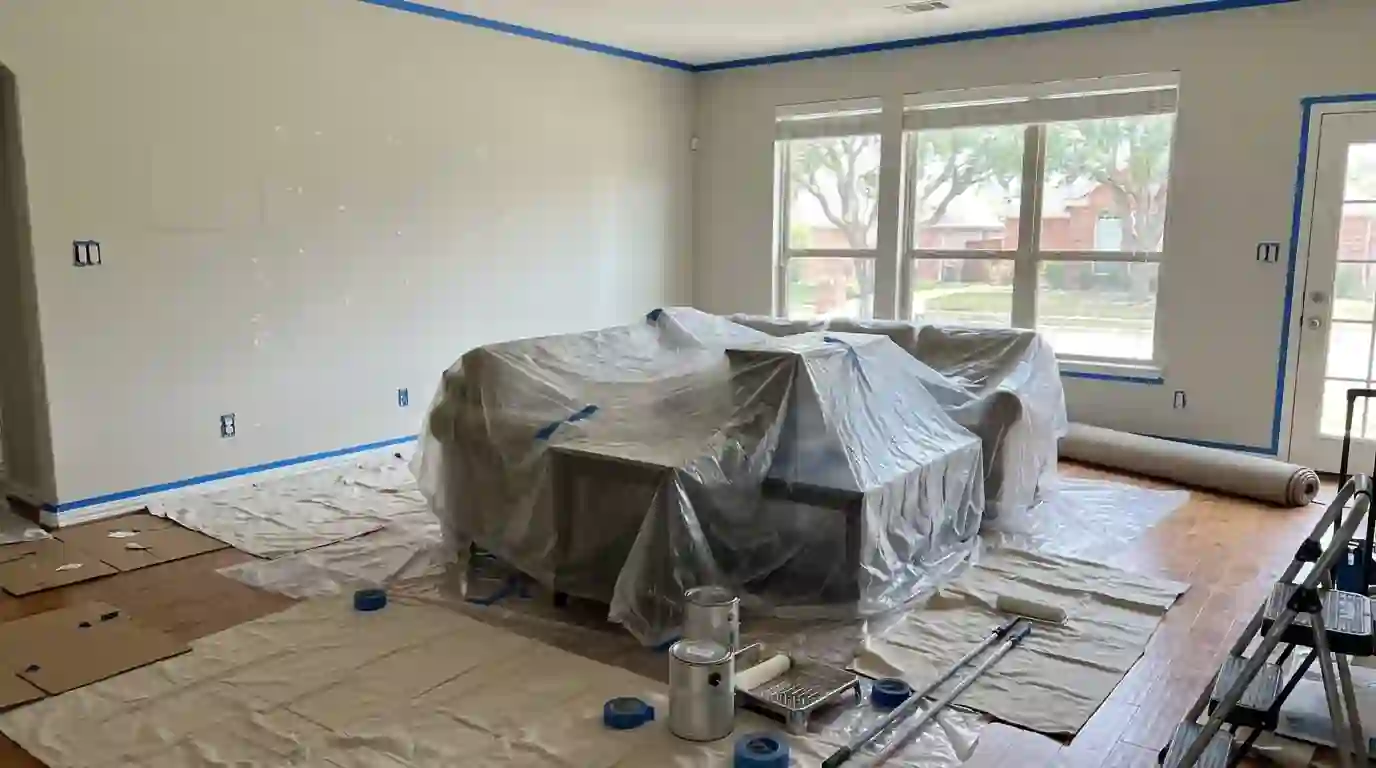
Clearing interior rooms
Crews need about three feet of clear space along every wall being painted. Move small furniture, lamps and side tables out of the room if you can. Large pieces such as sofas and beds usually get pushed to the center and covered by the crew.
Leave nails and anchors in place if you want to rehang things in the same spots, and tell the crew. Otherwise they will fill the holes, and you can start fresh.
Bathrooms need a quick pass too. Clear countertops, remove toilet tank lids if the wall behind them is being painted, and take down towel bars only if the crew asks. Many painters prefer to remove and reinstall fixtures themselves so they go back in the same spots.
- Take everything off the walls: art, mirrors, shelves, curtains and rods
- Empty bookshelves and display cabinets that need to move
- Pack away breakables, plants and electronics
- Clear closets fully if closet interiors are being painted
- Roll up rugs and move them out of the way
- Point out any items that should not be moved
Protecting valuables, kids and pets
Put jewelry, medications, cash and important papers in a closed room or a locked drawer. It is a simple habit with any crew working in a home, and it keeps everyone focused on the work.
Pets are happier and safer away from the work area. Dogs can track wet paint through the house, and cats like to explore open cans and fresh trim. A closed room, a crate in a far part of the house or a day at a sitter works well.
For homes built before 1978, the crew should use lead-safe work practices when sanding or scraping old paint, including plastic containment, misting and HEPA vacuums. Keep kids and pregnant family members out of those areas until cleanup is complete.
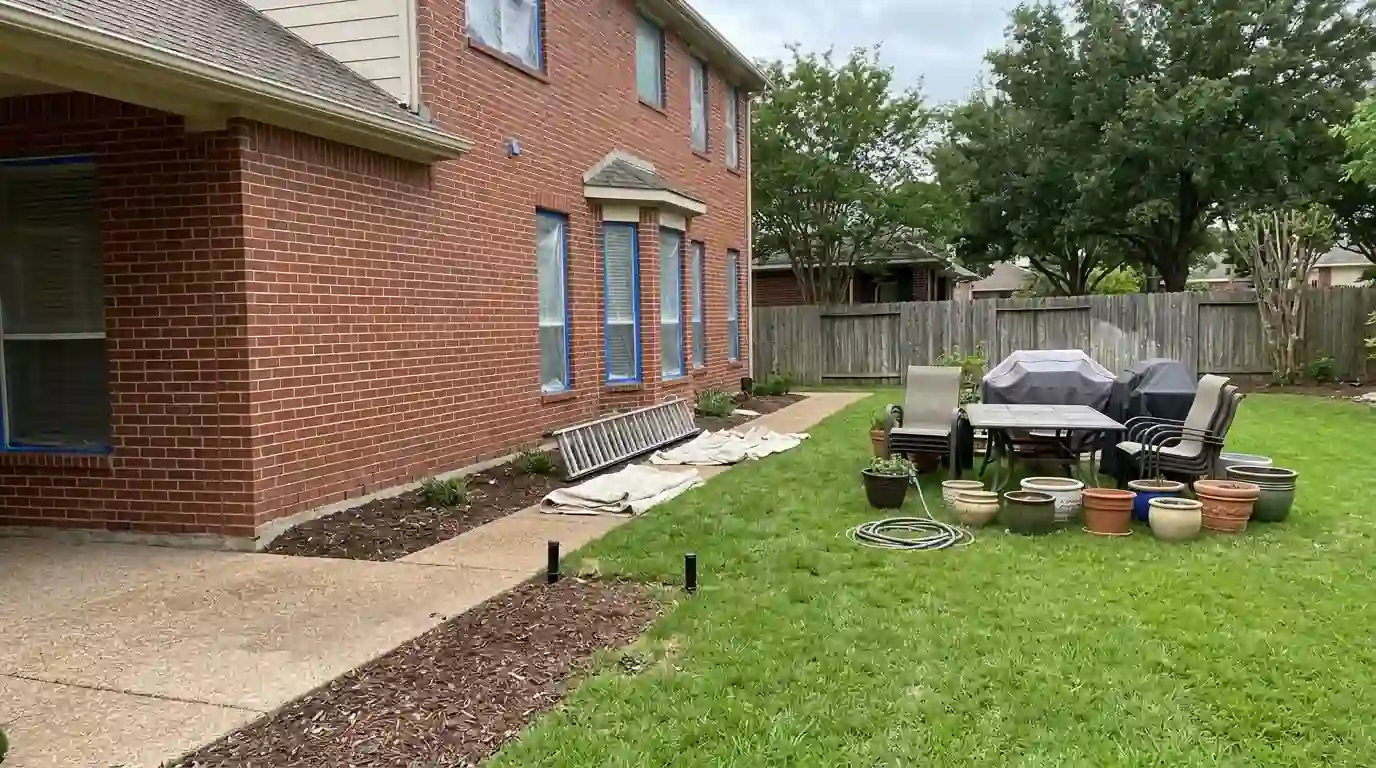
Exterior prep around the house
For exterior work, clear a path of three to four feet around the house. Move patio furniture, grills, planters, garden decor, hoses and toys away from the walls.
Turn off sprinklers at least 24 hours before the start and keep them off for the whole project. Wet siding and brick cannot be painted, and an early morning cycle can ruin a coat that went on the day before.
Trim back shrubs and branches touching the house. Crews need room for ladders, and branches rubbing on fresh paint leave marks. If cars normally sit in the driveway near the garage, plan to park on the street on the days the garage and the front of the house are painted.
If the house will be washed first, close every window and check that outdoor outlets have covers. Washing usually happens one to two days before paint so everything can dry.
Gates and side yards matter on exterior jobs. Leave gates open or unlatched, put away dog toys and pick up pet waste along the side yards, and let the crew know if any area has a sprinkler line or landscape lighting close to the wall.
During the job: daily routines
Expect the crew to start early, often around 7 or 8 in the morning, and to clean up their work areas at the end of each day. On summer exteriors in Dallas, starts may be closer to sunrise to beat the heat.
Keep the thermostat steady. A house held between 70 and 76 F helps interior paint dry evenly, and ceiling fans on low help with airflow once the painters say it is fine to run them. Leave windows closed if pollen or dust is heavy outside.
Walk through each room as it is finished. A touchup is easier while the crew still has the right paint open than a week later.
Have one point of contact. If two adults in the house give the crew different instructions, work can stall. Decide who answers questions about colors, schedule changes and touchups, and share that person's phone number with the crew lead.
After the paint dries
Interior walls are dry to the touch in an hour or two, but most paint needs two to four weeks to fully cure. Rehang art after a day or two, but wait about a week before scrubbing walls or pushing furniture tight against them.
Keep a labeled can of each color for touchups, with the room name, brand, color number and sheen written on the lid. Store it inside, not in a hot Dallas garage, where summer heat can spoil latex paint in a single season.
If you are getting the house ready for sale, pre-listing painting often runs on a tight schedule, so prep matters even more. Clearing rooms the night before can save the crew hours on day one, and the same goes for interior painting in an occupied home.
Leave painter's tape removal to the crew. Pulling tape at the wrong time can lift fresh paint, and experienced painters remove it while the coat is still slightly soft or cut it free with a knife.
Follow-up questions
Do I need to move all the furniture myself?
No. Most crews move and cover large pieces as part of the job, pushing them to the center of the room. What helps is clearing small items, breakables and anything on the walls. Ask your painter what they move and what they expect you to handle, so there are no surprises on the first morning of the job.
Can my family stay in the house while it is being painted?
Yes, most families do. Painting usually moves one or two rooms at a time, and low-odor waterborne paints make it comfortable to stay. Plan where you will work, sleep and keep pets each day. In homes built before 1978 where scraping or sanding is planned, those areas stay closed off until cleanup is finished.
Should I clean the walls before the painters arrive?
You do not need to. Crews wash or degrease walls where needed as part of prep, especially in kitchens and bathrooms. A quick dusting of baseboards and clearing cobwebs from corners helps, and pointing out stains, grease or water marks during the walk-through lets the crew plan the right primer for each spot.
Want a painter to look at it?
Call and a person answers 24/7. We will set a walk-through and give you a written scope.