Flat, eggshell, satin or semi-gloss: picking sheen for every room
Sheen changes how a color looks, how well a wall hides flaws and how easy it is to clean. Picking the right level for each room matters as much as picking the color itself.
Key takeaways
- Flat for ceilings, eggshell or matte for most living spaces
- Satin for kitchens, baths and laundry rooms
- Semi-gloss or a true enamel for trim, doors and railings
- Lower the sheen on walls with many patches or strong side light
What sheen means and how the levels compare
Sheen is how much light a dried paint film reflects. Manufacturers measure it with a gloss meter at a set angle, and the names vary a bit between brands. From lowest to highest, the usual levels are flat, matte, eggshell, satin, semi-gloss and gloss.
Higher sheen means a harder, smoother surface that wipes clean more easily, but it also shows every dent, patch and roller lap. Lower sheen hides flaws and gives a soft, even look. Older flat paints marked easily, but newer scrubbable matte lines have closed much of that gap.
Sheen names are not standard across brands. One company's eggshell may be close to another company's satin, so comparing a sheen by name alone can lead to surprises. Looking at a dried sample of the actual product is the only reliable test.
- Flat: hides the most, lowest wash resistance
- Matte: low reflection, scrubbable in premium lines
- Eggshell: slight glow, easy to wipe, the common wall choice
- Satin: soft shine, good for busy rooms and moisture
- Semi-gloss: hard and washable, for trim and doors
- Gloss: very reflective, for accents, cabinets and railings
Living rooms, bedrooms and ceilings
Living rooms and bedrooms usually look good in matte or eggshell. Eggshell is a safe default in homes with kids or pets because handprints wipe off without burnishing a shiny spot. Matte suits dining rooms and walls with a lot of old patches, such as older Dallas homes with years of drywall repair behind the paint.
Ceilings almost always get flat. A flat ceiling hides tape seams and slight unevenness, and it does not throw glare from windows or fixtures. In a room with big west-facing windows, a shiny ceiling can show every roller line in afternoon light.
Ceiling painting is usually done in a dedicated flat ceiling paint that spatters less and dries to a uniform look overhead.
Home offices and media rooms often look better in matte, because screens and lamps create glare on shinier walls. Dark accent colors in these rooms also read richer in matte, though they need careful touchups since dark matte shows scuffs as lighter marks.
Kitchens, bathrooms and laundry rooms
Kitchens and bathrooms need a finish that handles moisture and frequent wiping. Satin is the usual choice for walls in these rooms, with eggshell working in a powder room that sees little steam.
Bathrooms with a shower benefit from a paint with mildew-resistant additives, which most major brands offer in a bath-specific line. Running the exhaust fan for 20 minutes after a shower does as much for the paint as the sheen does.
Laundry rooms and mudrooms near the garage take scuffs from baskets, shoes and pets. Satin walls here are easier to clean, and the extra durability is worth the slight shine.
Older bathrooms with textured walls or past water damage may need a stain-blocking primer before the satin finish goes on. Without it, old marks can bleed through, and the slight shine of satin makes those spots easier to see.

Hallways, stairs and kids' rooms
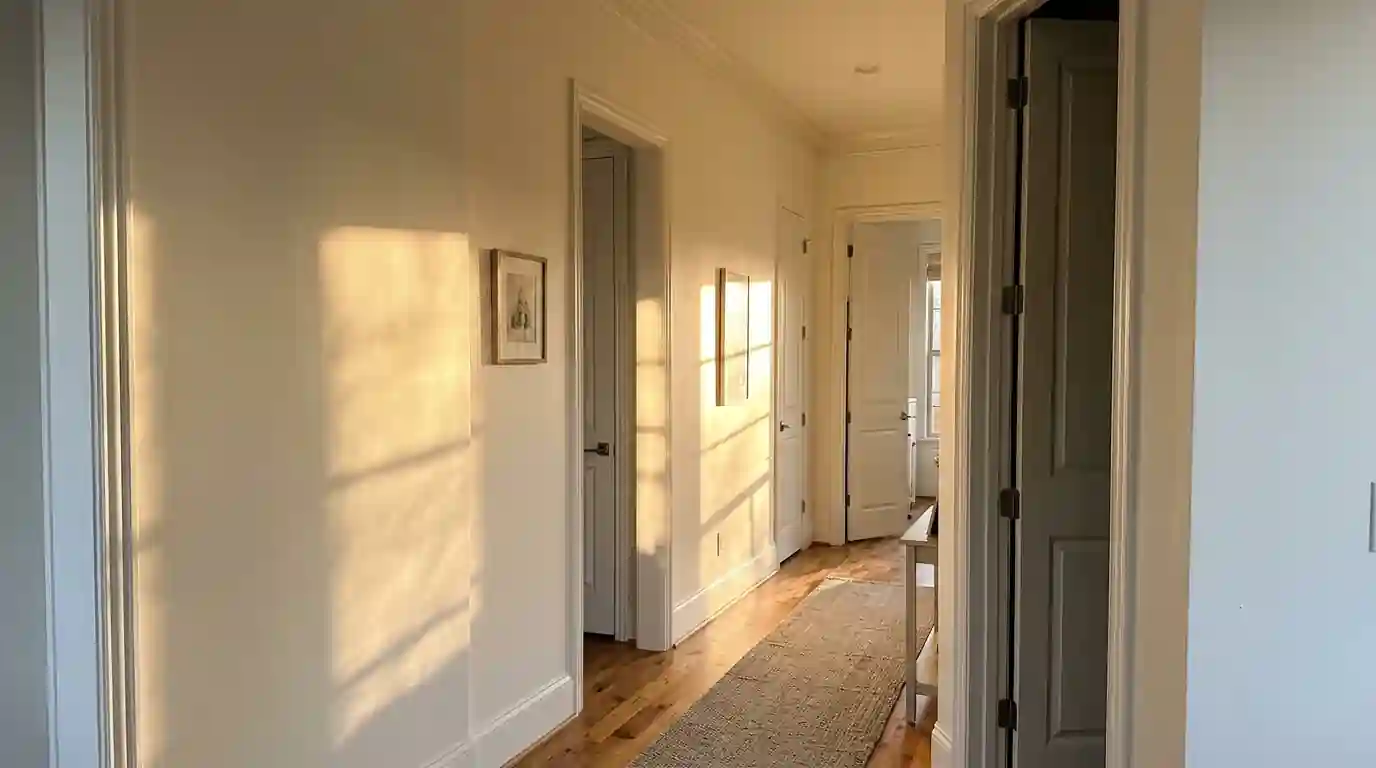
Hallways and stairwells collect hand marks, bag scrapes and the odd vacuum bump. Eggshell or satin both work. Satin cleans more easily, while eggshell hides patches better on long walls that catch light from one end.
Kids' rooms and playrooms do well in a scrubbable matte or an eggshell from a premium line. These newer products let you wipe off crayon and marker without changing the look of the wall.
Along staircases, the handrail and balusters take the most wear, so they get a harder finish than the walls. Railings and spindles are usually done in semi-gloss or a urethane enamel.
Trim, doors and cabinets
Trim and doors are where higher sheens earn their place. Semi-gloss on baseboards, casings and doors gives a clean edge against the wall color and stands up to mops, vacuums and shoes. It also makes the trim easy to wipe when dust collects on top of baseboards.
Some homeowners now prefer satin trim for a softer, more modern look. That works fine, as long as the product is a true enamel built for trim and doors rather than wall paint in a satin finish.
Cabinets usually get satin or semi-gloss in a cabinet-grade enamel. Gloss can look sharp on a front door or a piece of built-in furniture, but on large flat panels it shows every brush or spray mark.
Interior doors are worth a separate thought. A paneled door in semi-gloss shows off the profiles nicely, while a flat slab door in semi-gloss can show every small dent. Satin enamel is often a good middle ground for slab doors in older homes.
Light, flaws and the Dallas sun
Light changes how sheen looks. Rooms with big south and west windows in Dallas get strong, low-angle light in late afternoon, and that raking light shows texture and patches on higher sheens. If a room has walls that were repaired many times, dropping the sheen one step can hide a lot.
Changing sheen without changing color also takes care. Going from satin to matte over old satin paint needs a light scuff or a primer so the new coat bonds and looks even.
When you call about interior painting, it helps to know which rooms take the most wear. That decides where satin is worth the extra shine and where matte will look better, and the walk-through is a good time to check whether any walls need extra prep.
Exterior sheen follows similar logic. Siding usually gets satin or low luster to shed dust, and trim and doors get semi-gloss for durability. Keeping the sheen choices consistent inside and out gives the house a coherent look from the curb to the living room.
Follow-up questions
Can I use one sheen for the whole house?
You can, and some homeowners pick eggshell for every wall to keep touchups simple. The tradeoff is that bathrooms and laundry rooms may need repainting sooner, and ceilings look better in flat. A common compromise is one wall sheen for living spaces, satin for wet rooms, flat ceilings and semi-gloss trim throughout.
Why does my touchup spot look shinier than the rest of the wall?
That is called flashing. Fresh paint over aged paint, a slightly different sheen, or a brush touchup on a rolled wall all reflect light differently. Using the same can and the same tool, and feathering the edges, helps. On higher sheens, repainting the whole wall corner to corner is often the only way to hide a repair.
Does sheen change how a color looks on the wall?
Yes. Higher sheens reflect more light, so the same color can look slightly lighter and more saturated in satin than in matte. Lower sheens look softer and a touch deeper. Before committing, look at samples in the sheen you plan to use, painted on a large board and checked in both daylight and lamp light.
Want a painter to look at it?
Call and a person answers 24/7. We will set a walk-through and give you a written scope.